Thomas Russell
Thomas Russell was born at Betsborough in County Cork on 21 November 1767. He was intended for the Church, but in 1782 he went to India as a volunteer with his brother Ambrose. After five years’ service he returned, and later entered the 64th Regiment as captain. In 1789 he became acquainted with Wolfe Tone, and the friendship soon became a close intimacy. Around 1791 Russell sold his commission to meet a liability of £200 for a friend. He then obtained the office of Seneschal to the Manor Court of Dungannon and was made a justice of the peace for County Tyrone.
Dateline
Thomas Russell was born at Betsborough in County Cork on 21 November 1767. He was intended for the Church, but in 1782 he went to India as a volunteer with his brother Ambrose. After five years’ service he returned, and later entered the 64th Regiment as captain. In 1789 he became acquainted with Wolfe Tone, and the friendship soon became a close intimacy.
Public Career
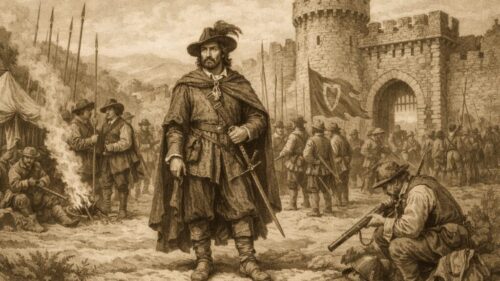
Around 1791 Russell sold his commission to meet a liability of £200 for a friend. He then obtained the office of Seneschal to the Manor Court of Dungannon and was made a justice of the peace for County Tyrone. He resigned both appointments because he could not accept a bench on which a prisoner’s religion was asked before the crime was considered. In 1794 he was appointed librarian of the Belfast Library, and he wrote for the Northern Star.
Political Action
He published a pamphlet on the Catholic claims in 1796. By then he had been appointed to command the United Irishmen in County Down. He was arrested on 16 September 1796 and held first in Newgate, Dublin, and afterwards at Fort George, Scotland. In June 1802 he was liberated with other state prisoners and landed on the Continent. In August 1802 he met Robert Emmet in Paris, and later reached Ireland in disguise. Emmet assigned him the task of rousing Ulster.
Final Days
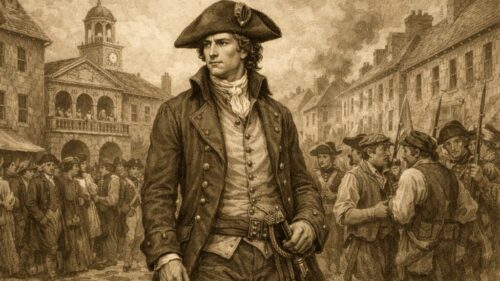
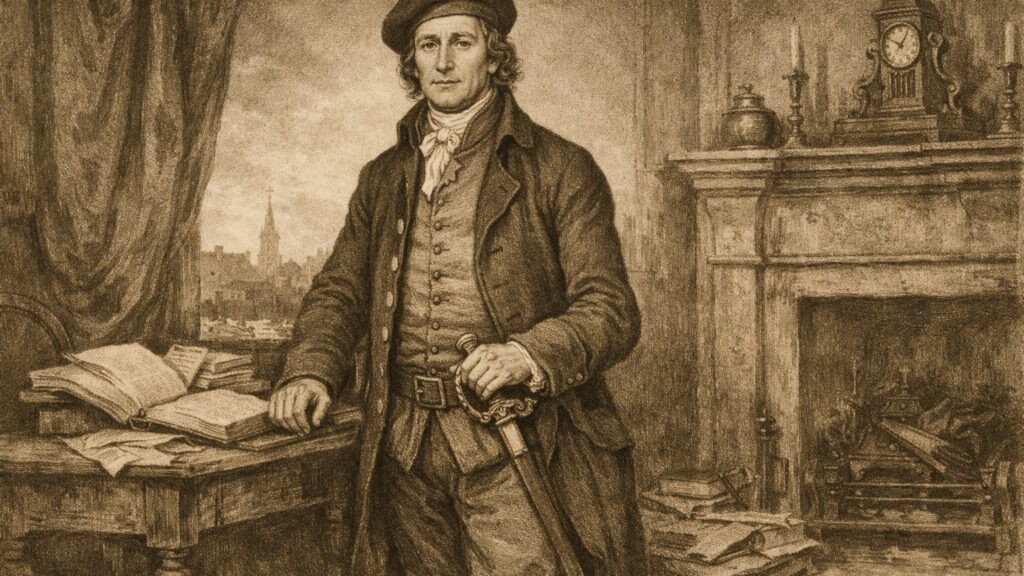
Russell was arrested in Dublin on 9 September 1803. He was tried at Downpatrick and found guilty of high treason on 19 October 1803, and he was executed the next day. He was buried in Downpatrick churchyard under a slab inscribed “The grave of Russell.” He is described as tall, with dark hair and complexion.
Source References
Hover over a number to see the source. Select it to open the source.