Joseph Plunkett — Irish Review
He was educated by the Jesuits at the Catholic University School, Belvedere College and Stonyhurst College in Lancashire. As a young man he contracted tuberculosis, and he spent periods in Italy, Algeria and Egypt between 1910 and 1912. Literary Life Plunkett met Thomas MacDonagh when MacDonagh tutored him in Irish for University College Dublin matriculation examinations. Their friendship was shaped by poetry, religion and mysticism. MacDonagh published some of Plunkett’s early poems in the Irish Review, and later edited his first collection, The Circle and the Sword, which appeared in 1911.
Dateline
He was educated by the Jesuits at the Catholic University School, Belvedere College and Stonyhurst College in Lancashire. As a young man he contracted tuberculosis, and he spent periods in Italy, Algeria and Egypt between 1910 and 1912.
Literary Life
Plunkett met Thomas MacDonagh when MacDonagh tutored him in Irish for University College Dublin matriculation examinations. Their friendship was shaped by poetry, religion and mysticism. MacDonagh published some of Plunkett’s early poems in the Irish Review, and later edited his first collection, The Circle and the Sword, which appeared in 1911. In 1913 Plunkett took over the Irish Review when it faced financial difficulty, and under his editorship it became more political.
Revolutionary Work
He supported Arthur Griffith’s Sinn Féin policies and the workers during the 1913 lock-out, and he was elected to the provisional committee of the Irish Volunteers in November 1913. His language in the journal led to seizures of copies under the Defence of the Realm Act. By then he was a member of the Irish Republican Brotherhood and committed to revolution by force of arms. In April 1915 he went to Germany to assist Roger Casement in seeking arms and support, and in May he joined the IRB Military Council.
Rising Role
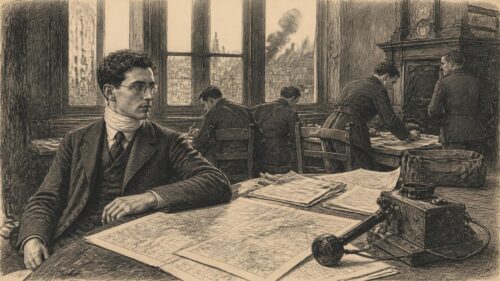
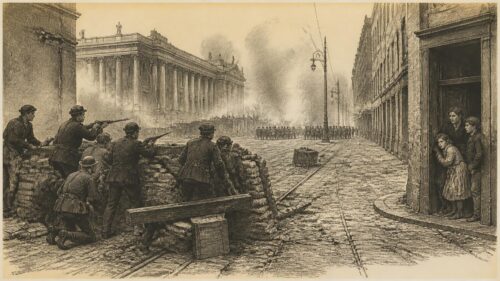
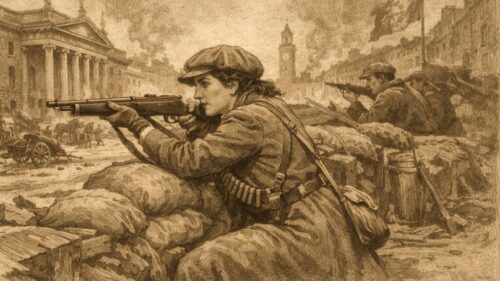
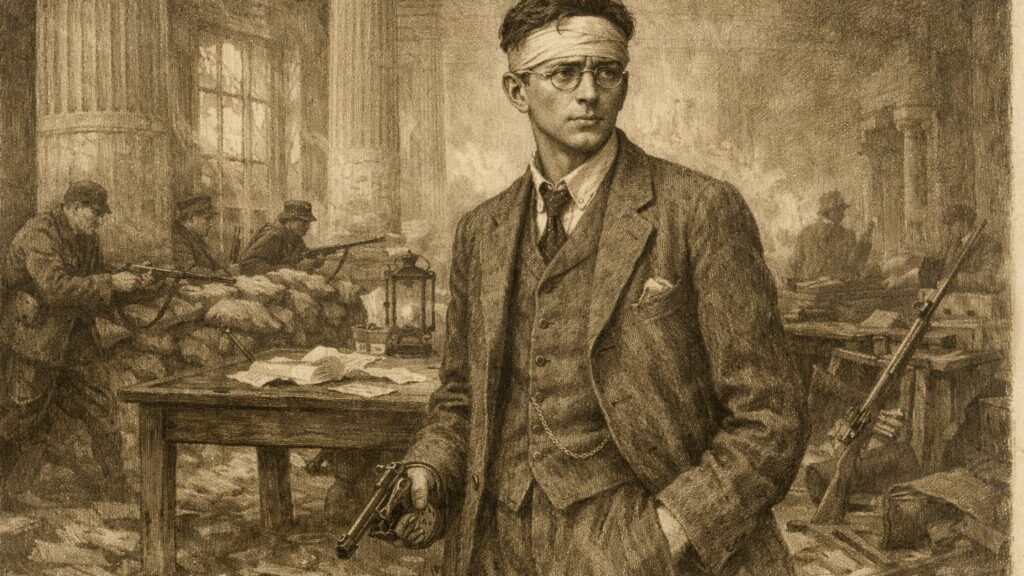
Plunkett was heavily involved in the final preparations for the Easter Rising. He and Seán Mac Diarmada are believed to have forged the document released on 19 April 1916 that suggested the authorities were about to suppress the Irish Volunteers, though the status of the document was never determined. In very poor health and recovering from major surgery on glands in his neck, he nevertheless joined the Provisional Government in the General Post Office.
Final Days
After the surrender, Plunkett was tried by court-martial and sentenced to death by firing squad. The authorities allowed him to marry Grace Gifford in Kilmainham Jail on the night before his execution. He was executed on 4 May 1916.
Source References
Hover over a number to see the source. Select it to open the source.