Cushendun
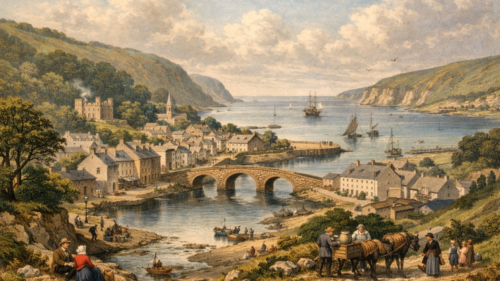
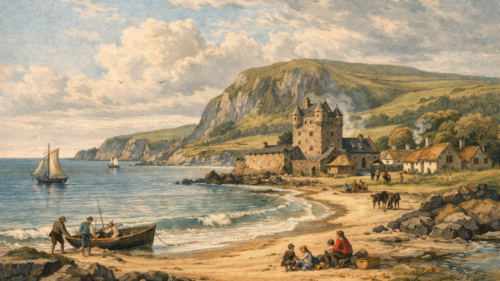
Cushendun is securely identified in historical reference works as a small sea-port on the north-east coast of Ireland, in County Antrim, with Lewis placing it partly in the parish of Culfeightrin and in the baronies of Carey and Lower Glenarm. Lewis also notes that it stood on a small bay at the mouth of the River Dun or Glendun, and that it was known for summer resort traffic, winter shelter for small vessels, and trade across to Cantire in Scotland 2. The modern place-name authority likewise places Cushendun in county Antrim, barony Cary, civil parish Culfeightrin, and treats Bun Abhann Duinne as the validated Irish form for the population centre and townland 1.
Dateline
Historical setting
Cushendun is securely identified in historical reference works as a small sea-port on the north-east coast of Ireland, in County Antrim, with Lewis placing it partly in the parish of Culfeightrin and in the baronies of Carey and Lower Glenarm. Lewis also notes that it stood on a small bay at the mouth of the River Dun or Glendun, and that it was known for summer resort traffic, winter shelter for small vessels, and trade across to Cantire in Scotland 2. The modern place-name authority likewise places Cushendun in county Antrim, barony Cary, civil parish Culfeightrin, and treats Bun Abhann Duinne as the validated Irish form for the population centre and townland 1.
The historical naming evidence is strong and consistent. Patrick Weston Joyce explains that the Four Masters recorded the name as Bun-abhann-Duine, and that it was later changed to Cois-abhann-Duine, both expressing the same idea of a place at or by the mouth of the River Dun; he further notes that this form was gradually compressed into the present English spelling Cushendun 3. Logainm’s entry preserves the Irish form Bun Abhann Duinne, while also linking it directly to the English Cushendun and to the same Antrim locality 1.
Older settlement and harbour use
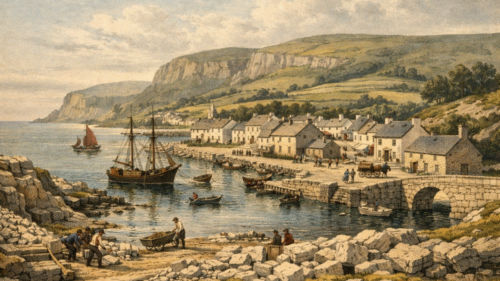
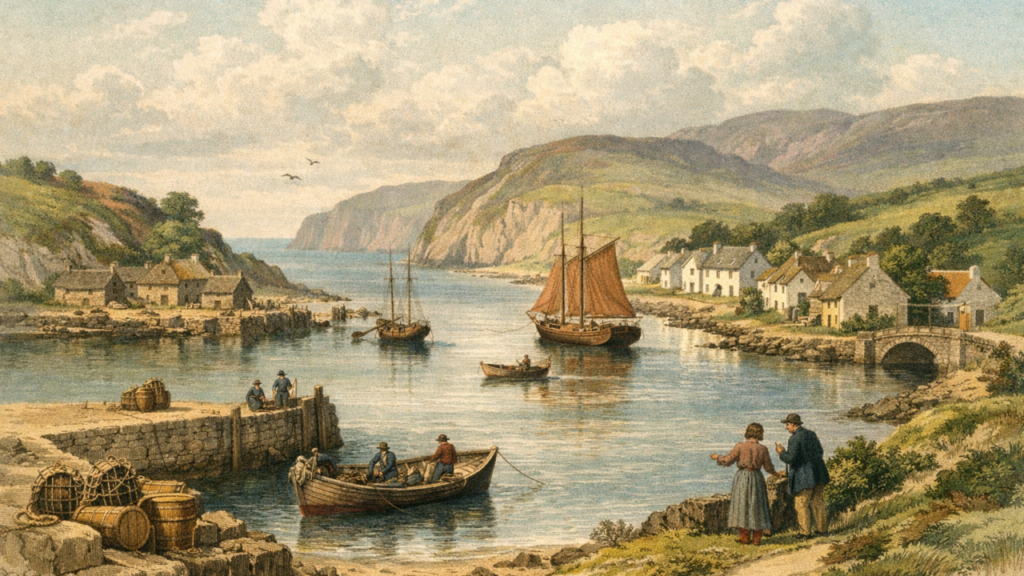
Before the present village was laid out, Cushendun was already a landing place of local significance. The National Trust notes that centuries before the planned village existed, the bay served as a safe landing place and harbour for travellers between Ireland and Scotland, and that nearby Carra Castle belongs to a much older defensive landscape 4. This matches Lewis’s description of a working small port with shelter, anchorage, quarries, and seasonal coastal traffic, showing that the site’s history is maritime and strategic rather than urban 2.
The modern village
The present-built village is comparatively late. The National Trust records that Ronald John McNeill began building Cushendun village in 1912, commissioning Clough Williams-Ellis to design it as a picturesque Cornish-style settlement in County Antrim 4. That means the name and harbour were historical long before the surviving village ensemble, and the modern built form should not be confused with the older place-name or the older landing place 4.
Historical spelling and identity
In the historical record, Cushendun appears under several related forms: Bun-abhann-Duine in Joyce’s place-name scholarship, Cois-abhann-Duine as a later related form, and Bun Abhann Duinne in the modern Irish-language authority 13. The English historical spelling Cushendun is the established anglicized form, and the place is consistently tied to County Antrim in the cited sources 124.