
Legal Resistance(c.1900s)
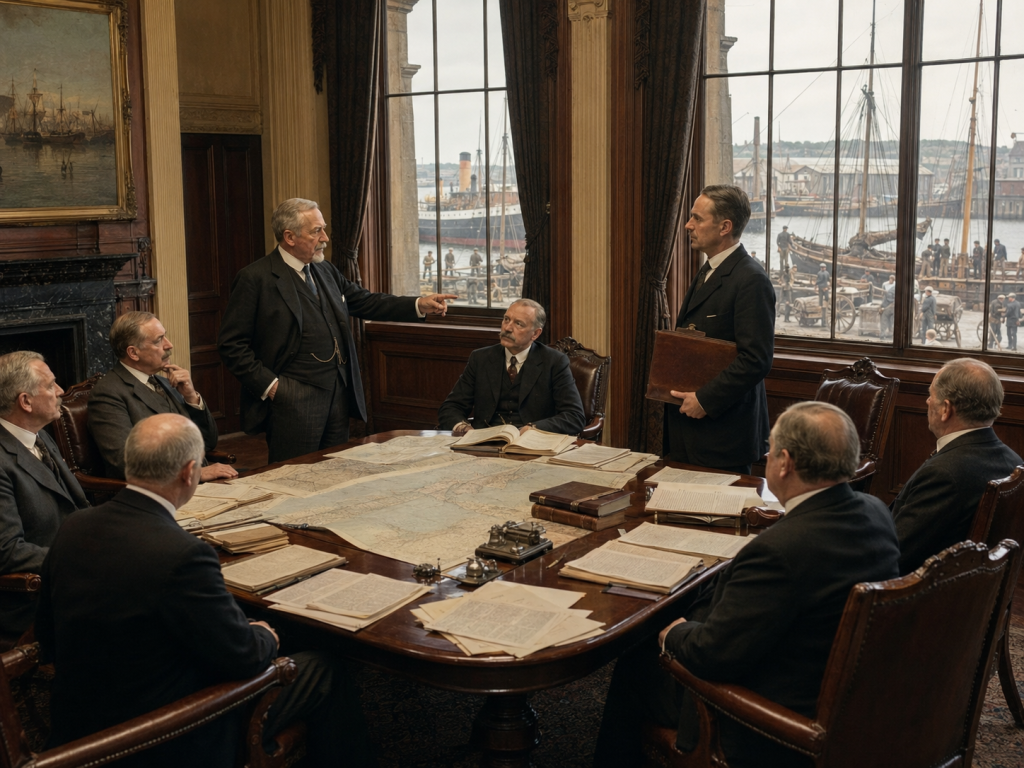
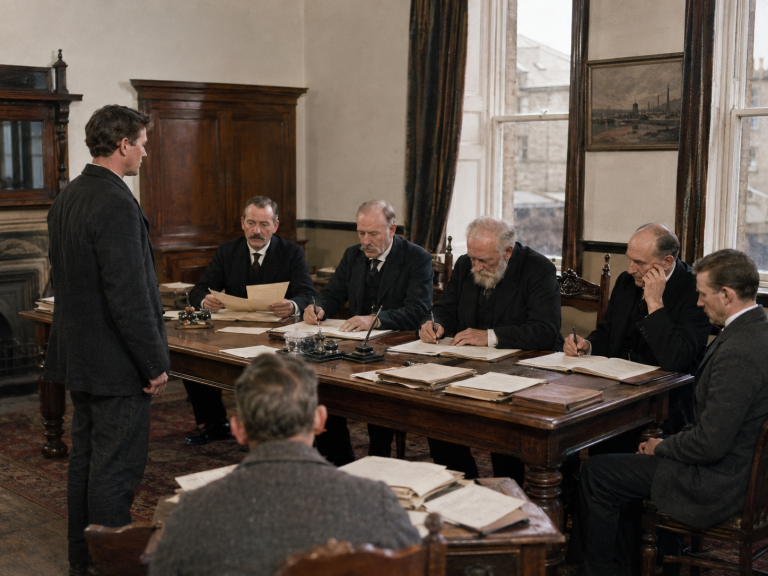
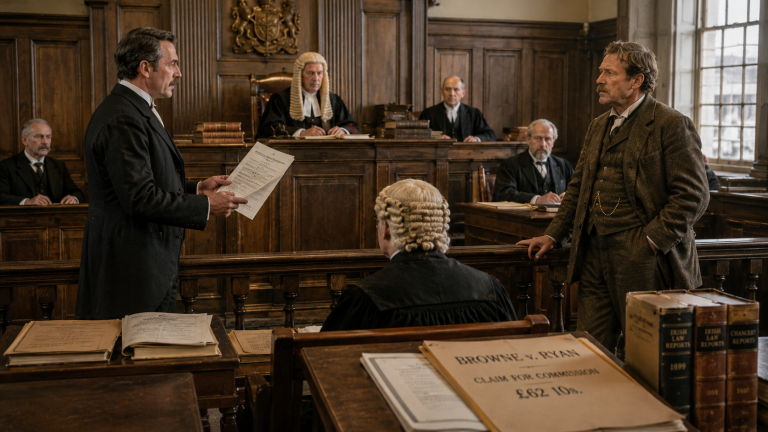
Limerick Harbour Commissioners instructed the Dublin solicitor George Fottrell to organise formal opposition to renewed proposals for railway amalgamation. The decision, reported on 2 January 1900, also authorised him to retain an experienced King’s Counsel to represent the harbour authority during the expected parliamentary struggle. Commissioners had resisted a similar scheme during the previous year and regarded its revival as a direct threat to the commercial independence of Limerick. By securing legal expertise at an early stage, they ensured that the port’s objections would be supported by evidence, parliamentary procedure and professional advocacy rather than confined to local resolutions.
The proposed transaction would absorb the Waterford, Limerick and Western Railway into the Great Southern and Western Railway, already the largest railway undertaking in Ireland. The smaller company operated an extensive network linking Limerick with Waterford, Sligo, Tralee, Foynes and agricultural districts throughout the west and south. Opponents feared that its disappearance would remove an important element of competition and allow the enlarged company greater control over freight rates, timetables and routes. The Commissioners therefore treated amalgamation as a question affecting the balance of transport power across Ireland rather than a routine transfer between private companies.
Railway charges exercised a powerful influence upon Limerick Harbour because goods entering or leaving the port depended upon efficient inland connections. Grain, coal, livestock, dairy produce, manufactured goods and imported materials moved between ships, warehouses, factories, farms and railway sidings. Higher freight rates or poorer services could make Limerick less competitive than Dublin, Cork or Waterford and might encourage merchants to redirect trade through other ports. Commissioners responsible for the harbour’s revenue and development feared that a railway monopoly could determine commercial traffic according to the interests of its wider system rather than those of the Shannon port.
The appointment of Fottrell and senior counsel prepared the Harbour Commissioners to oppose the promoters before parliamentary committees examining the amalgamation bill. Legal representatives could challenge company witnesses, present freight comparisons and explain how earlier railway competition had reduced charges on routes serving Limerick and surrounding districts. The campaign would require cooperation with Limerick Corporation, County Council representatives, merchants and other bodies threatened by railway concentration. It would also involve considerable expense, but commissioners believed that the long-term cost of losing independent competition could exceed the immediate price of solicitors, counsel and parliamentary evidence.
The Commissioners’ action marked the beginning of an organised campaign that broadened across Limerick during January 1900. The Corporation later authorised formal opposition, while county and harbour representatives assembled evidence concerning trade, employment and transport. Parliament nevertheless approved the amalgamation in August, and the Waterford, Limerick and Western Railway ceased to exist independently at the beginning of 1901. The decision to retain Fottrell remains significant because it showed how strongly Limerick’s commercial leadership associated railway competition with the prosperity of its port, industries, shops, cattle trade and agricultural hinterland.
Primary Sources
- Freeman’s Journal, “The Railway Amalgamation Proposals: Action of Limerick Harbour Commissioners,” 2 January 1900, p. 6.
- Limerick Harbour Commissioners Collection, IE LA P2, board and secretary records concerning opposition to railway amalgamation, Emerald Archives.
- House of Commons Debates, “Great Southern and Western and Waterford, Limerick, and Western Railway Companies Amalgamation Bill [Lords],” 1 August 1900, vol. 87.
- Reports from the Joint Select Committee on the Great Southern and Western and Waterford, Limerick, and Western Railway Companies Amalgamation Bill, Parliamentary Papers, 1900, paper 196, vol. X.
- Great Southern and Western and Waterford, Limerick and Western Railways Amalgamation Act 1900, 63 & 64 Vict., c. ccxlvii.
- C. E. J. Fryer, The Waterford and Limerick Railway, Headington: Oakwood Press, 2000.
- Ernie Shepherd, Waterford, Limerick and Western Railway, Hersham: Ian Allan Publishing, 2006.