Now Sharing: Articles: 212 Images: 666 Total Items Archived: 878

Article Archives

Article Archives

212 articles found

Licences Revision

On 2 February 1900, a second legislative measure concerning beer retailers’ and spirit grocers’ licences in Ireland was introduced in the British Parliament, prompting renewed attention in Limerick’s commercial and civic circles. The city, with its vibrant network of public houses, grocers, and licensed retailers, had already been following closely the progress of earlier licensing reforms. News of this additional bill, reported in both national and local newspapers, was quickly discussed by business owners, municipal leaders, and temperance advocates, who recognised that changes to licensing laws could have significant economic and social consequences.
Unity Resolutions

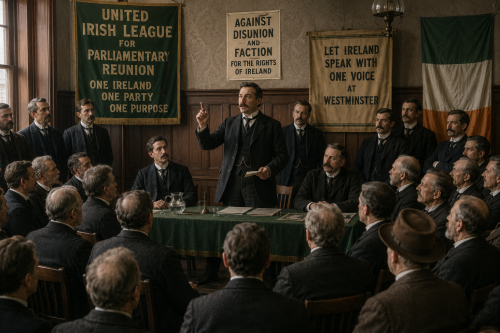
Local political organisations passed resolutions supporting a united Irish parliamentary representation as dissatisfaction deepened with the factional divisions inherited from the fall of Charles Stewart Parnell. United Irish League branches, nationalist associations and constituency bodies increasingly treated reunion as a public obligation rather than a private matter for rival leaders. Their resolutions urged parliamentarians to restore cooperation, accept common discipline and present Ireland’s claims through one organised party at Westminster. Such declarations did not possess formal authority over every MP, but they demonstrated that continued separation risked alienating local supporters whose votes, subscriptions and organisational labour sustained constitutional nationalism.

Dingle Pier

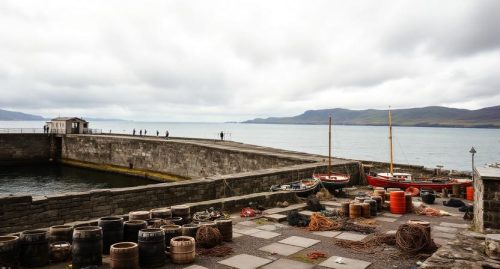
On 5 February 1900, the condition and proposed development of Dingle Pier in County Kerry were formally discussed in the British Parliament, drawing attention to the challenges and opportunities facing Ireland’s coastal infrastructure. The debate was prompted by concerns from local residents and business interests about the pier’s deteriorating state and its capacity to serve the needs of fishing fleets, cargo vessels, and passenger steamers.

Children Gather

A vast children’s celebration has been held in Phoenix Park as part of Queen Victoria’s final visit to Ireland, bringing together school pupils from Dublin and numerous districts beyond the capital. Special trains, organised parties and local escorts carried children towards the park, where extensive arrangements had been made for their reception. Contemporary estimates of attendance vary, but all describe a gathering numbering many tens of thousands. News of the spectacle has reached Limerick, where families, teachers, clergy and political organisers are considering both the scale of the occasion and the use of schoolchildren within an explicitly royal ceremony.

Postal Services

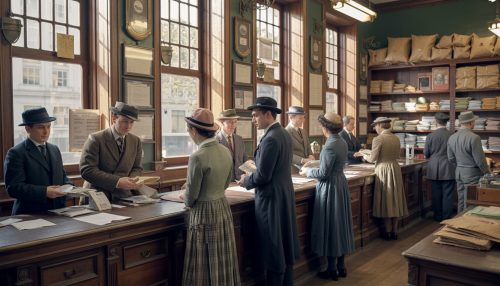
On 5 February 1900, postal arrangements and services at Enniscorthy, County Wexford, were formally questioned in the British Parliament, drawing attention to the challenges facing rural and provincial communities in Ireland at the turn of the century. Enniscorthy’s residents, businesses, and civic leaders had expressed concerns about the efficiency, reliability, and accessibility of postal services, issues that had implications for communication, commerce, and social life throughout the region.

Redmond Chosen

Nationalists throughout the city and county are today considering the election of John Redmond as chairman of the reunited Irish Parliamentary Party. His appointment follows the agreement that brought Parnellites and anti-Parnellites together after almost ten years of damaging division. Local supporters of Home Rule hope the choice will restore authority, discipline and purpose to Ireland’s representation at Westminster. Redmond, long identified with the Parnellite cause, now assumes responsibility for men who recently stood in opposing camps. His success will depend upon persuading Limerick voters and nationalists elsewhere that old quarrels can finally yield to common political action.

Garrison Announced

A new military garrison was announced for Limerick on 2 January 1900, although the arrangement proved provisional. Contemporary reports stated that the 3rd Battalion, Oxfordshire Light Infantry, formerly the Royal Bucks Militia, would be embodied at High Wycombe and sent to Limerick for garrison duty during the South African War. The announcement also noted that the home details left behind by the regiment’s 1st Battalion, which had departed Aldershot for active service, had already reached the city. Within days, however, the proposed destination was altered, and the militia battalion was directed to Buttevant rather than Limerick.

Roberts Arrives

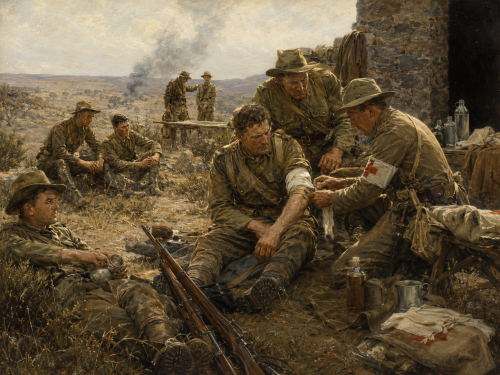
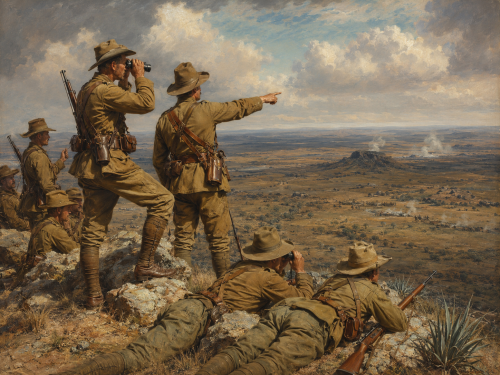
Field Marshal Lord Roberts arrived at Cape Town on 10 January 1900 and assumed supreme command of British forces in South Africa. He travelled aboard the Dunottar Castle with Lord Kitchener, who became his chief of staff. Their appointment followed the defeats of “Black Week,” when British reverses at Stormberg, Magersfontein and Colenso exposed serious weaknesses in command, intelligence and battlefield preparation. Roberts received a formal welcome at the harbour, but the ceremony could not conceal the gravity of his task. British garrisons remained besieged, casualties were rising and reinforcements arriving from across the Empire required organisation.

Health Inquiry

A government investigation into the causes of exceptionally high death rates in Irish cities was extended to Limerick, according to an announcement published on 27 January 1900. The Local Government Board was expected to apply machinery similar to that already established for examining public health in Dublin. The proposed scrutiny would reach beyond mortality statistics and examine how Limerick Corporation discharged its sanitary responsibilities. Drainage, cleansing, water supply, dairies and slaughterhouses were all identified for investigation. The announcement placed the city’s everyday environment under official examination and signalled that preventable illness and premature death would be treated as failures of administration as well as private misfortune.

Contracts Shortened

Limerick No. 1 District Council altered the system governing maintenance and repair contracts for public roads when members decided that future agreements would run for twelve months rather than the four-and-a-half-year term previously used. The decision followed an adjourned quarterly meeting held under the chairmanship of William Noonan and reported on 18 January 1900. Road tenders rejected at an earlier sitting had been referred to Limerick County Council, which declined to consider them and returned the entire question to the District Council. Members were therefore required to reconsider both the tenders and the basis upon which future road work would be awarded.