Children Gather
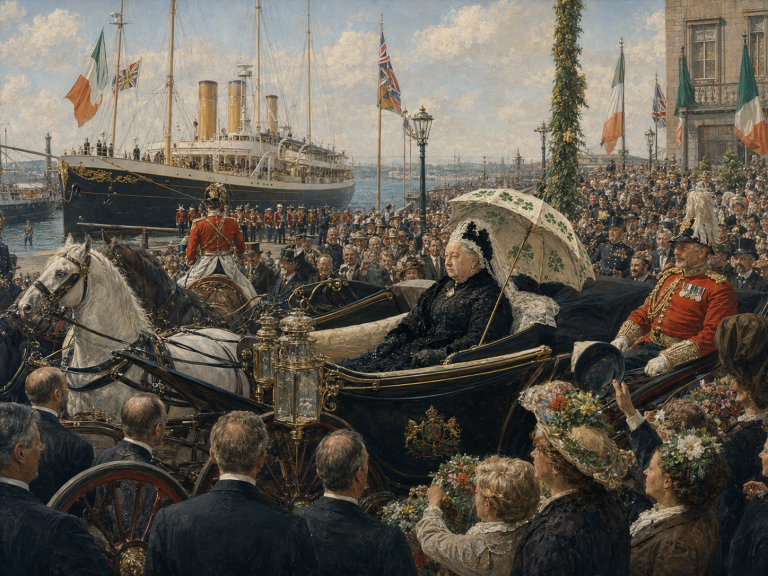
A vast children’s celebration has been held in Phoenix Park as part of Queen Victoria’s final visit to Ireland, bringing together school pupils from Dublin and numerous districts beyond the capital. Special trains, organised parties and local escorts carried children towards the park, where extensive arrangements had been made for their reception. Contemporary estimates of attendance vary, but all describe a gathering numbering many tens of thousands. News of the spectacle has reached Limerick, where families, teachers, clergy and political organisers are considering both the scale of the occasion and the use of schoolchildren within an explicitly royal ceremony.
The children assembled across a broad section of Phoenix Park, arranged in groups under the supervision of teachers, stewards and officials. Many had travelled considerable distances and endured long hours of waiting for the brief opportunity to see the Queen’s carriage pass. Military bands, mounted escorts and uniformed police added to the carefully organised spectacle. Refreshments and commemorative arrangements helped present the gathering as a generous royal treat. For children accustomed to school discipline, crowded homes and limited recreation, the journey itself may have been as memorable as the monarch, offering an extraordinary day beyond the routines of classroom, farm, workshop district or city street.
The event was also intended to display loyalty across social, religious and geographical divisions. British officials and unionist supporters could point to the assembled pupils as evidence of affection for the Crown and Ireland’s place within the United Kingdom. Yet attendance cannot be interpreted as a simple political declaration by the children themselves. Many came because their schools participated, their parents approved, or the excursion promised excitement and food. Others may have been drawn by curiosity rather than imperial attachment. The gathering united thousands within one ceremonial landscape, but it did not erase the different political meanings attached to their presence.
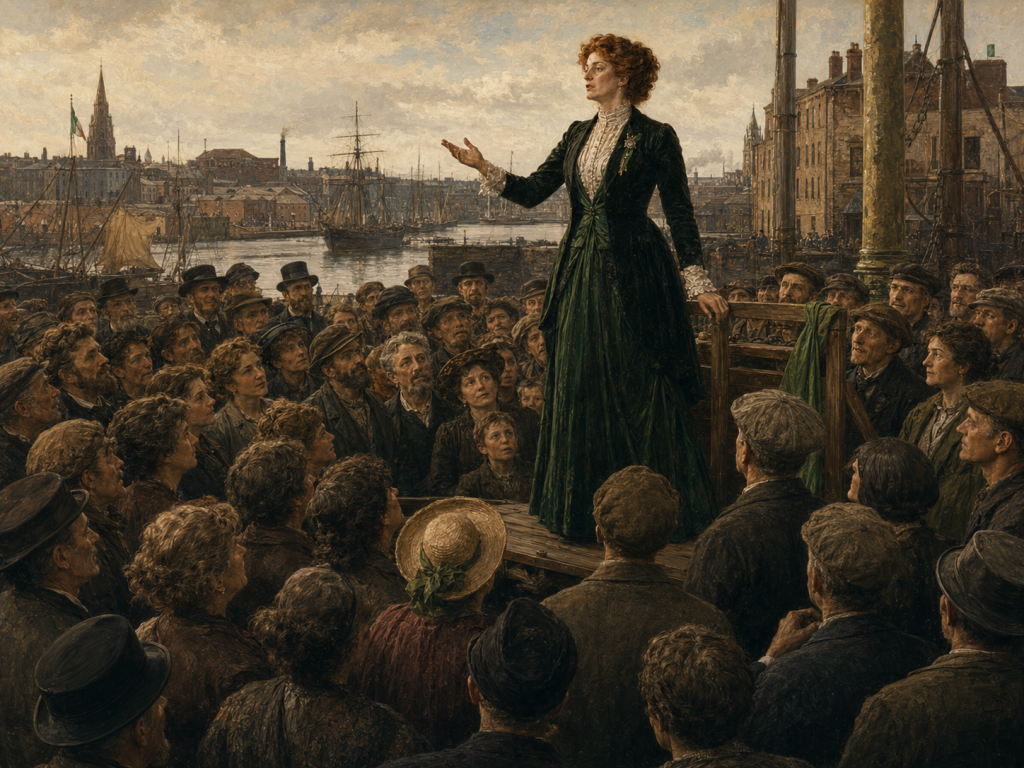
Nationalist opponents strongly criticised the celebration, arguing that Irish children were being used to support an imperial demonstration during the South African War. Maud Gonne and other nationalist women objected particularly to the effort to associate childhood, education and public charity with loyalty to the monarchy. Their opposition helped inspire plans for a separate patriotic children’s gathering later in the year. The dispute revealed how deeply politics had entered schooling and family life. A day presented by its organisers as harmless celebration was understood by its critics as an attempt to shape the loyalties of a rising generation before those children could judge the constitutional question for themselves.
Limerick’s response is likely to reflect the same divisions. Some local families will admire the organisation, music and royal generosity associated with the Phoenix Park celebration, while others will resent the prominence given to imperial loyalty. Teachers and parents may judge the occasion more practically, recognising the pleasure offered to children whose lives contained few such excursions. Whatever its political purpose, the gathering has become one of the largest public events of the Queen’s visit. The sight of thousands of pupils waiting in the park demonstrated the power of schools, railways, clergy and government officials to assemble childhood itself as part of a national spectacle.
Primary Sources
- The Irish Times, Dublin, 9 April 1900, contemporary report on the children’s celebration in Phoenix Park, including attendance estimates and organisational details. Exact page and column should be confirmed before formal citation.
- Freeman’s Journal, Dublin, 9 April 1900, reporting and nationalist commentary on the Phoenix Park gathering of schoolchildren. Exact page and column should be confirmed before formal citation.
- Queen Victoria, journal entry for 7 April 1900, Royal Archives, Windsor Castle, concerning the children’s gathering and royal progress through Phoenix Park. Exact archival volume and folio should be confirmed before formal citation.
- British Mutoscope and Biograph Company, film footage associated with Queen Victoria’s 1900 Dublin visit and the Phoenix Park ceremonies, preserved by the Irish Film Institute. Exact catalogue record should be confirmed before formal citation.
- Dublin Castle administrative and policing records concerning the organisation, transport, supervision and security of the Phoenix Park children’s celebration, 7 April 1900. Exact collection, file and folio should be confirmed before formal citation.