ChatGPT Image Jul 13, 2026, 06_51_45 PM

A government investigation into the causes of exceptionally high death rates in Irish cities was extended to Limerick, according to an announcement published on 27 January 1900. The Local Government Board was expected to apply machinery similar to that already established for examining public health in Dublin. The proposed scrutiny would reach beyond mortality statistics and examine how Limerick Corporation discharged its sanitary responsibilities. Drainage, cleansing, water supply, dairies and slaughterhouses were all identified for investigation. The announcement placed the city’s everyday environment under official examination and signalled that preventable illness and premature death would be treated as failures of administration as well as private misfortune.

Limerick Corporation served as the urban sanitary authority under the Public Health legislation then governing Ireland. Its responsibilities included removing refuse, maintaining sewers and drains, regulating nuisances, protecting water sources and enforcing rules affecting businesses capable of endangering health. The inquiry was expected to test whether those powers were being used effectively and whether deficiencies in staffing, finance or enforcement contributed to mortality. The announcement did not provide a precise local death rate or identify particular officials as responsible. It promised instead a broad examination of the systems through which the city attempted to prevent disease within densely occupied streets, courts, lanes and institutions.

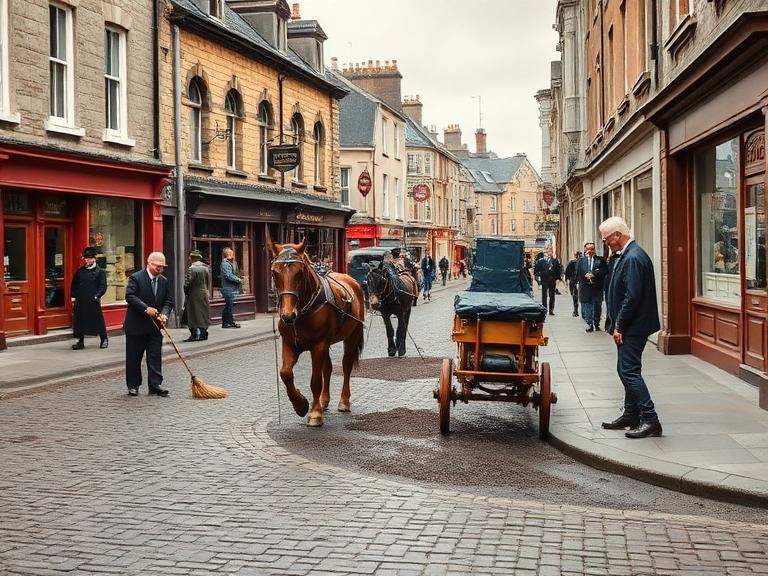
Drainage and cleansing were central concerns because human and animal waste could accumulate rapidly where sewers, yards and refuse removal were inadequate. Blocked drains, overflowing privies, damp dwellings and dirty thoroughfares created conditions in which infectious illness spread easily, particularly among families living in overcrowded accommodation. Water supply required equally close inspection, since contamination could carry disease through entire neighbourhoods. Investigators would need to consider not merely whether water reached the city, but whether its sources, storage, distribution and household use protected public health. The condition of streets and houses could not be separated from the municipal engineering and cleansing services supporting them.

Dairies and slaughterhouses brought food production within the inquiry’s scope. Milk could become contaminated through diseased cattle, unclean vessels, poor drainage or dirty cowsheds, placing infants and families at particular risk. Slaughterhouses created their own hazards when blood, offal and animal waste were handled close to homes or allowed to enter drains and waterways. Inspection therefore involved the health of animals, the cleanliness of premises and the Corporation’s willingness to enforce sanitary regulations against commercial operators. The inquiry promised to examine whether food reaching Limerick households was produced and prepared under conditions compatible with the city’s obligation to protect life.

The extension of the investigation marked a significant intervention in Limerick’s civic affairs, although the announcement itself contained no final findings. It recognised that urban mortality could arise from connected failures involving poverty, housing, water, refuse, food and local administration rather than from one isolated source. Any official recommendations could require new expenditure by the Corporation and its ratepayers, but neglect carried a heavier cost in illness, lost wages and family bereavement. By placing sanitation and food supervision under government scrutiny, the inquiry challenged Limerick’s authorities to demonstrate that public-health responsibilities were being exercised thoroughly throughout the city rather than existing only in legislation and committee reports.

  1. Weekly Irish Times, “London Notes,” 27 January 1900, p. 18.
  2. Local Government Board for Ireland, Report of the Committee Appointed by the Local Government Board for Ireland to Inquire into the Public Health of the City of Dublin, Dublin: Her Majesty’s Stationery Office, 1900.
  3. Public Health (Ireland) Act 1878, 41 & 42 Vict., c. 52.
  4. Registrar-General for Ireland, Thirty-Sixth Annual Report of the Registrar-General of Marriages, Births and Deaths in Ireland, covering 1899, Dublin: Her Majesty’s Stationery Office, 1900.
  5. Limerick Corporation Public Health Services Pre-1960 Collection, L/AH/PH/1, Limerick Archives.
  6. Ruth Quiry, Public Health and Housing in Limerick City, 1850–1935: A Geographical Analysis, MA thesis, Mary Immaculate College, University of Limerick, 2013.
Associated Archives

Health and Medicine in LimerickHealth and Medicine
Politics and Government in LimerickPolitics and Government
Historic News from LimerickHistoric News

Related Articles

190027ThActBoardDairiesDisease

Share Your Thoughts

We welcome your thoughts, memories and local knowledge about this article. Perhaps you recognise a person, place, building or event, remember a related story, or can provide additional names, dates or details. Every contribution helps improve the historical record and may reveal information that would otherwise be lost. Please share your comments, corrections and personal recollections with us, whether they are brief observations or detailed accounts. Your knowledge can help connect families, communities and generations while strengthening Limerick Archives for future visitors. By taking part, you become an important contributor to preserving and sharing Limerick’s history with everyone worldwide today.

Your email address will not be published. Required fields are marked *

Books Supporting the Archive

Profits from every book help fund the continuing preservation, restoration and free public sharing of Limerick’s history.

Cover of Ashes

Ashes

The Ashes Trilogy, Book One

Ashes begins the story of a group of children growing up in the streets and lanes of Limerick, where poverty and hardship are balanced by humour, imagination and fierce friendship. Their city is more than a setting: it watches, remembers and gives voice to lives often absent from official history. As the children explore their neighbourhood, they encounter family pressures, faith, hunger, danger and the first signs of a changing world. Through their adventures and loyalties, the novel captures the resilience of ordinary people and introduces the characters whose lives will unfold across the three volumes of The Ashes Trilogy.

All Books Available As Instant E-Books, Paperbacks & Hardbacks Worldwide.

Cover of Gurriers

Gurriers

The Ashes Trilogy, Book Two

Gurriers continues the lives of the Limerick children introduced in Ashes as childhood freedom begins to give way to work, responsibility and harsher choices. Their friendships remain strong, but poverty, family expectations, faith and the pressures of growing older test loyalties once taken for granted. The streets and lanes still offer humour, adventure and belonging, yet the wider world increasingly intrudes upon their lives. Through vivid dialogue, memorable characters and the watchful voice of Limerick itself, the novel explores resilience, identity and change while showing how even the closest companions can be drawn towards futures by circumstances beyond their control.

All Books Available As Instant E-Books, Paperbacks & Hardbacks Worldwide.

Cover of Scattered

Scattered

The Ashes Trilogy, Book Three

Scattered concludes The Ashes Trilogy as the friends who once shared Limerick’s streets and lanes face adulthood, work, hunger, faith, family duty and emigration. Time has altered their ambitions, tested their loyalties and carried some beyond the city that formed them. Yet memory continues to bind Louie, Seamus, Joe, Sean, Peter, Tony, Bardy, Maura, Eileen, Nora, Lingo and the mysterious Gleamer. Narrated through the enduring presence of Limerick itself, the novel explores separation, sacrifice and survival while recognising the humour and affection that remain. Together, their scattered lives complete a moving portrait of friendship, community and change across changing generations.

All Books Available As Instant E-Books, Paperbacks & Hardbacks Worldwide.

Cover of Threshold

Threshold

The Troubles Trilogy, Book One

Threshold opens in Belfast in 1968, where the Catholic Devlins and Protestant Morrows confront a city divided by religion, memory and fear. Civil rights marches, police violence, riots and internment transform ordinary streets into dangerous frontiers while political conflict enters homes, workplaces and schools. At the centre are Aileen Devlin and Thomas Morrow, whose relationship challenges the boundaries their families regard as essential to survival. As loyalty hardens into suspicion, both must decide whether inherited allegiance excuses injustice. Through family arguments, upheaval and private courage, the novel explores love, conscience, division and survival during the opening years of the Troubles.

All Books Available As Instant E-Books, Paperbacks & Hardbacks Worldwide.

Cover of Hunger

Hunger

The Troubles Trilogy, Book Two

Hunger is Book Two of The Troubles Trilogy, set in Belfast during the 1980s. Aileen Devlin and Thomas Morrow have built a fragile life across the city’s sectarian divide, but the conflict threatens the home they created for their daughter, Claire. As hunger strikes, the Anglo Irish Agreement and violence reshape Northern Ireland, republican Declan and loyalist Billy exploit fear, grief and vulnerable young men. Against them stand Aileen, Kathleen and Elsie, whose quiet strength keeps their families human. This is a story of love, survival and the courage to place people before causes in a divided society under pressure.

All Books Available As Instant E-Books, Paperbacks & Hardbacks Worldwide.

Cover of Crossing

Crossing

The Troubles Trilogy, Book Three

Crossing concludes The Troubles Trilogy during the decade from 1990 to 2000, as Belfast moves from violence towards negotiation, ceasefires and uncertain peace. The Devlin and Morrow families face political change alongside grief, ageing, divided loyalties and the consequences of choices made across three decades. Relationships once threatened by religious boundaries are tested by memory, mistrust and the fear that compromise may betray the dead. As the peace process gathers momentum, ordinary people must decide whether reconciliation is possible. The trilogy closes with a story of endurance, forgiveness, loss and hope beyond inherited division, proving that peace begins with courage.

All Books Available As Instant E-Books, Paperbacks & Hardbacks Worldwide.

Cover of Severance

Severance

Historical Novel

Severance is a historical novel set in Ballingarry, County Limerick, during Ireland’s struggle for independence. A torn and bloodied dispatch passes through fields, kitchens, lofts and hidden routes, placing everyone who handles it in danger. Michael Enright carries the burden of trust, while Mary, Molly and their neighbours struggle to preserve the message and protect one another. Against them, Captain Edward Harcourt studies every delay, wound and fragment for clues. As loyalty, fear and betrayal tighten around the hidden network, ordinary people must decide what they are willing to risk when history enters their homes and silence itself becomes dangerous.

All Books Available As Instant E-Books, Paperbacks & Hardbacks Worldwide.

Cover of Limerick Generations: 1900 to 1909

Limerick Generations

1900 to 1909

Limerick Decalogy, Book One

Limerick Generations: 1900 to 1909 opens the decade by documenting a city and county entering the twentieth century amid political debate, commercial activity, poverty, faith and technological change. Month by month, the book connects major Irish developments with local events, institutions, streets and communities. Public meetings, labour, transport, education, sport, business and everyday life reveal how national questions were experienced in Limerick. Historical reports and carefully reconstructed narratives bring forgotten moments and ordinary people into focus. As Book One of Limerick Decalogy, it establishes the foundation for a ten volume journey through one hundred years of local history and memory.

All Books Available As Instant E-Books, Paperbacks & Hardbacks Worldwide.

Cover of Limerick Generations: 1910 to 1919

Limerick Generations

1910 to 1919

Limerick Decalogy, Book Two

Limerick Generations: 1910 to 1919 traces a decade of political transformation, labour conflict, war, revolution and social change across Limerick city and county. Home Rule, unionist resistance, trade union organisation and the First World War entered streets, farms, schools, workplaces and family life. The Easter Rising, conscription crisis, influenza pandemic and general election altered public loyalties and expectations. The decade culminated in the Limerick Soviet of 1919, when workers challenged military restrictions through organised collective action. As Book Two of Limerick Decalogy, the volume preserves local experiences of hardship, courage, grief, endurance and change during years of intense historic upheaval.

All Books Available As Instant E-Books, Paperbacks & Hardbacks Worldwide.