
Archived: 26 September 2026
Abstract
In 2007, Northern Ireland’s devolved government returned, with DUP leader Ian Paisley and Sinn Féin’s Martin McGuinness jointly heading an Executive, turning power-sharing into practical administration. In the Republic, Bertie Ahern won a third election and formed a coalition with the Greens and Progressive Democrats amid Celtic Tiger prosperity. However, cooling house prices and reliance on construction exposed economic vulnerability. Census results highlighted immigration, changing households and religious diversity, while Irish gained EU official-language status. Corrib gas protests, scrutiny of Ahern’s finances and criminal-justice legislation raised questions of trust and authority. Cultural initiatives and smoke-free rules reflected wider social change.
Read Article

Archived: 26 September 2026
Abstract
In 2006, Ireland’s boom brought record housebuilding, low unemployment, migration and pressure on infrastructure and services. The census recorded 4,239,848 people, with non-Irish nationals comprising about one tenth, reflecting profound social and religious change. Government responded through employment-permit, strategic-planning and social-partnership measures, while the Dublin Port Tunnel opened to improve freight access. In Northern Ireland, the St Andrews Agreement created a route towards restoring devolved power-sharing, although Stormont remained suspended; a Transitional Assembly began preparatory work. The High Court rejected recognition of Katherine Zappone and Ann Louise Gilligan’s Canadian marriage. Europe’s Ryder Cup victory at the K Club projected confidence.
Read Article
Archived: 26 September 2026
Abstract
In 2005, Ireland’s transformation exposed tensions between peace, prosperity and accountability. The Provisional IRA ended its armed campaign and decommissioned its entire arsenal, although Northern Ireland’s devolved institutions remained suspended amid distrust following the Northern Bank robbery and Robert McCartney’s murder. In the Republic, the new Health Service Executive, citizenship rules and Disability Act reflected institutional and demographic change. Celtic Tiger growth, construction and immigration reshaped society, while the Irish Ferries dispute highlighted labour standards. Imprisonment of the Rossport Five crystallised opposition to the Corrib gas project. Cork’s cultural year and Irish’s EU recognition affirmed cultural confidence and European standing.
Read Article
Archived: 26 September 2026
Abstract
In 1991, Ireland combined tentative recovery with political instability and continuing conflict. Dublin’s European City of Culture programme promoted the capital’s contemporary artistic identity, despite criticism of its visibility and reach, and supported Temple Bar’s emergence as a cultural quarter. The Fianna Fáil–Progressive Democrats coalition was strained as Taoiseach Charles Haughey dismissed finance minister Albert Reynolds, replacing him with Bertie Ahern. Fiscal restraint and social partnership reduced borrowing and inflation, but unemployment reached about 14.7 per cent and insecurity persisted, although emigration eased. The IRA’s Downing Street mortar attack underscored the Troubles’ reach, while negotiations continued without a peace breakthrough.
Read Article

Archived: 26 September 2026
Abstract
In 1990, Ireland combined growing international confidence with economic insecurity and continuing Northern conflict. Dublin’s European Community presidency hosted discussions on German reunification and future union, while Italia ’90 inspired nationwide celebration after Ireland reached the World Cup quarter-finals. Nelson Mandela’s visit highlighted Irish anti-apartheid solidarity, and abolition of the death penalty marked legal reform. Economic recovery remained uneven, with unemployment at 12.9 per cent. Northern Ireland saw violence alongside tentative political developments. Mary Robinson’s presidential victory over Brian Lenihan, following damaging controversy, made her Ireland’s first woman president and challenged established assumptions about political authority, gender and public life.
Read Article
Archived: 26 September 2026
Abstract
In 1995, Ireland confronted constitutional, social and political change amid economic growth and cultural confidence. The Government and Britain issued Framework Documents for Northern Ireland, while disputes over paramilitary decommissioning delayed talks; the twin-track initiative and President Clinton’s visit sustained peace-process momentum. In November, voters narrowly approved the Fifteenth Amendment, ending the constitutional ban on divorce subject to conditions. The Supreme Court’s McKenna ruling required state neutrality in referendum campaigns. Legislation permitted regulated information on abortion services abroad and established civil legal aid. Rising employment foreshadowed the Celtic Tiger, while Riverdance and plans for Irish-language television symbolised modernising cultural ambition.
Read Article
Archived: 26 September 2026
Abstract
In 1994 Ireland underwent major political, cultural and economic change. Riverdance, premiered during Dublin’s Eurovision interval, transformed Irish dance into a globally successful expression of modern cultural confidence. The IRA’s August cessation of military operations, followed by an October loyalist ceasefire, reduced organised violence and created opportunities for negotiations, though disarmament, constitutional issues and political participation remained unresolved. Taoiseach Albert Reynolds, influential in advancing the peace process, resigned after the Fianna Fáil–Labour coalition collapsed amid controversy over Brendan Smyth and Harry Whelehan. John Bruton then led a Fine Gael–Labour–Democratic Left coalition. Meanwhile, falling unemployment, investment and exports signalled national recovery.
Read Article
Archived: 26 September 2026
Abstract
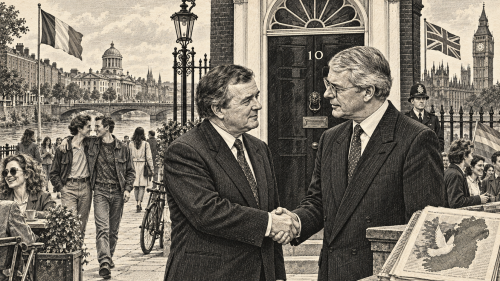
In 1993, Albert Reynolds led Ireland's first Fianna Fáil–Labour coalition, with Dick Spring as Tánaiste and Foreign Affairs Minister, reflecting changing electoral politics. The Criminal Law (Sexual Offences) Act decriminalised consensual sex between adult men, ending Victorian-era provisions after David Norris's campaign and European court ruling. European integration advanced through the single market and Maastricht Treaty's creation of the European Union. Reynolds and John Major's Downing Street Declaration provided a constitutional, peaceful framework for Northern Ireland, despite continuing violence. Unemployment remained 15.7 per cent, but investment, European funding and policy reforms foreshadowed growth, while social divisions and emigration persisted nationally.
Read Article
Archived: 26 September 2026
Abstract
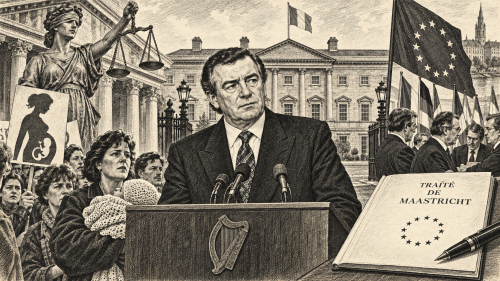
In 1992, Charles Haughey resigned and Albert Reynolds became Taoiseach amid economic hardship and coalition tensions. The X Case, involving a raped fourteen-year-old prevented from travelling for an abortion, led the Supreme Court to permit abortion where a woman’s life faced a real and substantial risk, including suicide. Referendums rejected limiting this ruling but protected travel and information rights. Ireland overwhelmingly approved Maastricht, endorsing European Union membership and deeper integration. November’s election weakened Fianna Fáil, boosted Labour and led to a Fianna Fáil-Labour coalition in 1993. Northern peace talks continued despite violence, laying foundations for later progress in later years.
Read Article
Archived: 26 September 2026
Abstract
In 1983, Ireland confronted constitutional, political and security questions that would echo for decades. Voters approved the Eighth Amendment, inserting constitutional protection for the unborn. Garret FitzGerald’s coalition launched the New Ireland Forum, while Gerry Adams won West Belfast at Westminster. In Northern Ireland, thirty-eight IRA prisoners escaped from the Maze Prison, intensifying debate over security. The kidnapping of supermarket executive Don Tidey ended with two members of the security forces killed during his rescue. Economic recession, unemployment and emigration remained severe. Together, these events made 1983 a year of constitutional change, political realignment, conflict and social strain across Ireland.
Read Article
