Archived: 14 October 2026
Abstract
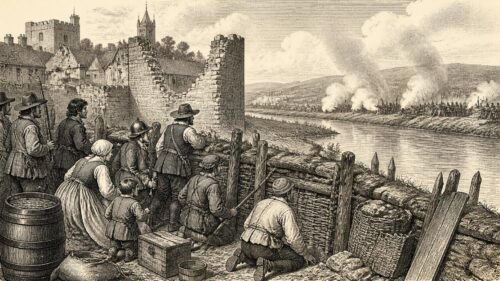
In 1650, the Cromwellian conquest advanced despite continuing resistance in Connacht, Limerick and Ulster. Cromwell’s agreement with Protestant royalists weakened Ormond’s Catholic–royalist coalition. At Clonmel, Hugh Dubh O’Neill’s improvised inner defence repelled a costly assault, although shortages enabled the garrison’s escape and the town’s surrender. Broghill defeated a relief force at Macroom, while Scarrifholis destroyed the Ulster Catholic army and led to Heber MacMahon’s execution. After Cromwell departed, Henry Ireton captured plague-stricken Waterford and Duncannon, pressured Athlone and failed before Limerick. Clergy repudiated Ormond; garrisons, blockade, disease and resource seizures established groundwork for further conquest and settlement in Ireland thereafter.
Read Article

Archived: 16 October 2026
Abstract
In 1620, Longford’s April plantation lease conditions advanced Crown efforts to replace Gaelic landholding with surveyed estates, rents and accountable landlords, while allowing adaptation by established inhabitants. Under Sir Oliver St John and surveyor William Parsons, plantation policy extended beyond Ulster, with Leitrim approved for development. Royal patronage elevated Richard Boyle as earl of Cork and Catholic Gaelic-Scottish Randal MacDonnell as earl of Antrim, binding regional powers to the Stuart state. Bangor gained port status, strengthening Irish Sea links. Church appointments, Catholic continental networks, and Trinity College’s scholars revealed competing yet interconnected religious and intellectual worlds within the post-conquest order.
Read Article

Archived: 17 October 2026
Abstract
In 1591, Tudor authority pressed unevenly upon Gaelic Ireland through military, legal and administrative measures. Brian na Múrtha O’Rourke, lord of West Bréifne, fled to Scotland after invasion, was surrendered to England, tried for treason and executed at Tyburn, demonstrating the crown’s expanding reach. Monaghan’s contested settlement and mass pardons revealed efforts to reorganise lordship and land. Hugh O’Neill’s marriage to Mabel Bagenal intensified Ulster rivalries. Catholic appointments and continental contacts sustained religious networks and official fears of foreign intervention. Annalistic deaths and praise for lords preserved Gaelic values. Although no rebellion began, distrust and dispossession sharpened conditions preceding war.
Read Article
Archived: 18 October 2026
Abstract
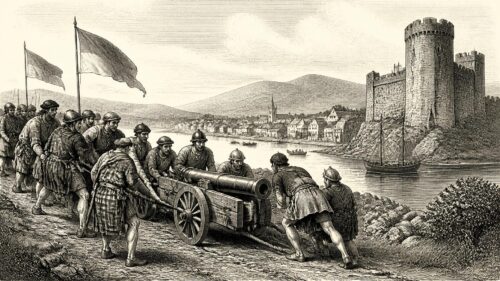
In 1516, Ireland was governed through overlapping royal, Gaelic and urban powers. As Henry VIII’s deputy, Kildare led a coalition that captured Leap Castle, secured hostages and imposed authority in the midlands. In the north-west, Manus O’Donnell obtained French-linked artillery after a pilgrim’s visit to Lough Derg, used it to take Sligo Castle, and later negotiated peace with O’Neill under Dublin’s mediation. Kildare’s Dublin parliament addressed markets, ports, taxation and defence. Religious life, travel and scholarship remained vital: friars drowned on Lough Erne, the Book of Fenagh was completed, and Desmond’s Gaelic lord died amid continuing regional warfare and connections.
Read Article
Archived: 19 October 2026
Abstract
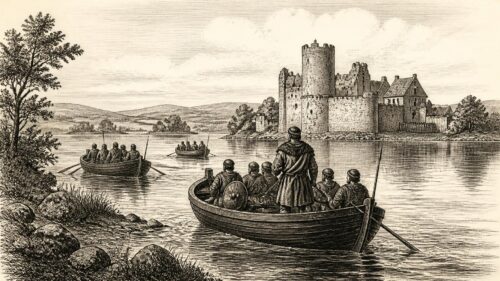
In 1508 Aodh Óg Ó Domhnaill transformed power in Fermanagh by travelling across Lough Erne, capturing Enniskillen castle from Ruaidhrí Mag Uidhir, installing a rival Maguire and taking hostages. His expeditions also reached Lower Connacht, illustrating negotiated, military lordship. Elsewhere, feuds produced killings, raids, castle destruction, exile and attacks around churches, including a St Patrick’s Day defence at Domhnach Mhaighe Dá Chlaoine. Eoghan Ó Ruairc and Margaret O’Brien began the Franciscan friary at Creevelea, demonstrating aristocratic patronage. Annals also record clerical deaths, hospitality and learning. In the Pale, parliament authorised taxation, revealing overlapping Gaelic and English political systems within Ireland.
Read Article
Archived: 20 October 2026
Abstract
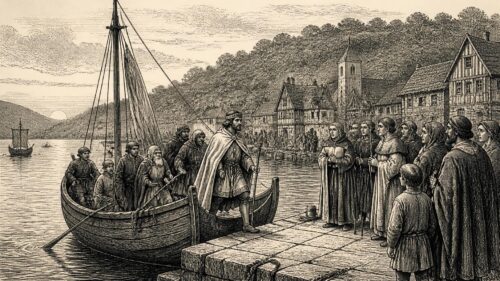
In 1428, Irish annals recorded no single national crisis but interconnected regional events. Aedh Mag Uidhir, a Fermanagh lord returning from pilgrimage to Compostela, died at Kinsale on 11 August and was buried at Cork, illustrating maritime, religious and political links. His death coincided with Maguire dynastic violence, including seizure of his sons’ castle and the killing of Aedh Óg. In Leinster, Donnchadh Mac Murchadha Caomhánach’s ransom, return and cooperation with English authority reflected negotiated power. Deaths of ecclesiastical and local rulers, notably a Mac Conmara chief, reveal hereditary offices, patronage, protection and peace as foundations of Ireland’s diverse lordships.
Read Article

Archived: 23 October 2026
Abstract
For Ireland, 1360 is remembered most clearly through a stark cluster of fires. The Annals of Connacht record “great burnings” at Roscommon, Devenish, Sligo, the monastery of Lisgoole, Fenagh and Drumlease. The entry gives no date within the year, no named commander and no narrative explaining whether these were connected attacks, separate raids, or destruction arising from several local conflicts. That silence matters. It would be unsafe to turn the notice into a single, neatly organised campaign. Yet its geographical reach, from Connacht into Fermanagh and the north-west, makes it an unusually vivid indication of insecurity in a year otherwise
Read Article




