Archived: 30 October 2026
Abstract
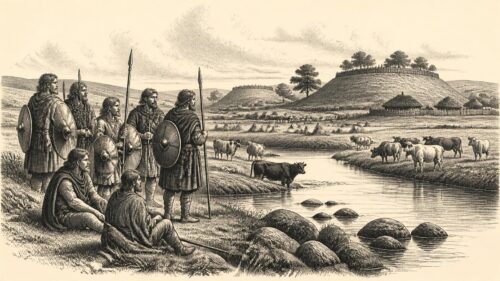
In 781, men of Brega defeated a Leinster force at the battle of the Ríg during Samhain, killing Cú Chongalt, king of Ráith Inbir. Annals name four Bregan leaders and preserve a verse recalling an unwelcome Leinster visit and encampment beside the river. The conflict reflected contested borderlands, dynastic rivalry and pressure from Tara under Donnchad Midi, without proving his involvement. Autumn warfare affected farming, tribute, livestock and local authority. Society remained rural, bound by clientship and ecclesiastical institutions. The evidence records no Viking activity, permanent conquest, or precise location, illustrating both the political significance and limits of surviving sources.
Read Article
Archived: 30 October 2026
Abstract
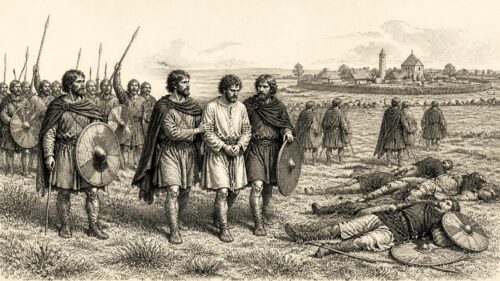
In 782, Ruaidrí son of Fáelán defeated his cousin Bran son of Muiredach at the Curragh near Kildare, killing allies including Mugrón of Uí Fhailgi and capturing Bran. The Leinster struggle involved rival Uí Dúnlainge branches and allied regional interests, amid wider pressure from Donnchad Midi of Tara, Bran’s father-in-law. In Connacht, King Artgal son of Cathal adopted the pilgrim’s staff, declaring a journey to Iona for the following year. Annals also record numerous ecclesiastical deaths, illustrating monastic administration and influence. Careful chronology is essential, since Four Masters entries are misdated; 782 reveals clearly intertwined dynastic, religious and maritime connections.
Read Article

Archived: 30 October 2026
Abstract
In 783, Irish annals recorded political rivalry, regional warfare, ecclesiastical change and royal deaths across a connected but divided island. Donnchad, southern Uí Néill ruler, and Fiachna of Ulaid met at Inis na Ríg, yet neither would enter the other’s sphere, exposing limits to high-kingship. Battles occurred among northern Uí Néill groups and at Carn Conaill in Connacht, while Áth Truim was burned. Church leaders died, including Flann of Inis Caín Dega, killed by poison; Dúnchad of Uí Maine adopted religious observance. Relics reached Tailtiu, demonstrating ecclesiastical authority and mobility. The notices reveal shifting local power rather than unified rule.
Read Article
Archived: 30 October 2026
Abstract
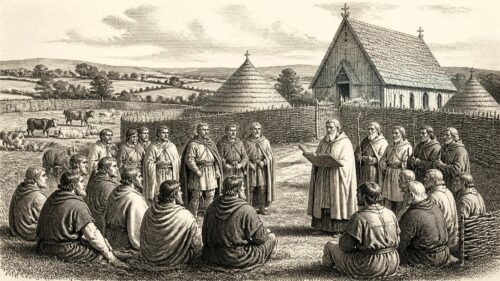
In 784, the Annals of Inisfallen record that the Law of Ailbe operated throughout Munster, indicating a provincial ecclesiastical settlement backed by saintly and likely secular authority. No surviving text identifies its rules, sponsors or proclamation, but such cána could protect churches, regulate obligations, secure revenues and reinforce peace. The measure reflected Emly’s importance and Munster’s contested kingship, without proving any specific ruler’s involvement. Notices of abbots’ deaths at Clonmacnoise and Terryglass reveal interconnected religious institutions. On 27 November, Irish-born Virgil of Salzburg died, demonstrating Irish ecclesiastical influence abroad. Together, these events illuminate sacred authority, political negotiation and rural obligations.
Read Article
Archived: 30 October 2026
Abstract
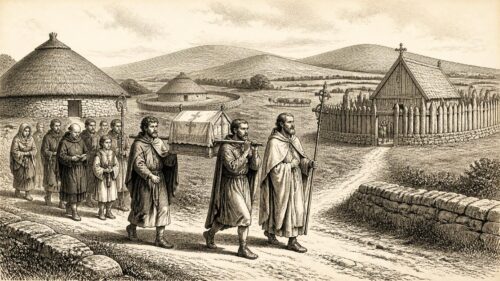
In 785, annalistic records noted political and ecclesiastical transitions across a divided, predominantly rural Ireland. Ruaidrí mac Fáeláin, Leinster overking, died, creating opportunities later exploited by Donnchad Midi and Bran Ardchenn. Máel Dúin of Loch Gabor and Dúnchad of Uí Maine also died, while Tipraite won an otherwise unexplained battle of the Muad. Relics of Ultán were carried on circuit, demonstrating mobile saintly authority and church patronage. Deaths included abbots, learned clerics, a scribe and Abbess Ellbríg. The notices reveal interconnected royal and religious networks, although they preserve little about ordinary people, chronology, motives, warfare, or material conditions in detail.
Read Article
Archived: 30 October 2026
Abstract
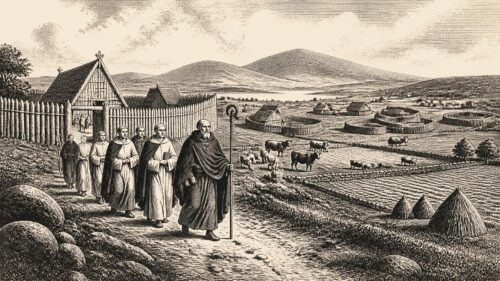
In 786, annalistic evidence depicts Ireland as politically fragmented but connected by ecclesiastical networks. In Connacht, the Uí Briúin were defeated at Gola, while the Uí Fhiachrach of Muirisc killed Flaithgal of Umall and his nobles; Tipraite of Connacht and Conall of Uí Maine also died. In the north, Máel Dúin of Cenél nEógain defeated and expelled Domnall of Cenél Conaill. Dub dá Bairenn, abbot of Clonard, visited Clonard’s Munster ecclesiastical sphere. Deaths among abbots, bishops, scholars and ascetics, notably at Kildare, underline church institutions’ importance. They nonetheless show clearly volatile local lordship, rural dependence, and durable religious authority throughout.
Read Article
Archived: 30 October 2026
Abstract
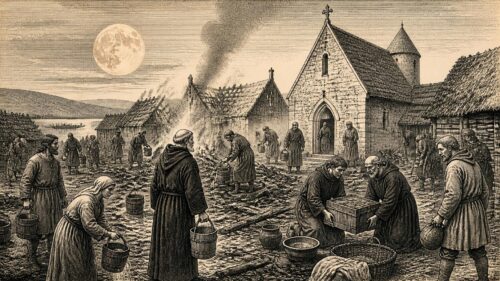
In 787, Irish annals record the death of Máel Dúin, king of In Fochla, creating a transition within the Cenél nÉogain dynasty rather than a national succession. In Connacht, Ciarán of Clonmacnoise’s law was proclaimed, extending ecclesiastical authority and protections with secular support after unrest. Deaths of abbots and bishops at several churches illustrate religious institutions managing land, learning and ritual. Daire Calgaid, probably Derry, suffered a fire of unknown cause. Annalists also noted a blood-red Moon on 18 February, preserving a celestial observation without establishing its explanation. These entries reveal intertwined political, religious and authority in early medieval Ireland.
Read Article
Archived: 30 October 2026
Abstract
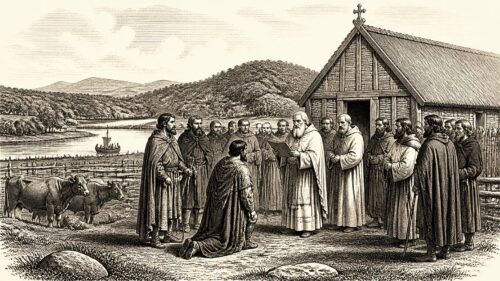
The most consequential Irish notice securely placed in 788 is not a battle or a royal accession, but a brief statement of authority: “Ciarán’s law in force in Connacht.” In an island divided among many kingdoms, dynasties and ecclesiastical federations, such a line signals a major public act. It points to the standing of the saint of Clonmacnoise, to the ability of Connacht’s rulers and clerics to cooperate, and to the practical value of religious protection in a society where cattle, tribute, land and people were vulnerable to seizure. Dating the Year Carefully Medieval Irish annals require particular care with
Read Article
Archived: 30 October 2026
Abstract
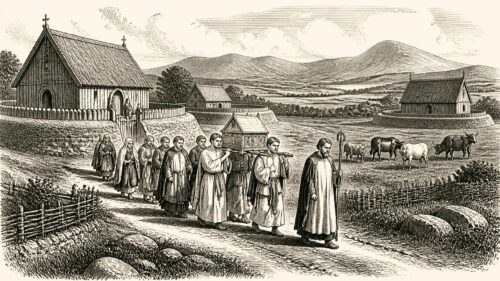
The Irish annal entered under AD 789 in the modern edition of the Annals of Ulster presents a country of intensely local politics, powerful churches and fragile material settlements. Its internal annal number is U790, a reminder that early Irish chronologies require care; nevertheless, the editor’s calendar heading places the cluster of notices considered here in 789 CE. The record does not describe one national event. Instead it preserves sharp glimpses from Connacht, Ulster, Leinster, Munster and the Dublin region: a battle at Áth Rois, deaths among kings and abbots, a major killing in the north-east, a church burned, and,
Read Article
Archived: 30 October 2026
Abstract
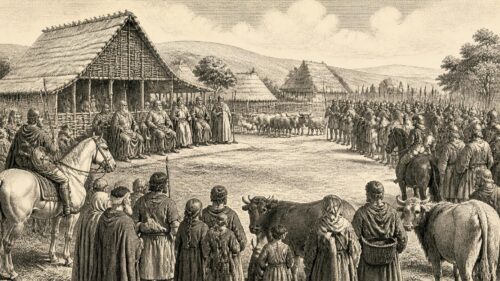
In 790, recorded in the Annals of Ulster under a chronologically disputed heading, Donnchad Midi of Clann Cholmáin defeated Áed Ingor of Cenél nÉogain at Tailtiu, the prestigious Uí Néill assembly site. Allies from Uí Chremthainn died with Áed’s force, demonstrating complex political connections. Diarmait of Tethba was killed at Ard Ablae, while regional kings of Uí Maine and Airthir also died. Obituaries marked leading clerics’ deaths across major churches, and Connacht’s king Artgal died at Iona. Rural farming, ecclesiastical estates and assemblies underpinned society. No securely dated Viking raid belongs to this year; indigenous rivalry dominated political life throughout.
Read Article
