Archived: 30 October 2026
Abstract
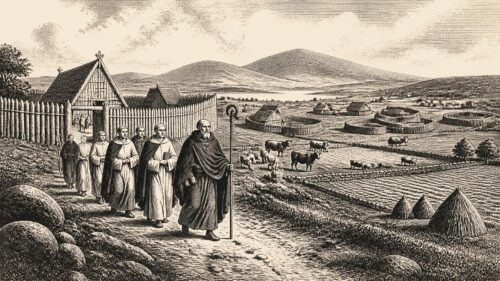
In 786, annalistic evidence depicts Ireland as politically fragmented but connected by ecclesiastical networks. In Connacht, the Uí Briúin were defeated at Gola, while the Uí Fhiachrach of Muirisc killed Flaithgal of Umall and his nobles; Tipraite of Connacht and Conall of Uí Maine also died. In the north, Máel Dúin of Cenél nEógain defeated and expelled Domnall of Cenél Conaill. Dub dá Bairenn, abbot of Clonard, visited Clonard’s Munster ecclesiastical sphere. Deaths among abbots, bishops, scholars and ascetics, notably at Kildare, underline church institutions’ importance. They nonetheless show clearly volatile local lordship, rural dependence, and durable religious authority throughout.
Read Article
Archived: 30 October 2026
Abstract
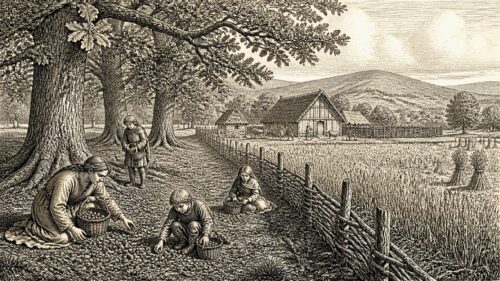
In 773, securely dated by a December lunar eclipse, Ireland experienced exceptional drought and heat, causing widespread failure of staple bread-grain. Abundant oak-mast, or acorns, offered limited relief, particularly through pig fodder, but did not erase subsistence pressures. Donn Cothaid, king of Connacht, died, prompting a dynastic transition later associated with Flaithrí of the Uí Briúin. Annals also recorded deaths of Maenach of Sláine, scribe Dainél of Letuba, several abbots and bishop Aedán, Lerthan, abbess of Kildare, and Áed of Rechru. These notices reveal interconnected environmental, political and ecclesiastical vulnerabilities, while preserving only limited detail about local consequences for communities.
Read Article
Archived: 30 October 2026
Abstract
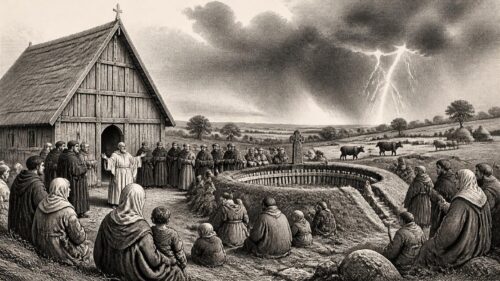
In annalistic year 771, Donnchad mac Domnaill, king of Tara, led a hosting to Cnoc Báine, probably in modern County Tyrone, demonstrating authority rather than recording a confirmed victory. The annals also note killings of Conchobor and Connacht rulers Áed Aithgein of Uí Maine and Art of Aidne. The law of saints Comán and Aedán was renewed across the three Connachts, illustrating church and secular collaboration. A severe Michaelmas thunderstorm prompted widespread fasting. Deaths included ecclesiastics from Clonard and Cluain Eidnig, and Suibne, abbot of Iona. Chronological discrepancies among later annals require caution when assigning additional events to this year.
Read Article
Archived: 30 October 2026
Abstract
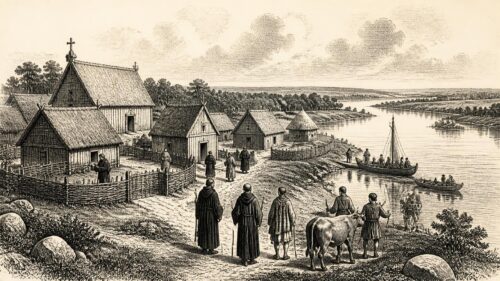
Conventionally dated to 768, the annals record transitions rather than a national crisis in Ireland. Dub Innrecht, Uí Briúin king of Connacht, died from bloody flux, creating an undocumented succession question but not evidence of epidemic or civil war. Ecclesiastical leadership changed with the deaths of Aedán of Lismore, the senior abbot at Clonmacnoise, Fer dá Crích son of Suibne at Armagh, and Coibdenach of Cell Tóma. Eithne of Brega, styled queen of Tara’s kings, was praised for penance. These selective notices illuminate intertwined dynastic, religious and economic authority in a rural, fragmented Ireland connected to Britain through learned networks.
Read Article
Archived: 30 October 2026
Abstract
In annalistic year 766, Ireland’s fragmentary records reveal political rivalry and ecclesiastical links. Folloman, king of Mide, was treacherously killed after supporting Donnchad Midi, while fighting between Mide and Brega claimed Máel Uma and Donngal. In Connacht, Dub Innrecht’s Uí Briúin defeated the Conmaicne at Sruthair, killing many, including Áed Dub. In Munster, Uí Fhidgeinte and Araid Cliach defeated Máel Dúin at Énboth Breg. Crimthann, abbot of Clonfert, died, and Suibne, abbot of Iona, visited Ireland. These notices depict competing dynasties, powerful churches, and Irish Sea connections, while leaving ordinary life largely unrecorded and offer no evidence of Viking raids.
Read Article
Archived: 31 October 2026
Abstract
In 758, Irish annals record regional political and ecclesiastical transitions rather than an island-wide crisis. At Druim Róbaig in Connacht, Uí Briúin defeated Uí Fhiachrach; Ailill grandson of Dúnchad prevailed, while Tadc son of Muirdibur and three grandsons of Cellach were killed. Deaths included Niallgus, king of the Déisi of Brega, Cathal of Uí Chennselaig, and Aed of the Ciannachta. Céile Petair, abbot of Armagh, and Marthu, abbess of Kildare, also died. These notices reveal Ireland's regional lordships, kin-based succession and influential churches, while their selectivity precludes claims about nationwide conditions, causes, or outcomes beyond the sparse surviving evidence available.
Read Article
Archived: 31 October 2026
Abstract
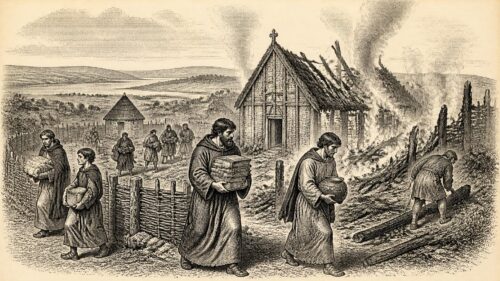
For Ireland in 756, the annals offer no single, all-embracing story. Instead, they preserve a sharp cluster of incidents: the burning of the great church settlement of Bangor on St Patrick’s Day; a military expedition which brought Leinster forces into Mag Muirthemne; the death of a Connacht overking; fighting in the midlands and Connacht; and a catastrophic wreck on Lough Ree. Read together, these terse notices reveal an island in which kingship, ecclesiastical authority and movement by water were all deeply consequential. They also demand care. Medieval annals did not record every event, and they often give outcomes without causes.
Read Article
Archived: 1 November 2026
Abstract
In the political moment around 744, Irish annals record regional deaths, warfare and the close alliance of kingship and church authority. Ardgal, king of Éile, died, while bishops and ecclesiastical leaders including Laidcnén of Saigir and Colmán of Lesán were killed. Conflicts claimed Conchobor of Uí Fhidgente and other elites, and the Déisi defeated Corcu Mo-Druad. Most significantly, Forggus son of Cellach, Uí Briúin king of Connacht, jointly enforced the laws of Saints Ciarán of Clonmacnoise and Brénainn of Clonfert, securing ecclesiastical rights through royal power. Differing annalistic chronologies place much of this cluster in 743 or 744. Sources differ.
Read Article
Archived: 2 November 2026
Abstract
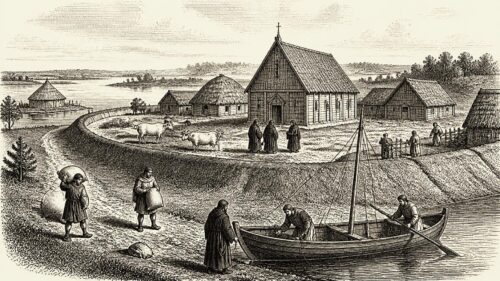
In 683 CE, Ireland’s surviving annalistic record places political violence, contested provincial authority and the first reported onset of a grave mortality within the same year. The entries are terse, but their conjunction is striking: Dúnchad Muirisce, king of Connacht, was killed; Colgu, son of the former Tara ruler Blathmac, fell in the battle of Corann alongside Fergus, king of Cenél Cairpri; two strongholds were besieged; and, in October, a disease described as the “mortality of children” began. For a society whose history was usually recorded through the fates of rulers, clerics and religious houses, this last notice points beyond
Read Article
Archived: 2 November 2026
Abstract
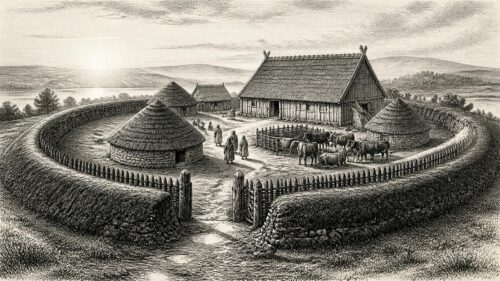
In 682 CE, the clearest Irish event is the killing of Cenn Fáelad son of Colgú, styled king of Connacht in the annals. The Annals of Ulster preserve the event in a terse entry; the related Annals of Tigernach and Chronicon Scotorum name his killer as Ulcha Derg, grandson of Caillide, of the Conmaicne Cúile. Tigernach adds the vivid but limited detail that Cenn Fáelad was slain after the Conmaicne had stormed his house. It is the year’s central fact: a provincial king died violently in his own residence, not in a named pitched battle. The sources provide neither a
Read Article
Archived: 2 November 2026
Abstract
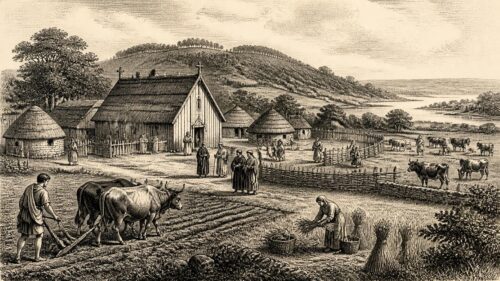
In 681 CE, Ireland’s surviving annalistic record preserves three securely associated notices: the killing of Cenn Fáelad, described as king of Connacht; a battle at Ráith Mór in Mag Line against Britons, in which Cathasach, king of the Cruithin, was killed; and the death of Suibne, superior of Corcach. These are short entries, but they reveal a political world in which royal authority remained precarious, conflict crossed the narrow seas, and ecclesiastical communities were led by figures important enough to be entered beside kings and battles. The evidence must be handled carefully. The Annals of Ulster place these items under
Read Article
Archived: 2 November 2026
Abstract
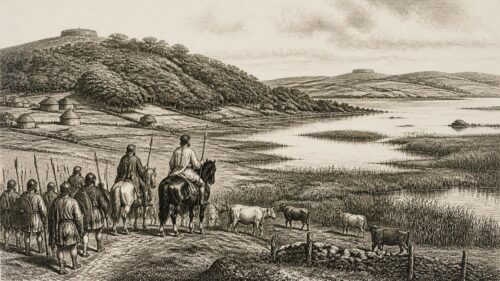
In 665 CE, Ireland stood in the shadow of a grave mortality while conflict still continued between powerful regional groups. The clearest event placed directly in this calendar year is the battle of Loch Fén, recorded by the Annals of Inisfallen as a fight between the men of Munster and Connacht in which Talamnach, son of Laidcenn, was killed. The notice is stark: it supplies neither a victor nor a cause. Yet its very brevity is revealing. Even amid epidemic loss, kings and war-bands remained able to mobilise, cross regional boundaries and contest territory or political influence. The battle also
Read Article
Archived: 2 November 2026
Abstract
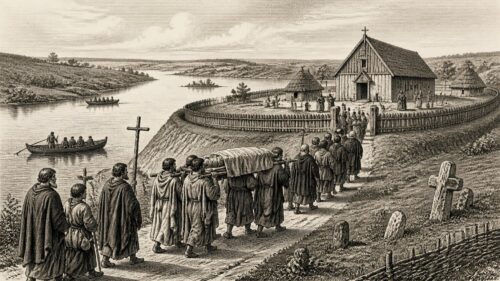
In 663 CE, Ireland’s annalistic record is dominated not by a famous battle or a royal inauguration, but by deaths: above all that of Guaire Aidne, remembered as king of Connacht, and by the loss of senior churchmen at Bangor and Ferns. The year is a useful reminder that early Irish history is often preserved in short, retrospective notices rather than continuous narrative. Those notices nonetheless reveal a society in which royal standing, kinship, monasteries and burial places were tightly interwoven. They also require care over dating. The Annals of Ulster preserve these notices under U663, while their internal year-equivalent
Read Article
Archived: 3 November 2026
Abstract
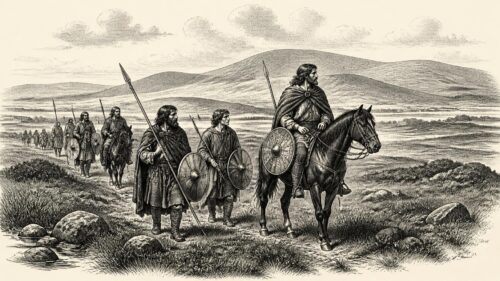
In 649 CE, Irish annalistic tradition places two violent political reversals in Connacht: the killing of Raghallach mac Uatach, described as king of Connacht, and the defeat of Guaire of Aidne by Diarmait mac Áedo Sláine at the battle of Carn Conaill. These were not incidents in the history of a unified Irish state. Ireland was divided among numerous peoples, dynasties and client kingdoms, while ambitious rulers sought influence through raiding, alliance, tribute and control of ecclesiastical centres. Yet the events associated with this year reveal how quickly local conflict could draw in rulers from across the island, and how
Read Article





