
Archived: 12 October 2026
Abstract
In 1772, George Townshend’s departure and Simon Harcourt’s arrival as Lord Lieutenant altered Dublin Castle’s leadership without changing Ireland’s dependence on British imperial authority or its patronage-based, unrepresentative parliament. Ulster’s Hearts of Steel protest exposed rural insecurity over rents, leases, taxes and evictions; government answered with troops, targeted legislation and a later pardon, rather than structural reform. Parliament granted Catholics restricted long-term leases of bog land, a limited economic concession preserving wider penal disabilities. The London-Derry Journal’s foundation and revived siege commemoration illustrated print’s growing civic role. Meanwhile, linen, improvement and institutions coexisted with inequalities in land, religion and power.
Read Article
Archived: 12 October 2026
Abstract
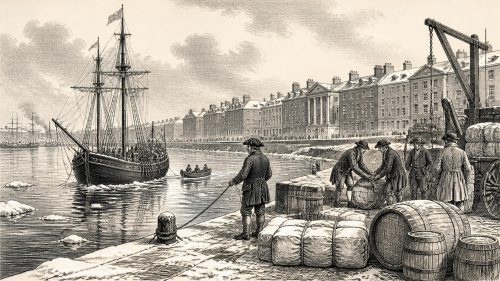
In 1770, Ireland was governed during Parliament’s prorogation as Lord Townshend used patronage to weaken parliamentary undertakers and strengthen Dublin Castle. Westminster sustained bounties supporting Irish linen, while the Dublin Society promoted economic improvement. Quarantine regulations monitored shipping routes and goods amid fears of plague. In December, authorities embargoed provision-laden vessels, reflecting concern over supplies without proving famine; butter received exemption in 1771. Catholic and Presbyterian exclusion, landlord power and dependence on agriculture and exports persisted. Trinity’s College Historical Society began meeting, while Burke and Goldsmith published works. The year reveals an unequal kingdom managed through law, commerce and patronage.
Read Article
Archived: 12 October 2026
Abstract
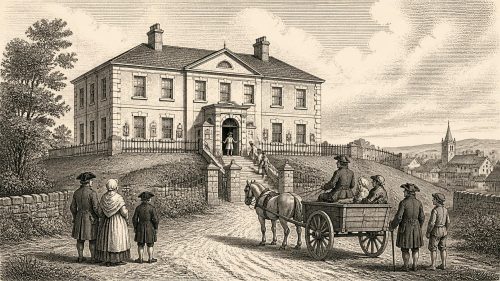
In 1754, Ireland’s unresolved dispute over public revenue sharpened conflict between the Irish Commons, Dublin Castle and Britain, despite Parliament’s restricted Protestant character. At Dublin’s Smock Alley Theatre, a performance of Mahomet provoked a political riot, damaging the theatre and forcing manager Thomas Sheridan’s departure. Days later, Dillon, Ferrall and Company failed, exposing the fragility of private banking and commercial credit. At Navan, the County of Meath Infirmary, supported by subscription, began providing modest organised care for poor patients. The year also saw notable improvement projects, historical and commercial print, and the death of Irish-language poet Seán Clárach Mac Domhnaill.
Read Article

Archived: 12 October 2026
Abstract
In 1750, George II chartered the Dublin Society for Promoting Husbandry and Other Useful Arts, formalising an elite-led body that encouraged agricultural, industrial and artistic improvement through premiums, advice and practical education. Its drawing-school association, though imprecisely dated, reflected efforts to train craftsmen. In December, the Duke of Dorset returned as lord lieutenant, reshaping political expectations before later conflicts over revenue and executive authority. Charles Lucas, writing from London, advanced civic arguments in print. Beneath these institutional developments lay restricted representation, Anglican privilege, penal disabilities, unequal commerce and rural insecurity, despite population growth, agricultural adaptation, and Ulster’s expanding linen economy.
Read Article

Archived: 12 October 2026
Abstract
In 1749, Irish tensions appeared in political print, official measures, economic debate and religious conflict. Dublin apothecary Charles Lucas used The Censor and civic addresses to challenge municipal corruption, defend Protestant constitutional rights and question Dublin Castle’s authority. Parliament denounced his publications as seditious, ordered his arrest, and forced his flight. Government proclamations addressed quarantine, coin clipping and rural crime, reflecting administrative reliance on local institutions and military power. Thomas Waite’s account emphasised linen, restricted woollen trade and military spending, while improvement schemes favoured elite direction. In Cork, Charles Wesley’s Methodism provoked unrest, exposing intersecting confessional, civic and social rivalries.
Read Article
Archived: 13 October 2026
Abstract
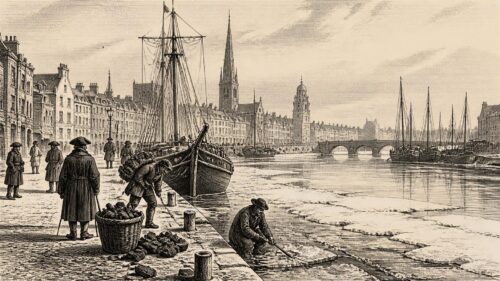
In 1739, Ireland’s unequal political and social order faced mounting pressures from justice, taxation, war, religious discrimination, infrastructure and weather. Lord Santry’s conviction for murdering Laughlin Murphy demonstrated aristocratic accountability but also privilege, as petitions later secured his pardon. Parliament raised duties to support imperial needs, while Britain’s war with Spain affected trade and prompted renewed Catholic disarmament; Catholic petitioners sought secure leases. The Dublin Society promoted flax, linen and road improvements, though storms revealed vulnerable bridges, mills and transport. After a wet summer disrupted harvests and turf cutting, severe frost soon arrived in late December, foreshadowing 1740–41’s catastrophic famine.
Read Article

Archived: 13 October 2026
Abstract
In 1738, Ireland experienced a wet, delayed farming season, documented in Cathal Ó Conchubhair’s Irish-language diary through delayed harvests and turf work, exposing rural dependence on weather, fuel and mixed crops. Samuel Madden urged Protestant landlords to promote estate management, agriculture, flax, education and manufacture, though his improvement scheme preserved inequalities. Parliament remained prorogued while government addressed robbery through proclamations and rewards. The deaths of harper Turlough O’Carolan and Dublin educator Thomas Sheridan marked losses. Roxborough Castle’s construction and Richard Montgomery’s birth reflected investment and Protestant Atlantic opportunities. The year revealed social division, economic ambition and environmental vulnerability without famine.
Read Article
Archived: 13 October 2026
Abstract
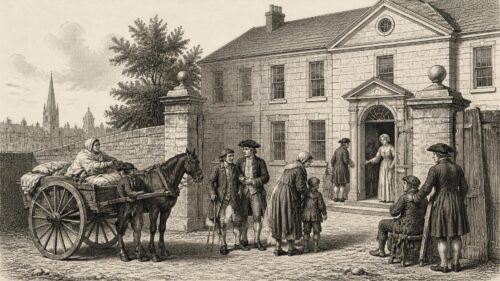
In 1733, Ireland experienced influenza, financial insecurity and institutional change centred on Dublin. Dr Steevens’ Hospital opened, providing treatment for workers while imposing rules of admission and patronage. Ben and Samuel Burton’s bank collapsed, exposing dependence on credit. Parliament returned, raised revenue duties and elected Henry Boyle Speaker, while proclamations targeted smuggling and disorder. George II chartered the Protestant charter-school society to educate and convert poor Catholic children. The Dublin Society promoted agriculture, minerals and manufactures. Cultural life included Samuel Madden’s fiction, the death of Irish-language poet Séamas Dall Mac Cuarta, Richard Kirwan’s birth, and architect Edward Lovett Pearce’s death.
Read Article

Archived: 13 October 2026
Abstract
In 1731, Dublin witnessed institutional developments that illuminated eighteenth-century Ireland’s unequal political and social order. Thomas Prior, Samuel Madden and fellow Protestant elites founded the Dublin Society to promote agriculture, manufactures and useful knowledge, creating a forum for economic improvement. In October, the Irish parliament first met in Edward Lovett Pearce’s Parliament House on College Green, a grand but constitutionally constrained home for a legislature representing Protestants alone. Its session considered regulation and transport, including roads. Meanwhile, the Lords’ hostile inquiry into popery documented enduring Catholic worship, clergy, schools and religious communities, exposing the narrow social base of Protestant rule.
Read Article




