Archived: 4 October 2026
Abstract
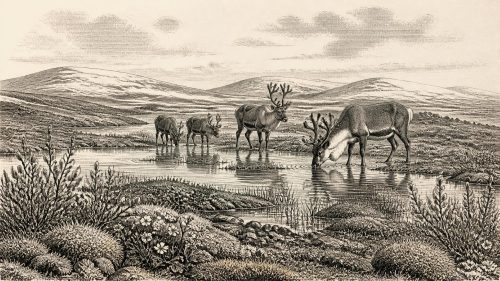
Thirty thousand years BCE cannot identify a known Irish event, but falls within the broad calibrated age of Derryvree’s freshwater silts in County Fermanagh. Deposited between glacial tills, these sediments record a temporary ice-free, treeless periglacial wetland containing dwarf willow, mountain avens and aquatic plants. They demonstrate regional climatic change rather than island-wide conditions. Castlepook Cave, County Cork, preserves late-Pleistocene fauna, including reindeer, mammoth, bear, fox, hare, lemming and hyaena, though its deposits are chronologically complex. A cut-marked reindeer bone may indicate Upper Palaeolithic butchery, but cannot prove settlement. Disturbance, incomplete records and uncertain dates leave Ireland’s human presence unresolved.
Read Article
Archived: 1 October 2026
Abstract
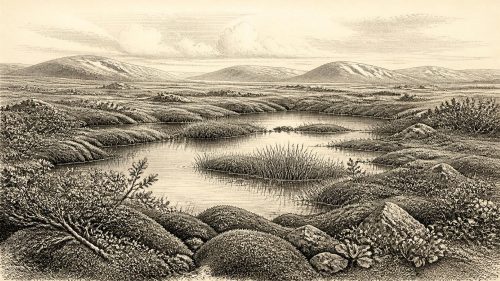
Around 30,430 BCE, Ireland is known only through broad calibrated ranges and fragmentary environmental evidence. At Derryvree, County Fermanagh, freshwater silts between glacial tills show that ice retreated long enough for tundra wetland communities to develop. Pollen, plants and insects indicate treeless ground with grasses, sedges, dwarf willow, arctic-alpine flora and aquatic pools, before later ice returned. Castlepook Cave, County Cork, preserves mixed Middle and Late Pleistocene fauna, including mammoth, reindeer, giant deer and predators, demonstrating cold-stage habitats. A possibly cut-marked reindeer bone suggests brief human visits, but no secure evidence supports settlement, culture or permanent occupation in this period.
Read Article
Archived: 28 September 2026
Abstract
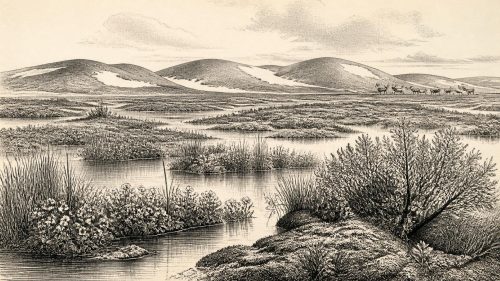
Circa 30,539 BCE, Ireland lay within the volatile Late Pleistocene, but the date represents a broad calibrated range rather than a recorded year. At Derryvree, County Fermanagh, freshwater sediments between glacial tills preserve evidence of a tundra wetland, including buckbean, dwarf willow, sedges, mosses and aquatic plants, demonstrating an interval between ice advances. Castlepook Cave, County Cork, contains remains of cold-adapted mammals, although accumulated across long periods. A cut-marked reindeer bone may indicate human butchery around 33,000 years ago, but cannot prove settlement. The evidence depicts environmentally dynamic Ireland, with uncertain access, no agriculture, institutions or securely established human population.
Read Article

Archived: 27 September 2026
Abstract
30,560 BCE is not a precise recoverable Irish historical year but a broad Late Pleistocene horizon within Marine Isotope Stage 3. At Derryvree, County Fermanagh, freshwater organic sediments between glacial tills record an ice-free interval before renewed glaciation. Radiocarbon dating provides only a wide calibrated range. Mosses, sedges, dwarf willow, aquatic plants, pollen and insects indicate cold, treeless, wet, open terrain with pools and short growing seasons. Comparable sites demonstrate regionally varied ice activity. Southern cave fauna confirms wider Pleistocene mammals, though not contemporaneity. No secure evidence identifies humans, settlements, agriculture or institutions then; Ireland’s earliest human activity is later.
Read Article

Archived: 26 September 2026
Abstract
30,635 BCE is a modern label, not a date tied to an Irish event. During unstable Marine Isotope Stage 3, Ireland’s evidence is environmental and fragmentary. At Derryvree, County Fermanagh, organic freshwater sediments beneath tills, dated BIRM-166 to about 30,500 radiocarbon years BP, record a cold, treeless wetland between ice advances, with dwarf willow, sedges, mosses and aquatic life. Castlepook Cave, County Cork, preserves a long, re-dated assemblage of mammoth, giant deer, reindeer and predators. A possibly tool-marked reindeer bone suggests unconfirmed human visitation. Shifting ice, coastlines and uncertain routes preclude claims of settlement, land bridges or precise island-wide conditions.
Read Article

Archived: 26 September 2026
Abstract
Around 30,662 BCE, Ireland cannot be described through annual events or recorded communities, but through uncertain environmental evidence. At Derryvree, County Fermanagh, freshwater sediments and organic deposits between two glacial tills reveal a local ice-free interval during Marine Isotope Stage 3. Macrofossils indicate cold, wet, treeless terrain of pools, sedges, dwarf willow and sparse tundra-like vegetation. Lower sea levels altered coasts, although land connections remain unproven. Castlepook Cave’s fauna demonstrates that large mammals occupied suitable habitats, but its mixed deposits cannot date a single landscape. A possibly cut-marked reindeer bone suggests fleeting human visits, not established settlement, society or polity.
Read Article

Archived: 25 September 2026
Abstract
At the nominal date of 30,684 BCE, Ireland lay within the climatically unstable Late Pleistocene Marine Isotope Stage 3. Derryvree in County Fermanagh preserves freshwater silts between glacial tills, indicating a locally ice-free interval during the Midlandian glacial cycle. Radiocarbon evidence dates these deposits broadly, not to a single year. Its wetland supported tundra vegetation, including dwarf willow, bogbean, sedges and mosses, alongside cold-adapted insects. Cave faunas elsewhere demonstrate Irish Late Pleistocene ecosystems containing mammals such as reindeer, mammoth and predators. No secure human settlement or occupation is known; a marked reindeer bone from Castlepook only suggests possible human activity.
Read Article

Archived: 24 September 2026
Abstract
Approximately 30,748 BCE falls within a broad, uncertain later MIS 3 chronology, not a datable Irish year. Derryvree, near Maguiresbridge, preserves freshwater silts and plants beneath and between tills, showing that Fermanagh experienced an ice-free wetland interval before glaciation. Dwarf willow, sedges, bogbean and other fossils indicate treeless, periglacial terrain with pools, mosses and sparse vegetation. Cave finds show intermittent presence of cold-adapted mammals, including reindeer, mammoth and giant deer, although remains derive from differing periods. A marked Castlepook reindeer bone may evidence human butchery, but cannot prove settlement. Ireland was undergoing uneven ice-sheet expansion, while human history remains unrecoverable.
Read Article

Archived: 21 September 2026
Abstract
Labelled 30,977 BCE, this poorly dated period belongs to Marine Isotope Stage 3, before Ireland’s Last Glacial Maximum. Evidence consists of environmental deposits, faunal remains and radiocarbon measurements rather than historical records. At Derryvree, County Fermanagh, freshwater sediments beneath glacial till reveal a cold, treeless, waterlogged tundra-like wetland containing grasses, sedges, dwarf willow and aquatic plants. Castlepook Cave, County Cork, yielded mammoth, reindeer, giant deer, predators and cold-climate fauna, indicating open landscapes and intermittent wider connections. A possibly cut-marked reindeer bone suggests fleeting human activity, but proves neither settlement nor society. Ice was expanding regionally, not yet uniformly covering Ireland.
Read Article
Archived: 20 September 2026
Abstract
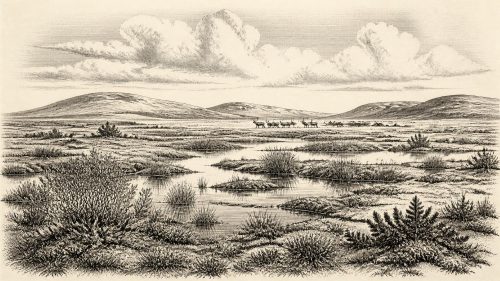
Around 31,098 BCE, a modern approximation within Marine Isotope Stage 3, Ireland experienced unstable Late Pleistocene conditions before the Last Glacial Maximum. At Derryvree, County Fermanagh, organic sediments between glacial tills preserve evidence of an ice-free, treeless wetland with sedges, grasses, dwarf willow, mosses, pools and cold-adapted insects. Castlepook Cave, County Cork, records reindeer, mammoth, giant deer, bears, wolves, hyaenas and other fauna, though its mixed deposits cannot represent one community. These sites show varied open habitats amid growing glacial influence. Human presence remains unproven: a possible butchered bone is inconclusive, while secure evidence dates much later in caves there.
Read Article
Archived: 18 September 2026
Abstract
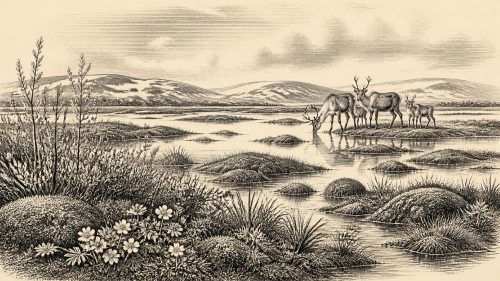
About 31,276 BCE, Ireland lay within the unstable later Marine Isotope Stage 3, not a datable historical year. Derryvree, County Fermanagh, preserves freshwater sediments between glacial tills, indicating an ice-free tundra wetland with sedges, grasses, dwarf willow, mountain avens, bogbean, water-milfoil and cold-adapted insects. Other northern deposits suggest recurrent open conditions. Castlepook Cave fauna indicates large mammals, including mammoth, reindeer and giant deer, but complex deposits limit precise dating. Ice was expanding before the Last Glacial Maximum. A possibly cut-marked reindeer bone suggests fleeting human presence, not settlement. Evidence supports a changing, resource-bearing landscape, while excluding claims of organised society.
Read Article

Archived: 17 September 2026
Abstract
Around 31,426 BCE, Ireland’s history is environmental rather than political. Derryvree, County Fermanagh, preserves freshwater organic sediments between glacial tills, indicating a cold, treeless, periglacial wetland with dwarf willow, bogbean, sedges, mosses and shallow pools. Its broad radiocarbon range prevents precise annual reconstruction. Climatic conditions during Marine Isotope Stage 3 fluctuated sharply, while Crag Cave records intermittent milder phases. Castlepook Cave demonstrates that mammoth, reindeer, giant deer, bears and hyaenas occurred in Ireland during this wider period. A possibly butchered reindeer bone suggests fleeting human presence, but no settlement evidence exists. Growing ice sheets created changing, uncertain routes and refuges.
Read Article

Archived: 14 September 2026
Abstract
31,752 BCE is a modern label rather than a precisely recoverable Irish year. Evidence from Derryvree, County Fermanagh, records an ice-free MIS 3 interval between glacial advances, with freshwater silts preserving tundra vegetation including dwarf willow, bogbean, sedges and mosses. Greenagho supports regional ice-free conditions, although Ireland’s ice cover, coastlines and connections remained variable. Castlepook Cave in Cork documents diverse cold-stage fauna, but revised dates prevent assuming contemporaneous species. A marked reindeer bone may indicate Upper Palaeolithic butchery, yet no secure settlement evidence exists. The period is best understood through fragmentary environmental records preceding major ice-sheet expansion across the island.
Read Article





