Archived: 14 October 2026
Abstract
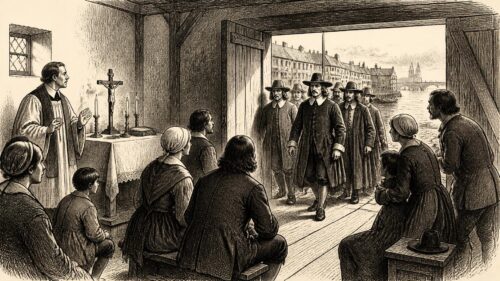
In 1679, amid the Popish Plot scare, Ormond's Irish administration intensified measures against Catholic worship, clergy and suspected disorder. Proclamations targeted bishops, Jesuits, masshouses and tories, linking religious nonconformity with threats to royal authority. Officers entering the Merchants' Quay masshouse met resistance, demonstrating both continuing Catholic worship and contested enforcement. A public Protestant fast nationalised fears of conspiracy. Catholic leaders, including Peter Talbot and Oliver Plunkett, faced confinement; Plunkett's December arrest made him the scare's principal Irish target. Authorities also guarded against Scottish unrest, pursued outlaws, regulated revenue and tobacco, and sponsored rebuilding projects, combining coercion, administration and Restoration display.
Read Article

Archived: 14 October 2026
Abstract
In 1678, the English Popish Plot panic transformed Irish government despite no rebellion or parliament. Lord Lieutenant Ormond pursued revenue collection, army support and land titles, but proposed legislation failed to resolve Restoration property disputes. Catholic structures remained active: Oliver Plunkett held a synod, while Nicholas French died in exile. Peter Talbot, archbishop of Dublin, returned conditionally in May but was arrested in October and imprisoned without evidence. Thereafter proclamations expelled clergy, suppressed religious institutions, disarmed Catholics, restricted access to garrisons and demanded enforcement by officials. These measures intensified sectarian insecurity, while trade, civic regulation and unresolved political tensions continued.
Read Article
Archived: 14 October 2026
Abstract
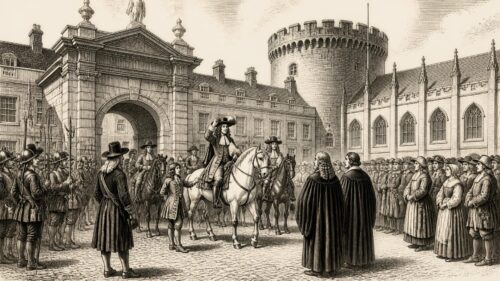
In 1677 James Butler, duke of Ormond, resumed the lord lieutenancy, succeeding Essex amid consequences of war, conquest and Restoration land settlement. His authority was constrained by control of revenue through Ranelagh’s undertaking, while his hoped-for parliament did not meet. Government addressed claims of 1649 royalist officers, currency regulation, night watches, local crime, fortifications and property disputes. Honours and ecclesiastical appointments reinforced Protestant authority, while Catholics remained restricted but not yet subject to later repression. Francis O’Molloy published the printed Irish grammar in Rome, exemplifying Catholic scholarship abroad. The deaths of Bellings, Lynch and Taaffe marked a passing political generation.
Read Article

Archived: 14 October 2026
Abstract
In 1673, Lord Lieutenant Essex’s proposed trade report portrayed Restoration Ireland through estimates of land, rents, livestock, housing, goods and scarce circulating coin, privileging taxable wealth over poorer households and local life. English restrictions on cattle imports encouraged exports of processed provisions, wool and fish through Dublin, Cork and Atlantic markets, although benefits were uneven. Essex governed within Protestant political dominance amid English anti-Catholic pressures. Investigation and hostility prompted Archbishop Peter Talbot’s departure for France, while October proclamations targeted Catholic arms, offices, clergy and institutions. Enforcement varied, but Catholic worship became more precarious. Presbyterians retained favour, illustrating selective confessional policy.
Read Article

Archived: 14 October 2026
Abstract
In 1672 Arthur Capel, earl of Essex, became lord lieutenant, seeking to centralise Restoration government by curbing provincial power, notably suppressing Munster’s presidency. Ireland supported the Third Anglo-Dutch War through transport, harbour defence, fortification surveys, customs regulation and garrison discipline. Charles II’s Declaration of Indulgence enabled limited, uncertain Catholic activity: bishops and clergy organised synods, appointments and disputes, while Protestant authority remained entrenched. Corporate officeholders faced the Oath of Supremacy, restricting Catholic civic participation. William Petty’s Political Anatomy assessed land, population and resources, reflecting a country still shaped by conquest, redistribution, taxation and religious division. Government combined flexibility with ascendancy.
Read Article

Archived: 14 October 2026
Abstract
In 1671, Ireland’s unresolved Restoration settlement shaped politics, finance, trade and religion. Sir Richard Talbot’s petition for Catholic landowners prompted a commission under Prince Rupert, yet threatened no immediate reversal of confiscations. Viscount Ranelagh’s revenue-farming contract transferred collection and government payments to private financiers, provoking army officers’ complaints over arrears. Navigation legislation further constrained Irish colonial commerce, while Sir George Hamilton recruited 1,500 men for French service. Catholic bishops Peter Talbot and Oliver Plunkett maintained precarious church administration amid internal disputes. Scholar Dubhaltach Mac Fhirbhisigh died, while Dublin’s Hospital and Free School received a royal charter, strengthening organised urban charity.
Read Article

Archived: 14 October 2026
Abstract
In 1670, under Lord Lieutenant John Berkeley, Ireland remained dominated by the Protestant land settlement and military power established after Cromwellian conquest, yet experienced limited religious latitude. Oliver Plunkett returned as Catholic archbishop of Armagh, rebuilding clerical discipline and hierarchy. Bishops met in Dublin, issued pastoral statutes and declared civil loyalty, despite rivalries between Plunkett and Dublin’s Peter Talbot. Plunkett’s Clones council extended reform and he mediated pardons for Tyrone tories. William Penn defended Quakers while managing Cork estates. Trade adapted to English livestock restrictions, Dublin gained Barrack Bridge, and rebuilding, estate consolidation and constrained negotiation reshaped society across Ireland.
Read Article

Archived: 14 October 2026
Abstract
In 1669, John, Lord Robartes replaced the duke of Ormond as lord lieutenant, reflecting English court politics and concern over Irish revenue and military administration. Arriving quietly at Howth, Robartes inherited a Protestant-led settlement founded on confiscation, unequal landholding and Catholic exclusion. Catholic leadership revived through appointments of Peter Talbot, James Lynch and Oliver Plunkett, consecrated abroad under continuing constraints. Protestant charitable education expanded through Erasmus Smith’s schools and Dublin’s proposed King’s Hospital. George Fox and William Penn documented active Quaker networks, persecution and petitioning. These developments revealed a pacified but unreconciled Ireland, divided by property, religion, power and taxation.
Read Article




