Essex Arrival1672 CE
In 1672 Arthur Capel, earl of Essex, became lord lieutenant, seeking to centralise Restoration government by curbing provincial power, notably suppressing Munster’s presidency. Ireland supported the Third Anglo-Dutch War through transport, harbour defence, fortification surveys, customs regulation and garrison discipline. Charles II’s Declaration of Indulgence enabled limited, uncertain Catholic activity: bishops and clergy organised synods, appointments and disputes, while Protestant authority remained entrenched. Corporate officeholders faced the Oath of Supremacy, restricting Catholic civic participation. William Petty’s Political Anatomy assessed land, population and resources, reflecting a country still shaped by conquest, redistribution, taxation and religious division. Government combined flexibility with ascendancy.
Dateline
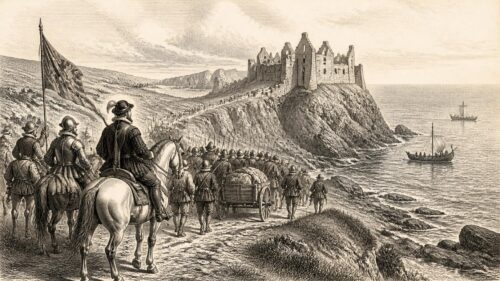
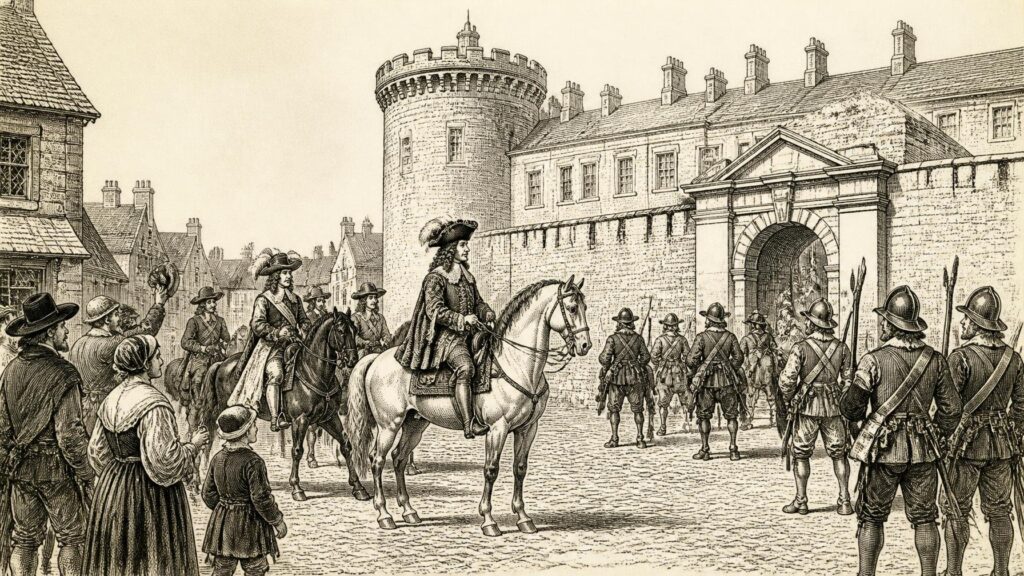
In 1672 Ireland was neither at war within its own borders nor politically quiet. A new lord lieutenant arrived to govern a kingdom still marked by the violence, confiscation and forced movement of the previous three decades. The Restoration land settlement had given many soldiers, adventurers and Protestant purchasers secure titles, while leaving a much reduced Catholic landed class to live with its consequences. Dublin Castle had to collect revenue, maintain a standing army, police corporate towns, protect coasts exposed to European war, and manage a religious majority whose public institutions remained vulnerable. Arthur Capel, earl of Essex, entered this unsettled political landscape in August.
A New Lord Lieutenant
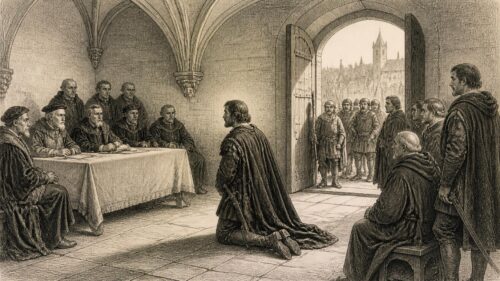
Essex was appointed lord lieutenant on 21 May and sworn in on 5 August. His accession mattered because the office concentrated the crown’s Irish executive authority: the lord lieutenant presided over government at Dublin Castle, directed the army and influenced the handling of revenue, law, corporations and religious policy. He succeeded Lord Berkeley, whose administration had acquired powerful critics. Essex was not an Irish magnate of the scale of James Butler, duke of Ormond, or Roger Boyle, earl of Orrery; that relative detachment may have been part of his usefulness to Charles II.
His instructions reveal the tensions built into Restoration rule. Essex was to reform civil and military establishments, reduce expensive or troublesome local power, and attend to the condition of the army. Yet he also received private latitude in applying the oaths of allegiance and supremacy, considering Catholic appointments to commissions of the peace, and seeking an accommodation with Catholic clergy. Such discretion did not amount to religious equality. It did, however, mean that government policy in 1672 could not be read simply from the anti-Catholic statutes on the books. Its practical reach depended upon decisions taken in Dublin Castle and by local officers.
The change was visible in Munster. On 30 July the presidency of Munster, held by Orrery since 1660, was suppressed; the formal abolition was implemented in August. This removed a major provincial office whose holder had exercised wide civil, judicial, military and ecclesiastical influence. The decision was not merely administrative tidying. It brought authority closer to Dublin and curtailed an autonomous regional power base accumulated by a formidable Restoration politician. The parallel diminution of old provincial structures signalled a preference for a more centralised vice-regal government.
War Beyond the Coast
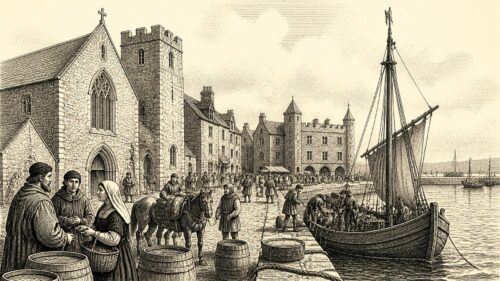
Ireland’s immediate security was shaped by the Third Anglo-Dutch War, which began in the spring of 1672. The island was not a battlefield, but its ports, soldiers and revenues were part of the Stuart monarchy’s wider war effort. In April, Treasury Commissioners at Dublin arranged for six companies, strengthened with recruits, to be shipped from Kinsale; a separate agreement made on 16 April provided vessels at Crosshaven for the transport of 850 officers and soldiers towards the Bristol Channel. These records show an administration treating Munster’s harbours as strategic links in a military system extending across the Irish Sea.
Defence also meant inspection rather than combat. Correspondence from August reported that the engineer Paulus Storff had been making maps and models of Munster towns and forts in order to assess weaknesses. The report, relayed second-hand and coloured by local argument, should not be mistaken for a complete survey; nevertheless, it captures a genuine official preoccupation. Kinsale, Cork and the approaches to them mattered more during a naval war. Work at the fortifications of Kinsale, interrupted after an earlier Dutch scare, was resumed in 1672. Coastal security, shipping and the availability of trained men were therefore part of everyday governmental business.
Late-year proclamations likewise point to a regime concerned with disciplined commerce and soldiers. A proclamation of 25 October dealt with tolls and customs, while another of 22 November required officers and soldiers to return to their garrisons and quarters. Neither decree describes the whole economy or the whole army. Together, they show the ordinary mechanics behind sovereignty: dues at ports and markets, regularised movement, and troops kept under command rather than becoming a burden or danger to civilians.
Indulgence and Its Limits
On 15 March Charles II issued his Royal Declaration of Indulgence, suspending the execution of penal laws against Protestant nonconformists and Roman Catholics in his realms. Its consequences in Ireland were qualified and uncertain. It did not repeal the legal framework of the established Church of Ireland, restore Catholic property, or make public Catholic worship permanently secure. Nor did it end the political suspicion in which Catholic ecclesiastical organisation was held. But it created a moment in which toleration seemed more conceivable, and it gave the new lord lieutenant room to consider a less mechanically punitive policy.
That opening was real enough for Catholic church affairs to be unusually active. John O’Molony, appointed bishop of Killaloe in 1671, was consecrated in Paris on 6 March 1672. The date is firmly recorded; his consecration abroad is itself revealing. Ireland’s Catholic hierarchy survived through continental connections, Roman authorisation and the movement of clergy between Ireland and Europe. Ordered by the Congregation of Propaganda Fide to return in August, O’Molony promptly did so. He became an important mediator among clergy and Catholic lay elites at a time when governmental tolerance could never be assumed to last.
Oliver Plunkett, Catholic archbishop of Armagh, illustrates the same mixture of organisational confidence and insecurity. During 1672 he spent seven weeks in Dublin, held a diocesan synod in May, installed Gerard Farrell as vicar-apostolic in Ardagh, met Essex in August, and attended the Franciscan provincial chapter at Elphin in November. These were not the actions of an invisible or inert church. They show pastoral administration, travel and internal communication across diocesan and provincial lines. Yet Plunkett’s activities took place under a Protestant state that retained the power to redefine toleration at short notice.
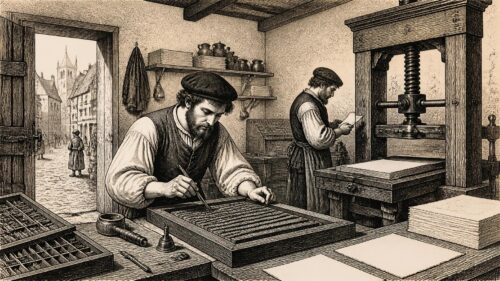
One contentious question was primacy: whether Armagh or Dublin possessed precedence and wider jurisdiction within the Catholic hierarchy. Plunkett published Jus primatiale in Dublin in 1672 in defence of Armagh’s claim; Archbishop Peter Talbot of Dublin answered later. In November, O’Molony helped reconcile the two archbishops and also eased related lay disputes. This episode is a useful corrective to any image of seventeenth-century Irish Catholicism as simply a persecuted remnant. It was an institution rebuilding authority, arguing over jurisdiction, sustaining continental networks and addressing divisions of its own.
Oaths, Towns and Political Belonging
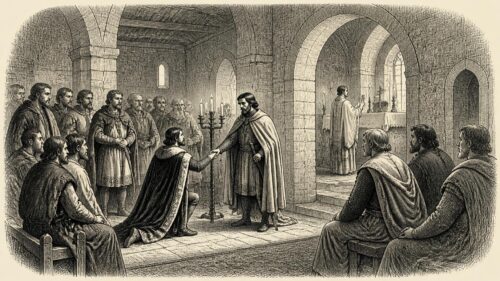
Religion also intersected directly with civic power. On 24 September, elected representatives in corporations were required to take the Oath of Supremacy to the crown unless exempted. Corporate towns were far more than places of trade. Their councils regulated markets and property, elected officers, administered local justice and supplied channels through which the state governed urban communities. Requiring office-holders to acknowledge royal supremacy over the Church narrowed the political sphere available to Catholics and made confessional conformity a test of municipal participation.
There was a contradiction at the centre of the year. Essex’s private instructions allowed discretion over the oaths in particular circumstances, while the corporate requirement reinforced the Protestant character of civic government. The contradiction was not accidental. Restoration administration needed cooperation, revenue and peace from a population divided by land, church and memory; it also depended on Protestant control of offices regarded as politically sensitive. In 1672, the state experimented with flexibility without abandoning the structures of ascendancy.
Measuring a Transformed Country
Another work connected clearly to 1672 offers an unusually penetrating, if far from impartial, view of the country Essex had come to govern. Sir William Petty’s manuscript The Political Anatomy of Ireland is dated 1672. It was not printed until 1691, so it should not be treated as a book that transformed public debate during the year. It is nevertheless a contemporary attempt to describe Ireland systematically through land, people, houses, hearths, churches, military capacity, soil, crops, money and trade.
Petty’s method grew out of the Down Survey and the post-conquest redistribution of land in which he had been deeply involved. His calculations are not neutral modern statistics: categories such as ‘Irish’, ‘English’ and ‘Scots’, estimates of population, and arguments about settlement served political purposes. Yet the manuscript shows what officials and projectors thought required measurement. Productive land, taxable households, pasture, grain, livestock, ports, exports and the number of people capable of work or arms were all treated as components of state power.
For ordinary people, these abstractions translated into daily realities. Most lived in rural households whose security was shaped by rents, tenure, harvests and access to common resources. Town dwellers encountered customs, tolls, markets, corporate rules and garrisons. Protestant settlers and office-holders enjoyed advantages that were neither universal nor always secure; Catholic families negotiated a society in which worship might be tolerated in practice but public authority was constrained. Petty’s Ireland was thus not a settled ‘post-war’ landscape in any simple sense. It was a country still being counted, taxed, fortified and governed after revolution.
Writing Irish Church History
A final, less firmly datable development belongs to the intellectual world of 1672. The Galway priest and historian John Lynch was working in exile in France on De praesulibus Hiberniae, a history of Irish bishops with particular attention to Catholic succession after the Reformation. The manuscript is conventionally associated with this period, but its composition cannot responsibly be reduced to a single documented day or publication date: it remained unpublished until 1944. Its importance lies in purpose. Lynch preserved a learned Catholic account of episcopal continuity at the same moment when O’Molony and Plunkett were making that continuity practical through appointments, synods and mediation.
The year therefore left no single dramatic Irish battle or parliamentary settlement. Its significance lies in connected adjustments: Essex’s arrival and the curbing of provincial presidency; troop movements and fortification in an international war; contested but tangible space for Catholic organisation; the policing of Protestant civic office; and new efforts to describe Ireland’s people and resources. In 1672 the restored monarchy sought an Ireland that was governable, taxable and defensible. The means it employed—centralisation, oaths, garrisons, negotiated toleration and measurement—also exposed the social and religious fractures it could not resolve.

Primary Sources
- Capel, Arthur
- CAPELL, Arthur (1632–83)
- Boyle, Roger
- BERKELEY, John (1607–78)
- O'Molony, John
- Plunkett, St Oliver
- Lynch, John
- The Political Anatomy of Ireland by William Petty, 1672
- Add MS 21127: The Political Anatomy of Ireland, by Sir William Petty
- The Political Anatomy of Ireland by Sir W. Petty, Surveyor General of Ireland, 1672
- The Economic Writings of Sir William Petty, vol. 1
- ORRERY PAPERS
- Patentee Officers and High Sheriffs in Ireland, 1173–1826
- Books of Survey and Distribution, 1636–1703: County Roscommon
- Statute Law Revision Act 2015
- Statute Law Revision (Pre-Union Irish Statutes) Act, 1962
- Pre-Union Irish Statutes Affected: 1662
- Ireland Under the Stuarts, Volume III
- Charles Boyle, 4th Earl of Orrery, 1674–1731
- We judging it requisite for His Majesties service, that all officers and souldiers of the army in this kingdom…