
Archived: 10 October 2026
Abstract
In 1851, Ireland’s census recorded 6,552,385 inhabitants, a decline of 1,659,330 since 1841, exposing famine mortality, disease, eviction and emigration while imperfectly distinguishing deaths from departures. Losses were greatest in western and southern potato-dependent districts, accelerating the disappearance of poor cabins and weakening Irish-speaking communities. Emigration remained immense, reshaping families and local economies. Estate sales under the Encumbered Estates Act, limited tenant-improvement legislation and Tenant Right agitation intensified land questions. The Medical Charities Act expanded dispensary provision. John Henry Newman’s appointment advanced plans for a Catholic university. Meanwhile, Ulster linen exhibitors at the Great Exhibition displayed industrial strength amid devastation.
Read Article

Archived: 10 October 2026
Abstract
Black ’47 marked the Great Famine’s worst turning point, after potato failure had exhausted household resources and public works proved inadequate. The Temporary Relief Act replaced wages with cooked rations, feeding about three million people daily at its peak through local soup kitchens, aided by Quakers and publicised by Alexis Soyer. Hunger and overcrowding accelerated fever, while Poor Law reforms expanded outdoor relief but shifted costs to impoverished localities. The Gregory Clause pressured small occupiers to surrender land for aid. Political divisions persisted amid O’Connell’s death. Kitchens closed prematurely, workhouses overflowed, and mass emigration intensified, leaving Ireland’s countryside fundamentally altered.
Read Article
Archived: 11 October 2026
Abstract
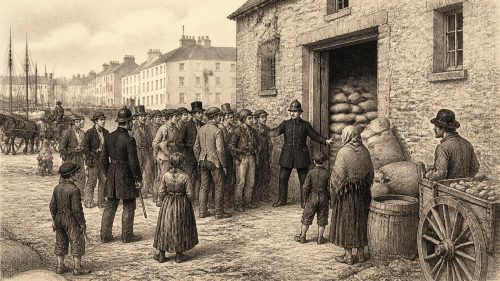
In 1842, before potato blight, Ireland experienced acute distress from scarcity, high prices, seasonal unemployment and entrenched poverty. Galway symbolised the crisis when hungry people attacked a potato store in June, reflecting fears of hoarding and food beyond local reach. The expanding Poor Law rapidly opened workhouses, offering deterrent, stigmatising relief while leaving many needy people outside. Temporary government aid acknowledged emergency conditions. Daniel O’Connell’s Repeal Association strengthened its organisation, linking constitutional demands with economic grievances and opposing slavery. Peel’s tariff reforms fuelled criticism of Westminster. In October, The Nation began promoting nationalism, connecting material hardship, identity and political self-government.
Read Article
Archived: 11 October 2026
Abstract
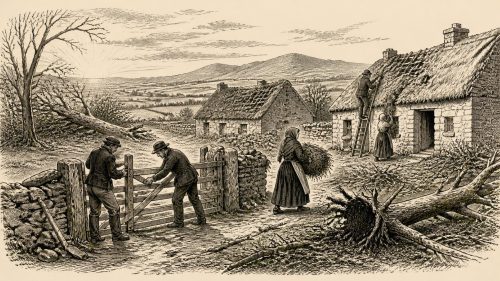
In 1839 Ireland experienced the Night of the Big Wind, a devastating storm of 6–7 January that damaged homes, farms, shipping and infrastructure, caused numerous deaths, and became a lasting marker in popular memory. Its effects intensified existing rural poverty and seasonal insecurity. Meanwhile, implementation of the 1838 Poor Law advanced through unions, guardians, rates and workhouse planning, while amendments refined administrative boundaries. Policing legislation strengthened state capacity in Dublin and nationally, amid O’Connell’s reform politics and continuing tithe disputes. National education and Griffith’s valuation expanded official knowledge. In August, the Belfast–Lisburn railway opened, signalling transport, commerce and institutional modernisation.
Read Article
Archived: 11 October 2026
Abstract
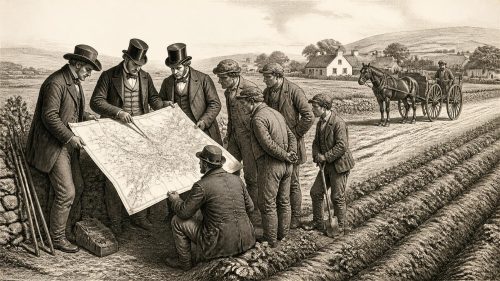
In 1838, Ireland was surveyed, classified and governed amid widespread rural insecurity. The Irish Railway Commissioners’ final report mapped population, trade and transport, advocated publicly directed railways, and warned of labourers’ heavy reliance on the nutritionally poor lumper potato, without predicting famine. The Poor Relief (Ireland) Act created poor-law unions, rates, guardians and a workhouse-centred system, reshaping local administration despite opposition. The Tithe Rentcharge Act replaced direct occupiers’ payments with a reduced landowners’ charge, easing but not ending religious grievance. Father Theobald Mathew’s Cork temperance campaign mobilised mass voluntary action. The Sirius voyage and surveys highlighted Atlantic and administrative links.
Read Article
Archived: 11 October 2026
Abstract
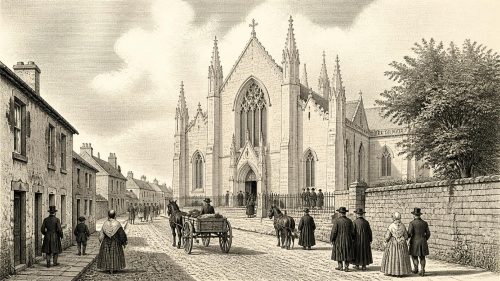
In 1837, Victoria’s accession prompted an Irish general election in which Daniel O’Connell and his allies demonstrated Catholic political organisation despite a restricted, public franchise. Parliament debated Irish poor relief amid widespread insecurity, but legislation followed only in 1838. Tithe grievances, local crop failures, potato dependence and uneven employment exposed rural vulnerability. Tuam’s completed Catholic cathedral symbolised post-emancipation confidence, although religious divisions endured. Samuel Lewis’s dictionary, Ordnance Survey work and Dublin policing measures reflected administrative control. Ireland remained commercially and imperially connected, illustrated by HMS Terror’s repair at Lough Swilly, yet the Union, unequal landholding, poverty and representation remained unresolved.
Read Article
Archived: 11 October 2026
Abstract
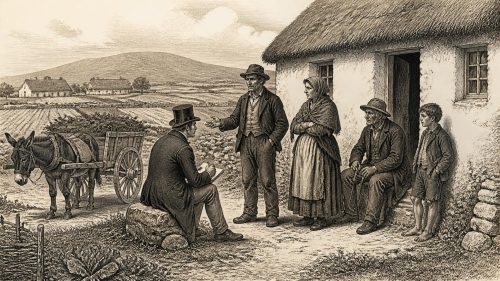
In 1833, Irish government combined coercion, church reform and social investigation amid unrest and poverty. The Suppression of Disturbances Act expanded powers over meetings, movement and suspected rural disorder, constraining constitutional mobilisation associated with Daniel O’Connell. Tithe resistance persisted despite legislation adjusting arrangements, while the Church Temporalities Act abolished levies, reorganised bishoprics and revenues, but preserved Protestant establishment and endowments. O’Connell continued to advocate repeal, tithe reform and redress. In September, Archbishop Richard Whately began a Royal Commission examining poorer classes, inaugurating systematic inquiry into labour, land, charity and deprivation. The year left Ireland’s religious, political and economic crises unresolved.
Read Article




