Archived: 19 October 2026
Abstract
In 1476, Ireland’s competing lordships combined warfare, negotiation and institutional continuity. Henry Ó Néill captured and demolished Bel-Feirste castle, while raiding Oirghialla; Clandeboye survived. Maguire succession in Fermanagh was destabilised by killings and deaths. In Connacht, brief seizures of Roscommon castle exposed fragile authority, whereas Mac William Burke and Aodh Ruadh Ó Domhnaill negotiated a division of Lower Connacht after confrontation. English forces devastated crops, a monastery and settlements in the midlands. Dublin lordship maintained parliamentary, fiscal and legal activity. Annals also recorded prominent poets, clerics and scholars, revealing interconnected political, religious and learned cultures amid violence across the island.
Read Article
Archived: 21 October 2026
Abstract
The most sharply dated Irish event of 1409 came in Connacht on the Monday after Michaelmas, the feast of St Michael on 29 September. A relieving force fought its way to the besieged castle of Roscommon with food and stores. The annalists regarded the operation as exceptionally daring. It was not a campaign of a unitary Irish kingdom, nor a clash simply between ‘Irish’ and ‘English’. It was a regional struggle among Gaelic dynasties and their allies, conducted around a formidable castle whose survival depended upon grain, supplies, mounted men and dependable political partnerships.Elsewhere, the year exposed the limited reach
Read Article
Archived: 21 October 2026
Abstract
In 1375, Ireland’s fragmented political order was revealed through warfare, succession, negotiation and administration. Niall Ó Néill defeated the English or Anglo-Irish of Downpatrick, killing Sir James of Malahide and others, demonstrating northern Gaelic strength. In Leinster, Donnchad Caemánach Mac Murchada was treacherously killed, opening the way for Art Mór’s later rise. Connacht rivals exchanged Roscommon and Ballintober castles, while Thomas succeeded Sir Edmund Albanach Mac William Burke. Raids, betrayals and kin killings exposed local insecurity. Annals recorded religiously framed deaths and poet Máel Sechlainn Ó Domhnalláin. William de Windsor’s cash-strapped administration operated as Edward III sought support at Westminster.
Read Article
Archived: 23 October 2026
Abstract
In 1341, Toirrdelbach Ó Conchobair, king of Connacht, captured Roscommon Castle, a royal English fortress, with annals differing over the role of his imprisoned rival Áed. The seizure strengthened him temporarily amid continuing Connacht dynastic conflict. Meanwhile, Edward III’s administration ordered investigations, resumed grants and proposed replacing locally connected officials, provoking resistance from the English of Ireland. Parliaments at Dublin and Kilkenny petitioned the king, defending lands, liberties and consultation while affirming loyalty. Elsewhere, violence and rapid successions marked Meath, Oriel and Connacht. Ecclesiastical deaths reflected institutional continuity. The year exposed fragmented, negotiated authority across overlapping Gaelic and settler societies.
Read Article

Archived: 25 October 2026
Abstract
In 1277, authority in Ireland was contested through dynastic rivalry, warfare, castles and law. In Thomond, Brian Ruad Ó Briain allied with Thomas de Clare, holder of Edward I’s grant to Thomond, against his nephew Toirrdelbach. Defeated, Brian sought refuge at Bunratty but was seized and executed on de Clare’s orders. In Connacht, Irish forces led by an Ó Conchobair and Domnall Ó Domnaill demolished Roscommon Castle, challenging royal control. Irish people reportedly offered 7,000 marks for English common law, seeking legal protections. The year also recorded ecclesiastical continuity and local raiding, illustrating Ireland’s plural, unstable political order throughout society.
Read Article
Archived: 25 October 2026
Abstract
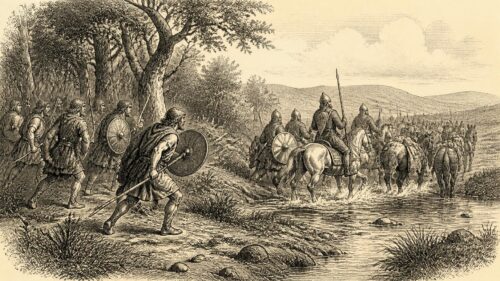
In 1270, Áed Ó Conchobair defeated Walter de Burgh’s Connacht expedition at Áth an Chip after manoeuvres around the Shannon, failed negotiations and hostage-taking. Local forces harassed the invaders, broke their vanguard and rear guard, and inflicted notable losses. Áed subsequently attacked castles, towns and settlements, including Roscommon, although conflict and reprisals continued across Connacht, Sligo, Corann and Thomond. The campaign demonstrated the strength of Gaelic kingship against Anglo-Irish magnates without ending de Burgh’s influence. Ireland also suffered widespread hunger and destitution. The year saw Archbishop Máel Pátraic Ó Scanaill’s death and Tanaide Mór Ó Maelchonaire’s succession as Connacht’s ollamh.
Read Article
Archived: 25 October 2026
Abstract
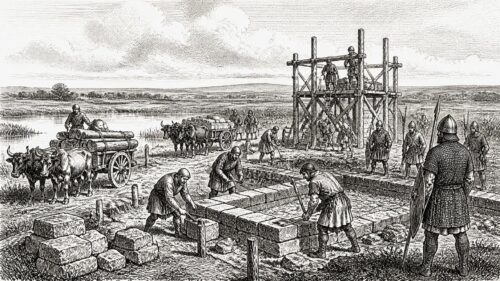
In 1269 Robert de Ufford, the English crown’s justiciar, began Roscommon Castle while Áed Ó Conchobair, king of Connacht, was ill, exploiting a temporary weakness to establish a durable royal foothold. The project disrupted local people and intensified Anglo-Irish pressure within Ó Conchobair territory, although it did not signify Connacht’s conquest. Sligo Castle’s rebuilding by Mac Muiris Mac Gerailt similarly demonstrated contested frontier control. Religious life featured Imar Ó Birn’s entry into Roscommon’s Dominican priory and aristocratic patronage. Annals also noted killings, the death of musician Áed Ó Finn, and uncertain reports of an earthquake and weather, requiring cautious chronology.
Read Article





