
Archived: 6 October 2026
Abstract
About 30,205 BCE, Ireland lay within the fluctuating cold conditions of Marine Isotope Stage 3, not a precisely datable historical year. At Derryvree, County Fermanagh, freshwater silts between glacial tills preserve an ice-free interval, broadly in the early thirty thousands of years before present. Pollen, plants and insects reveal treeless tundra wetlands of sedges, mosses, herbs and pools amid severe periglacial conditions. Castlepook Cave fauna indicates cold, open habitats and continental connections. A possibly cut-marked reindeer bone suggests, but cannot prove, human visitation. No secure evidence establishes settlement, society or continuous occupation; environmental archives provide the principal record for Ireland.
Read Article

Archived: 1 October 2026
Abstract
30,415 BCE is a modern label rather than a recoverable Irish historical year. At Derryvree, County Fermanagh, organic freshwater silts between two tills, dated BIRM-166, indicate a broad later Marine Isotope Stage 3 interval when tundra, wetlands and sparse treeless vegetation survived between glacial advances. Plant and insect remains record cold, freshwater habitats, while later ice obscured much earlier evidence. Ireland experienced unstable climates, shifting ice margins and changing connections with Britain and Europe. Castlepook Cave preserves diverse cold-stage fauna and a possibly tool-marked reindeer bone, suggesting brief human presence, but no secure evidence establishes permanent settlement, society or events.
Read Article
Archived: 1 October 2026
Abstract
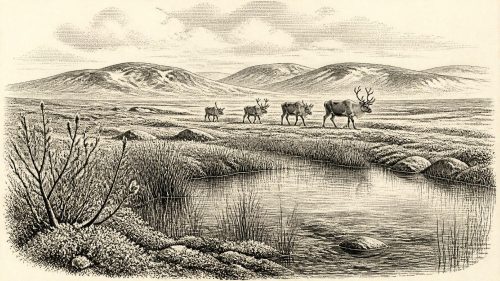
30,424 BCE is a modern chronological label, not a recoverable Irish year. Derryvree, County Fermanagh, preserves freshwater silts between glacial tills, dated broadly to Marine Isotope Stage 3. Its plants indicate tundra vegetation, wet margins and periglacial conditions during an ice-free interval, although they cannot describe all Ireland. Lower sea levels and expanding ice created changing landscapes and uncertain connections with Britain and Europe. Castlepook Cave records diverse cold-adapted fauna over a long period, not a single ecosystem. A possibly cut-marked reindeer bone may indicate fleeting human activity, but no secure contemporary settlement exists. Environmental change chiefly defines this period.
Read Article
Archived: 30 September 2026
Abstract
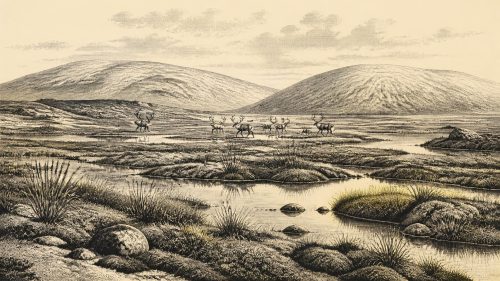
Labelled 30,443 BCE, this period cannot be tied to an exact Irish calendar year, as radiocarbon dates require calibration and retain wide uncertainties. At Derryvree, Fermanagh, freshwater sediments between glacial tills preserve evidence of an ice-free interval: open, treeless tundra, wetland plants, shallow water and short growing seasons. The sequence demonstrates fluctuating ice rather than uniform island-wide conditions. Castlepook Cave, Cork, yielded cold-climate fauna, showing intermittent ecological connections with north-west Europe. A cut-marked reindeer femur may indicate human handling, but cannot prove settlement. Together, these fragmentary records reveal dynamic Ice Age environments while limiting claims about people, society or events.
Read Article

Archived: 28 September 2026
Abstract
Around 30,554 BCE, Ireland lay within the climatically unstable Late Pleistocene, not a datable historical year. At Derryvree near Maguiresbridge, Fermanagh, freshwater silts between glacial tills indicate a locally ice-free tundra wetland during MIS 3, dated broadly to 36,900–31,700 years before present. Plants and insects record treeless, cold, seasonally frozen terrain with pools, mosses, sedges and herbs. Castlepook Cave, Cork, preserves mammoth, reindeer, hyaena and other fauna adapted to open habitats. A possibly stone-cut reindeer femur suggests, but cannot prove, Upper Palaeolithic visitors. Evidence reveals changing environments and animal communities, while later glaciation obscures human occupation, society and movement patterns.
Read Article

Archived: 27 September 2026
Abstract
About 30,557 BCE, Ireland’s evidence records no datable event, but Derryvree near Maguiresbridge preserves freshwater sediments deposited between glacier advances during Marine Isotope Stage 3. Their broad calibrated range encompasses this notional date, indicating an open, cold tundra wetland with pools, sedges, dwarf willow, mountain avens, mosses and seasonally available water. Local ice had retreated temporarily, although the British-Irish Ice Sheet was growing towards its later maximum and national conditions remain uncertain. Castlepook Cave’s fauna, including reindeer, mammoth, predators and other cold-adapted species, demonstrates variable food webs. A possibly butchered reindeer bone suggests transient Upper Palaeolithic visitors, not proven settlement.
Read Article
Archived: 26 September 2026
Abstract
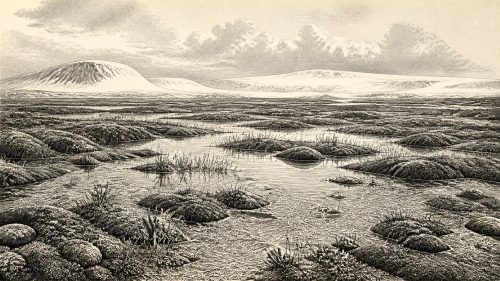
30,642 BCE is not a recoverable Irish year but a broad Late Pleistocene, Marine Isotope Stage 3 interval. At Derryvree, Fermanagh, organic freshwater silts between tills indicate ice-free, cold tundra-like wetlands around 33,500 calendar years BP, not an exact date. Plants suggest open, treeless terrain. Castlepook Cave, Cork, preserves a mixed assemblage including mammoth, reindeer, giant deer and predators, demonstrating intermittent Ice Age faunas. A possibly tool-marked reindeer femur may indicate human handling, but cannot prove settlement. Repeated glaciation, changing seas and limited evidence preclude claims about societies, routes or occupation. Ireland’s significance is environmental transformation and uncertain human possibility.
Read Article

Archived: 26 September 2026
Abstract
Although 30,653 BCE cannot denote a specific Irish event, it falls within a Late Pleistocene MIS 3 interval recorded at Derryvree, County Fermanagh. Freshwater silts and organic deposits between tills show an ice-free phase, supporting cold, treeless tundra wetland vegetation. Castlepook Cave, County Cork, preserves a diverse, differently dated fauna including mammoth, reindeer, giant deer and predators, demonstrating changing connected habitats. A marked reindeer femur may indicate Upper Palaeolithic butchery, but cannot prove settlement or continuous occupation. No political, cultural or social institutions are identifiable. Lower sea levels and shifting ice affected access, while routes and ice extent remain uncertain.
Read Article

Archived: 25 September 2026
Abstract
30,673 BCE is a retrospective label, not a recoverable Irish year, within fluctuating Marine Isotope Stage 3. Ireland’s low sea levels, shifting ice margins and open terrain connected it ecologically to north-western Europe, though no proven human route existed. Derryvree, County Fermanagh, preserves freshwater silts between glacial tills, indicating tundra vegetation, wetlands and severe periglacial conditions. Castlepook Cave, County Cork, contains cold-stage fauna accumulated over periods rather than simultaneously. A cut-marked reindeer femur may indicate human butchery around 31,000 BCE, but lacks associated occupation evidence. The period therefore reveals an intermittently habitable, ice-shaped landscape and unresolved possibility of human visits.
Read Article

Archived: 19 September 2026
Abstract
At 31,225 BCE, Ireland cannot be described through annual events, but Derryvree’s freshwater sediments, preserved between glacial tills in County Fermanagh, document an ice-free Late Pleistocene interval. Calibrated dating places the deposit broadly around 34,950–29,750 BCE. Pollen, plants, mosses and insects indicate open tundra, freshwater and severe periglacial conditions, not local woodland. Cave remains at Castlepook show varied cold-adapted fauna, while a marked reindeer femur may suggest an early human visit, though this remains unconfirmed. No evidence supports settlement or social institutions. Later ice expansion destroyed or buried traces, leaving environmental change, rather than human history, as the clearest record.
Read Article

Archived: 16 September 2026
Abstract
Around 31,584 BCE, an imprecise date within Marine Isotope Stage 3, Ireland experienced last-glacial conditions rather than uniform ice cover. Organic deposits beneath Derryvree drumlin in County Fermanagh preserve evidence of an ice-free freshwater wetland, with sedges, mosses and arctic-alpine plants amid open periglacial tundra. Castlepook Cave in County Cork records diverse fauna, including mammoth, giant deer, reindeer, predators and cold-adapted animals, although deposits span periods. A cut-marked reindeer bone may indicate fleeting human activity, not settlement. Lower sea levels altered routes and coastlines, while ice and erosion destroyed or buried much evidence. Ireland remained an unstable dynamic ecological frontier.
Read Article

Archived: 13 September 2026
Abstract
The reference year 31,802 BCE represents a Late Pleistocene setting rather than a securely dated Irish event. Cave remains, freshwater deposits and glacial geology provide the surviving evidence. Open landscapes supported tundra vegetation, freshwater habitats and large mammals while ice expanded unevenly across the British-Irish region. Later glaciation removed much of the earlier surface record, limiting certainty about local conditions and their timing. Castlepook research, Derryvree evidence, regional reconstructions and radiocarbon calibration therefore require cautious interpretation. The article explores habitable environments before wider ice cover while distinguishing modern archival chronology from the broad dating ranges supported by surviving scientific evidence.
Read Article
Archived: 13 September 2026
Abstract
The reference year 31,803 BCE offers a modern chronological marker for Ireland’s Late Pleistocene environment. No exact calendar record survives. Freshwater deposits in County Fermanagh indicate cold, open habitats with low vegetation, showing that ecosystems persisted before later ice expansion. Cave remains and glacial evidence contribute a regional picture. Ice growth, exposed ground and shifting habitats formed changing combinations rather than a uniform landscape. Derryvree studies, Castlepook investigations and regional reconstructions help interpret this fragmentary record. The article emphasises environmental change and chronological caution, explaining why broad scientific evidence cannot establish specific events in a single prehistoric Irish reference year.
Read Article
Archived: 13 September 2026
Abstract
The reference year 31,808 BCE introduces Ireland’s Late Pleistocene tundra environments while acknowledging that no event can be dated precisely to it. Environmental deposits, cave faunas and glacial evidence cover long periods. Cold grassland, sedges, herbs and low vegetation persisted where expanding ice had not overridden the ground. Fermanagh freshwater deposits demonstrate biological activity, while Castlepook Cave preserves remains of reindeer, mammoth, giant deer, bear, wolf and spotted hyaena. These assemblages connect Ireland to wider northwestern European ecology. The article interprets scattered evidence cautiously, separating an annual archive marker from the broader chronological ranges that scientific reconstruction can actually support.
Read Article

Archived: 10 September 2026
Abstract
About 31,814 BCE, Ireland lay within the climatically unstable later Marine Isotope Stage 3, although no evidence permits dating events to a single year. Derryvree, County Fermanagh, preserves freshwater silts beneath later tills, indicating a cold, open, treeless tundra with ponds, mosses and sparse vegetation. Southern caves, particularly Castlepook, contain remains of cold-stage mammals, but mixed deposits and revised dates prevent reconstructing one contemporary fauna. A cut-marked reindeer femur may indicate Upper Palaeolithic human processing, yet lacks secure archaeological context and proves neither settlement nor population. Ireland was a shifting, intermittently habitable glacial frontier documented by sediments, bones and ice.
Read Article

Archived: 9 September 2026
Abstract
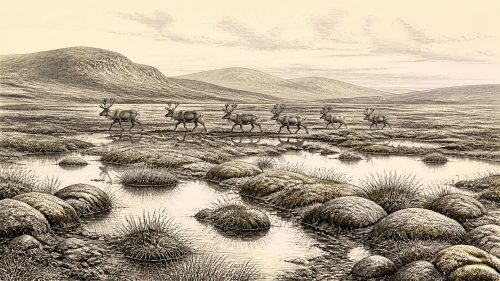
31,857 BCE is a reference, not a datable Irish year. Derryvree, County Fermanagh, preserves organic silts beneath glacial till, radiocarbon-dated broadly to 36,900–31,700 calendar years ago, indicating cold, open tundra and freshwater habitats during an unstable pre-glacial period. Ice expansion was uneven and later reached its maximum around 26,000 years ago; land connections remain uncertain. Castlepook Cave, County Cork, records Ice Age fauna, but not a single contemporaneous community. A possibly cut-marked reindeer bone suggests a human visit, yet lacks settlement context. No evidence supports claims about society, culture or permanent settlement. These deposits reveal changing habitats at ice’s edge.
Read Article
Archived: 9 September 2026
Abstract
About 31,881 BCE, Ireland lay within the unstable cold conditions of Marine Isotope Stage 3, rather than a precisely datable historical year. Buried freshwater deposits at Derryvree and Greenagho, County Fermanagh, show that north-central areas were periodically ice-free before later glacial advances, supporting treeless, waterlogged tundra of mosses, sedges and shallow pools. Cave remains at Castlepook, County Cork, demonstrate intermittent connections to wider European fauna, including reindeer, mammoth, horse, predators and lemmings. Possible stone-tool marks on a reindeer bone suggest brief human visits, but cannot prove settlement. Expanding ice subsequently covered most of Ireland, preserving only valuable fragmentary environmental evidence.
Read Article




