Derryvree Habitats31803 BCE
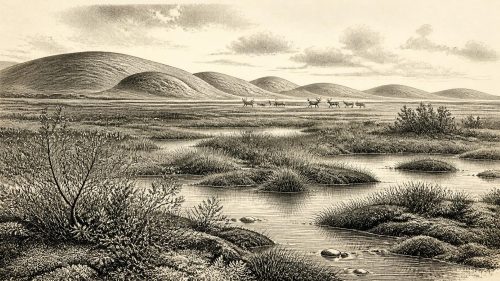
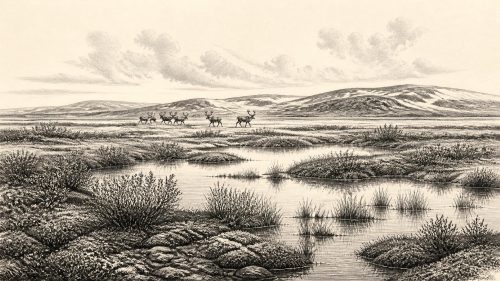
The reference year 31,803 BCE offers a modern chronological marker for Ireland’s Late Pleistocene environment. No exact calendar record survives. Freshwater deposits in County Fermanagh indicate cold, open habitats with low vegetation, showing that ecosystems persisted before later ice expansion. Cave remains and glacial evidence contribute a regional picture. Ice growth, exposed ground and shifting habitats formed changing combinations rather than a uniform landscape. Derryvree studies, Castlepook investigations and regional reconstructions help interpret this fragmentary record. The article emphasises environmental change and chronological caution, explaining why broad scientific evidence cannot establish specific events in a single prehistoric Irish reference year.
Dateline
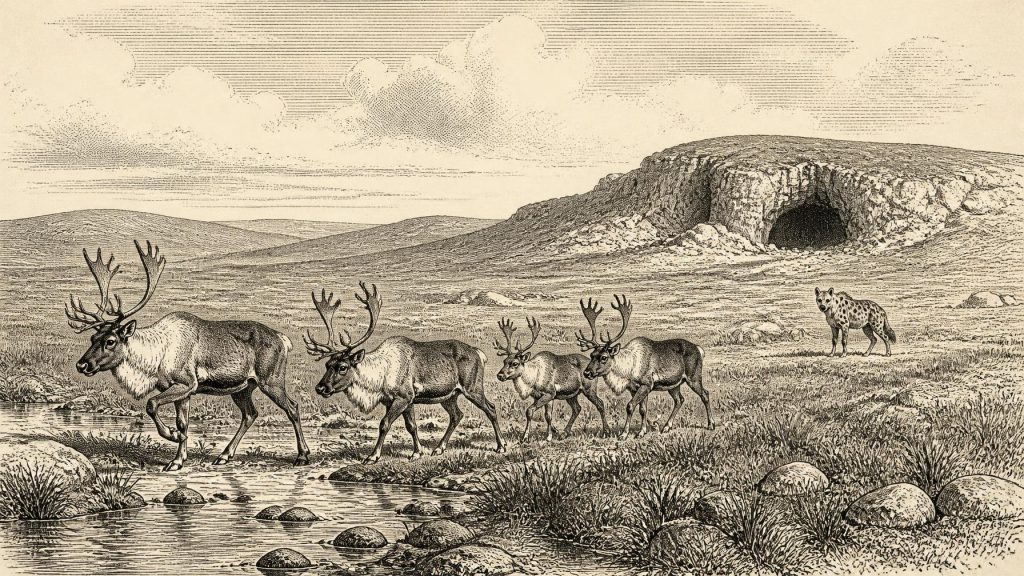
31,803 BCE is a modern reference year in a period for which Ireland has no exact calendar record. The Late Pleistocene landscape is known instead through environmental deposits, animal remains and glacial evidence.
Water and Tundra
Freshwater deposits in County Fermanagh indicate cold open habitats with low vegetation. Such evidence demonstrates that parts of Ireland still supported active ecosystems before later ice expansion.
Regional Change
The glacial system was dynamic rather than uniform. Ice growth, exposed ground and shifting habitats existed in changing combinations across the island.
Source References
Hover over a number to see the source. Select it to open the source.
- [1] Research draws on Derryvree environmental studies, BRITICE-CHRONO, Castlepook investigations, Quaternary science publications and radiocarbon calibration research.
Primary Sources
Research draws on Derryvree environmental studies, BRITICE-CHRONO, Castlepook investigations, Quaternary science publications and radiocarbon calibration research.