Archived: 31 October 2026
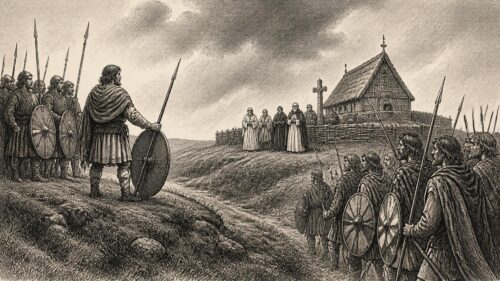
Abstract
In 759, annals record conflict, death and weather across Ireland, though their dating differs slightly. At Emain Macha, rivalry between priest Airechtach and Armagh’s abbot Fer dá Chrích helped provoke battle between Ulaid and Uí Néill forces. Fiachnae of Ulaid prevailed; Dúngal grandson of Conaing and Donn Bó died. Anmchad, king of Osraige, defeated Leinstermen at Gabráin. Domnall of Leinster died, alongside kings Rechtabra and Ferdamal, several abbots and named scholars. A rainy summer and a remarkable fish-bearing stream were noted. These terse records reveal intertwined ecclesiastical authority, regional warfare, learning and environmental observation within contested local networks of authority.
Read Article
Archived: 31 October 2026
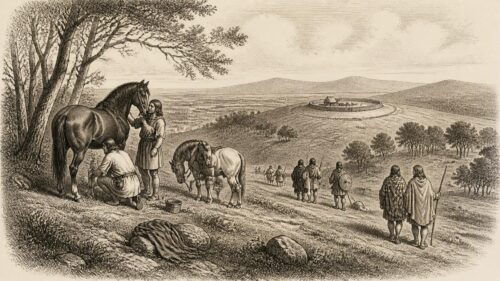
Abstract
In 758, Irish annals record regional political and ecclesiastical transitions rather than an island-wide crisis. At Druim Róbaig in Connacht, Uí Briúin defeated Uí Fhiachrach; Ailill grandson of Dúnchad prevailed, while Tadc son of Muirdibur and three grandsons of Cellach were killed. Deaths included Niallgus, king of the Déisi of Brega, Cathal of Uí Chennselaig, and Aed of the Ciannachta. Céile Petair, abbot of Armagh, and Marthu, abbess of Kildare, also died. These notices reveal Ireland's regional lordships, kin-based succession and influential churches, while their selectivity precludes claims about nationwide conditions, causes, or outcomes beyond the sparse surviving evidence available.
Read Article
Archived: 31 October 2026
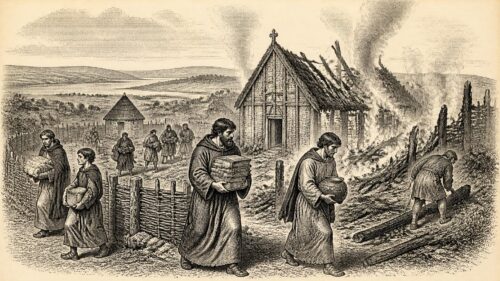
Abstract
For Ireland in 756, the annals offer no single, all-embracing story. Instead, they preserve a sharp cluster of incidents: the burning of the great church settlement of Bangor on St Patrick’s Day; a military expedition which brought Leinster forces into Mag Muirthemne; the death of a Connacht overking; fighting in the midlands and Connacht; and a catastrophic wreck on Lough Ree. Read together, these terse notices reveal an island in which kingship, ecclesiastical authority and movement by water were all deeply consequential. They also demand care. Medieval annals did not record every event, and they often give outcomes without causes.
Read Article
Archived: 31 October 2026
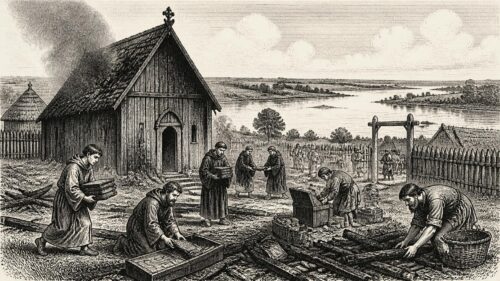
Abstract
In the annal-year 755, Cluain Moccu Nóis (Clonmacnoise), a major monastery beside the Shannon, was burned on 21 March, though modern calendar alignment remains uncertain. The annals do not state the cause, scale or casualties, but the fire exposed the vulnerability of a wealthy religious and transport centre dependent on regional labour and patronage. They also record deaths of kings of Uí Méith, Uí Maine and Uí Fhailgi, alongside churchmen and abbots from several communities. These notices reveal politically fragmented, interconnected Ireland, where monasteries held economic, scholarly and social importance. No evidence supports nationwide crisis, war, famine or rebuilding details.
Read Article
Archived: 31 October 2026
Abstract
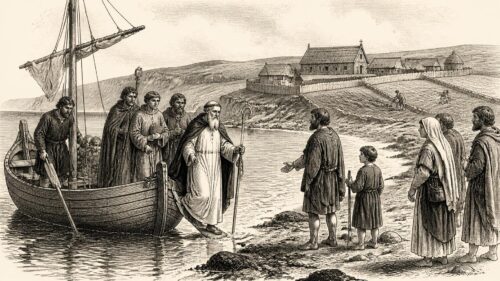
In 754, Irish annals recorded Sléibéne, abbot of Í (Iona), arriving in Ireland, illustrating Columban influence across the Irish Sea. Although chronology is uncertain, the associated notices portray fragmented political authority and interconnected ecclesiastical networks. Flann of Mag Aí and Loingsech of Cenél Conaill died, affecting important regional dynasties. Warfare included Osraige’s destruction of Fotharta Fea, heavy losses between Uí Briúin and Cenél Cairpri at Ard Naescán, and internal conflict among the Uí Thuirtri. The annals also noted local and religious deaths. Together, these brief records reveal an agricultural society shaped by local kingship, monasteries, violence and wider Gaelic connections.
Read Article
Archived: 31 October 2026
Abstract
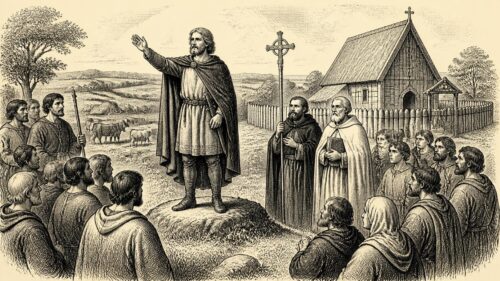
In 753 CE, Domnall Midi of Clann Cholmáin enforced the law of Colum Cille, publicly combining royal authority with the saint’s protection, privileges and ecclesiastical claims. The act reflected Ireland’s fragmented political order, where rulers, kin groups and churches negotiated power. Annals also record a solar eclipse, deaths of abbots and churchmen across Ireland, the death of Echaid, king of Uí Moccu Uais, slaughter among Connacht groups, and Ferblae’s death as a learned man. These terse notices reveal interconnected religious, political and economic communities. Chronological differences among annals require caution, although the eclipse is securely dated to 9 January 753.
Read Article
Archived: 31 October 2026
Abstract
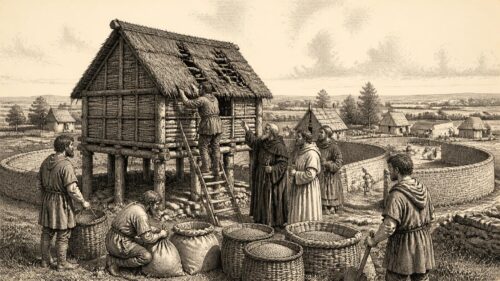
In 751, Irish annals recorded regional political and ecclesiastical change rather than a national event. Half the stored grain at Clonard, a major Meath monastery, was destroyed in uncertain circumstances, exposing the dependence of religious communities upon agricultural production, estates and redistribution. Flann of Uí Fhailgi and Fergus of southern Brega died, creating potential succession openings without recorded conflict. Numerous abbots, bishops, rulers and learned figures also died across Ireland, illustrating the reach of connected churches and monastic networks. The evidence does not establish famine, epidemic, warfare or Viking activity. Instead, 751 reveals fragmented kingship, clerical influence and material vulnerability.
Read Article
Archived: 31 October 2026
Abstract
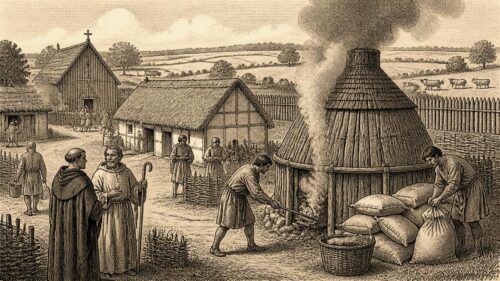
In 750 CE, the Annals of Ulster recorded that half the grain stores at Cluain Ioraird, or Clonard, County Meath, burned in a kiln or drying-house. The cause, quantity lost and consequences remain unknown, but the notice demonstrates the importance and vulnerability of a church settlement dependent on food, labour and reserves. Clonard, an established midland church linked later with learning, operated within networks of land, obligation and regional power. That year also saw the deaths of kings of Uí Fhailgi and southern Brega, illustrating fragmented political authority. The fire reveals material foundations supporting religious life, hospitality and institutional survival.
Read Article


