Archived: 25 October 2026
Abstract
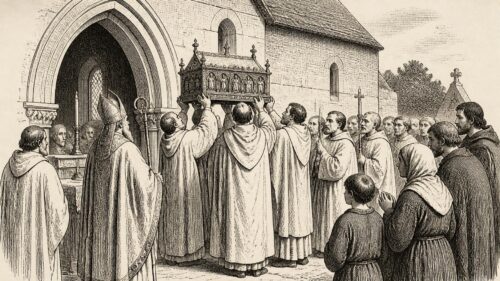
In 1242, a great chapter at Louth, attended by the Primate of Armagh and Irish Canons Regular, ceremonially raised relics of Saint Mochta, affirming religious networks and local prestige. Donnchad Cairprech Ó Briain, king of Thomond, and his son died, enabling Conchobar’s succession. Maurice FitzGerald, justiciar, and Fedlimid Ó Conchobair campaigned in Tír Chonaill, obtaining hostages before Tadhg Ó Conchobair’s capture. Brian Ó Dubhda was killed on pilgrimage, while Sligo’s hospital changed hands. Violence persisted in Connacht and Breifne. Hugh de Lacy’s death ended his personal Ulster lordship, while Armagh’s primate travelled to England. These events reveal fragmented, interconnected authority.
Read Article
Archived: 26 October 2026
Abstract
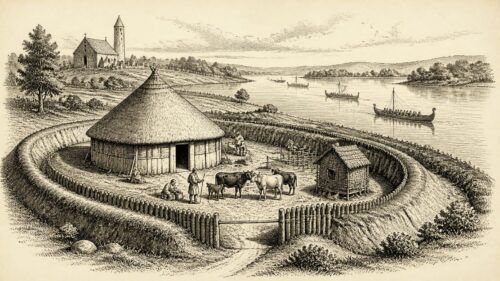
Annals conventionally place 993 amid a major mortality of people, cattle and bees, though its cause, scale and chronology remain uncertain. This crisis threatened subsistence, wealth and ecclesiastical resources. Political violence killed several local rulers in the midlands, Connacht and west, revealing fragmented lordship and Máel Sechnaill’s interventions. Brian of Munster led a naval expedition from Lough Ree towards Bréifne, while Mide suffered devastation and Dublin’s Norse-Gaelic politics remained unsettled. Meanwhile, Muirecán, Patrick’s successor, visited Cenél nÉogain and publicly affirmed Áed’s royal standing. The notices portray interconnected warfare, church authority, riverine mobility and vulnerable rural life throughout Ireland in 993.
Read Article
Archived: 27 October 2026
Abstract
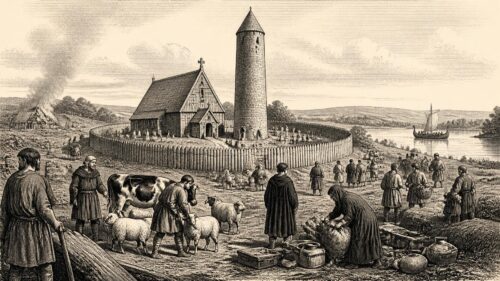
In 933, annalistic sources record interconnected conflicts across northern Ireland, while differing chronologies and casualty figures require caution. Muirchertach and Conaing, sons of Niall Glúndub, suffered defeat at Mag Uatha, but Conaing later defeated Ulaid forces and Muirchertach overcame raiders led by Matudán of Ulaid and Amlaíb son of Gothfrith, recovering plunder. Scandinavian groups based on inland and coastal waters participated in local alliances and warfare. Around Martinmas, Amlaíb plundered Armagh, a wealthy religious and political centre. Death notices for rulers and Bard Bóinne, chief poet, demonstrate the political and cultural consequences of contested authority, strategic waterways and regional violence.
Read Article
Archived: 27 October 2026
Abstract
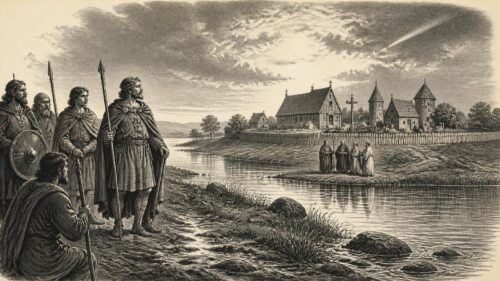
In 912, Irish annals centre on Cernachán son of Duiligén, who removed a captive from Armagh’s sanctuary and who was then killed at Loch Cerr. Niall son of Áed, king of Ailech, drowned Cernachán there, asserting Patrick’s church protection and northern Uí Néill authority. The episode reveals sanctuary, kinship and violence within fragmented kingship. Nearby notices record Niall’s campaigning, conflict between Brega and Leinster, clerical deaths and an accidental fire at Armagh. Annals also describe wet, dark weather and an appearance of Halley’s Comet. Maritime entries show Ulaid fleets, Welsh captives, ransom networks and Scandinavian activity across the Irish Sea.
Read Article
Archived: 28 October 2026
Abstract
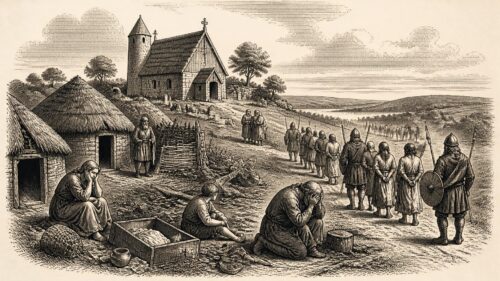
In 895, during the year, according to annalistic chronology, Dublin raiders led by Glún Iarainn plundered Armagh, reportedly carrying off 710 captives and damaging its church. The attack exposed the vulnerability of a major ecclesiastical and political centre. Elsewhere, Dub Lachtna of Caisel and churchman Máel Petair died; Cellach, Brega’s leading heir, was treacherously killed; and Muiredach of Ulaid fell in regional conflict. Heavy snowfall and great scarcity disrupted subsistence, likely worsening hardship without proving direct causes for violence. These fragmented records portray Ireland as interconnected kingdoms and churches, where sacred wealth, political succession, and ordinary survival remained precariously entwined.
Read Article
Archived: 28 October 2026
Abstract
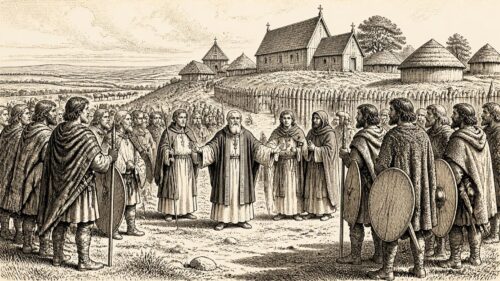
In 893, surviving annals depict Ireland as a landscape of ecclesiastical, dynastic and Scandinavian power. Mochta, bishop, anchorite and scribe of Armagh, died, emphasising the church’s learned authority. At Whitsun, Cenél nEógain and Ulaid forces fought at Armagh; Máel Brigte imposed settlement under Patrick’s honour through compensation, hostages and executions. Dublin’s Scandinavian leadership split between a son of Ímar and the jarl Sigfrith, prompting departures but not ending Viking activity. Congalach, heir designate of Brega, also died, exposing uncertain succession. These fragmentary records reveal sacred centres enforcing political claims amid interconnected Irish Sea conflict and the burdens borne by communities.
Read Article
Archived: 30 October 2026
Abstract
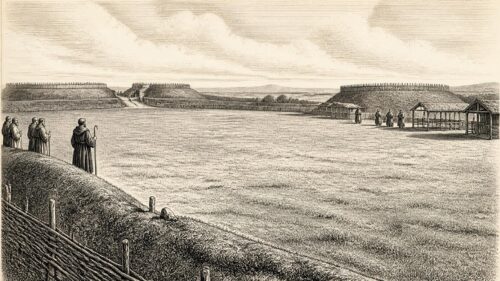
In 810, Tallaght’s monastic community prevented the royal fair at Tailtiu after the Uí Néill violated its sanctuary, leaving the assembly devoid of expected horses and chariots. Subsequent gifts to Tamlacht indicate public redress and demonstrate ecclesiastical leverage over Áed son of Niall’s kingship. Nuadu, abbot of Armagh, carried Patrick’s law and a casket to Connacht, extending Patrician claims without recorded outcome. The Ulaid defeated Scandinavian raiders, the first surviving annalistic Irish victory, though details remain unknown. Death notices recall monastic and aristocratic life, while the disrupted fair depended upon agricultural surplus and rural exchange across early medieval Irish society.
Read Article
Archived: 30 October 2026
Abstract
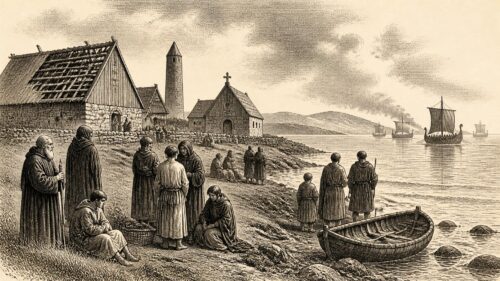
In 806, though annalistic dating varies, Ireland experienced pestilence, political upheaval, ecclesiastical losses and attacks on religious sites. A great mortality was recorded alongside abundant woodland mast, without identifying the disease. Áed Oirdnide promulgated Patrick’s law, reinforcing links between royal authority and Armagh, while Fínshnechtae regained Leinster and Flaithnia of Uí Fhailgi was killed. Leading churchmen died, and Tír dá Glas was burned for unknown reasons. Most notably, pagan seaborne raiders killed sixty-eight members of Iona’s Columban community. The massacre exposed monasteries’ maritime vulnerability, although Iona and its Irish-connected Columban network survived and remained influential throughout the Irish Sea world.
Read Article
Archived: 30 October 2026
Abstract
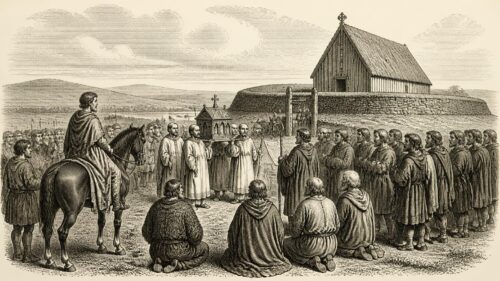
In 793, Ireland’s annals depict religious institutions as instruments of regional power rather than a unified kingdom. Muirgius of Connacht supported the promulgation of Comán’s law, while Munster’s Artrí was formally acknowledged as king alongside Ailbe’s law, probably strengthening Emly’s ecclesiastical claims. Armagh suffered the death of abbot Dub dá Leithe, other notable obituaries, and violent violation by Uí Chremthainn, followed by restoration. Tóla’s relics were taken on circuit, extending sacred authority beyond monasteries. In south-west Munster, the king of Corcu Duibne died at Conchenn. Chronological uncertainties remain, and however no securely recorded Viking raid occurred in Ireland that year.
Read Article
Archived: 31 October 2026
Abstract
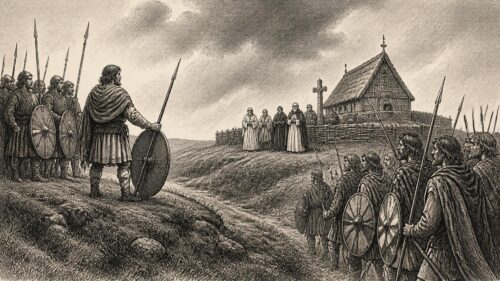
In 759, annals record conflict, death and weather across Ireland, though their dating differs slightly. At Emain Macha, rivalry between priest Airechtach and Armagh’s abbot Fer dá Chrích helped provoke battle between Ulaid and Uí Néill forces. Fiachnae of Ulaid prevailed; Dúngal grandson of Conaing and Donn Bó died. Anmchad, king of Osraige, defeated Leinstermen at Gabráin. Domnall of Leinster died, alongside kings Rechtabra and Ferdamal, several abbots and named scholars. A rainy summer and a remarkable fish-bearing stream were noted. These terse records reveal intertwined ecclesiastical authority, regional warfare, learning and environmental observation within contested local networks of authority.
Read Article
Archived: 31 October 2026
Abstract
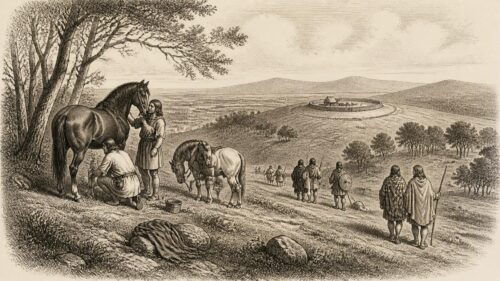
In 758, Irish annals record regional political and ecclesiastical transitions rather than an island-wide crisis. At Druim Róbaig in Connacht, Uí Briúin defeated Uí Fhiachrach; Ailill grandson of Dúnchad prevailed, while Tadc son of Muirdibur and three grandsons of Cellach were killed. Deaths included Niallgus, king of the Déisi of Brega, Cathal of Uí Chennselaig, and Aed of the Ciannachta. Céile Petair, abbot of Armagh, and Marthu, abbess of Kildare, also died. These notices reveal Ireland's regional lordships, kin-based succession and influential churches, while their selectivity precludes claims about nationwide conditions, causes, or outcomes beyond the sparse surviving evidence available.
Read Article
Archived: 1 November 2026
Abstract
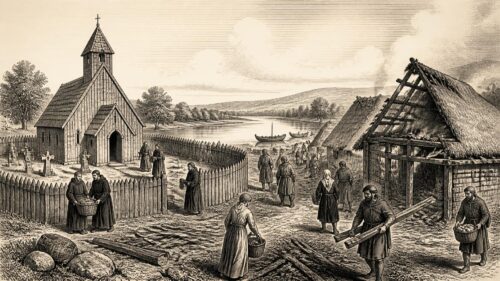
In 731, Irish annals record the burning of Cúl Raithin, generally identified with Coleraine, without naming attackers, motive or losses. As a church-centred settlement on the Bann, its destruction probably disrupted worship, learning, storage, production and lordship. Annalistic chronology supports the date but cautions against detailed reconstruction. Death notices commemorate religious figures including Colmán úa Littáin and Eochaid of Armagh, while revealing varied ecclesiastical centres and ties to dynasties. Reports of fighting in Dál Riata and Pictland, and Ceolwulf’s Northumbrian imprisonment, show a connected northern maritime world. The evidence remains selective, recording no unified Irish crisis but illuminating ordinary life.
Read Article

