Archived: 1 October 2026
Abstract
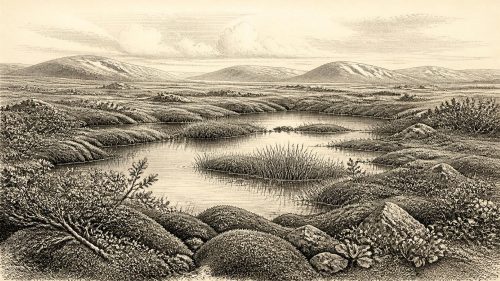
Around 30,430 BCE, Ireland is known only through broad calibrated ranges and fragmentary environmental evidence. At Derryvree, County Fermanagh, freshwater silts between glacial tills show that ice retreated long enough for tundra wetland communities to develop. Pollen, plants and insects indicate treeless ground with grasses, sedges, dwarf willow, arctic-alpine flora and aquatic pools, before later ice returned. Castlepook Cave, County Cork, preserves mixed Middle and Late Pleistocene fauna, including mammoth, reindeer, giant deer and predators, demonstrating cold-stage habitats. A possibly cut-marked reindeer bone suggests brief human visits, but no secure evidence supports settlement, culture or permanent occupation in this period.
Read Article

Archived: 27 September 2026
Abstract
30,560 BCE is not a precise recoverable Irish historical year but a broad Late Pleistocene horizon within Marine Isotope Stage 3. At Derryvree, County Fermanagh, freshwater organic sediments between glacial tills record an ice-free interval before renewed glaciation. Radiocarbon dating provides only a wide calibrated range. Mosses, sedges, dwarf willow, aquatic plants, pollen and insects indicate cold, treeless, wet, open terrain with pools and short growing seasons. Comparable sites demonstrate regionally varied ice activity. Southern cave fauna confirms wider Pleistocene mammals, though not contemporaneity. No secure evidence identifies humans, settlements, agriculture or institutions then; Ireland’s earliest human activity is later.
Read Article

Archived: 26 September 2026
Abstract
Around 30,662 BCE, Ireland cannot be described through annual events or recorded communities, but through uncertain environmental evidence. At Derryvree, County Fermanagh, freshwater sediments and organic deposits between two glacial tills reveal a local ice-free interval during Marine Isotope Stage 3. Macrofossils indicate cold, wet, treeless terrain of pools, sedges, dwarf willow and sparse tundra-like vegetation. Lower sea levels altered coasts, although land connections remain unproven. Castlepook Cave’s fauna demonstrates that large mammals occupied suitable habitats, but its mixed deposits cannot date a single landscape. A possibly cut-marked reindeer bone suggests fleeting human visits, not established settlement, society or polity.
Read Article

Archived: 25 September 2026
Abstract
At the nominal date of 30,684 BCE, Ireland lay within the climatically unstable Late Pleistocene Marine Isotope Stage 3. Derryvree in County Fermanagh preserves freshwater silts between glacial tills, indicating a locally ice-free interval during the Midlandian glacial cycle. Radiocarbon evidence dates these deposits broadly, not to a single year. Its wetland supported tundra vegetation, including dwarf willow, bogbean, sedges and mosses, alongside cold-adapted insects. Cave faunas elsewhere demonstrate Irish Late Pleistocene ecosystems containing mammals such as reindeer, mammoth and predators. No secure human settlement or occupation is known; a marked reindeer bone from Castlepook only suggests possible human activity.
Read Article

Archived: 14 September 2026
Abstract
31,752 BCE is a modern label rather than a precisely recoverable Irish year. Evidence from Derryvree, County Fermanagh, records an ice-free MIS 3 interval between glacial advances, with freshwater silts preserving tundra vegetation including dwarf willow, bogbean, sedges and mosses. Greenagho supports regional ice-free conditions, although Ireland’s ice cover, coastlines and connections remained variable. Castlepook Cave in Cork documents diverse cold-stage fauna, but revised dates prevent assuming contemporaneous species. A marked reindeer bone may indicate Upper Palaeolithic butchery, yet no secure settlement evidence exists. The period is best understood through fragmentary environmental records preceding major ice-sheet expansion across the island.
Read Article