Archived: 26 September 2026
Abstract
Ireland’s 2024 combined constitutional rebuff, electoral change and social pressures. In March, voters rejected Family and Care amendments, citing unclear wording and limited practical value. Simon Harris succeeded Leo Varadkar as Taoiseach, while local, European and November general elections produced fragmented representation; government formation remained unresolved. Population growth and migration intensified housing, service and international-protection accommodation shortages despite construction and economic resilience. Cuan expanded domestic-violence provision. Ireland recognised Palestine, challenged UK legacy legislation, and Northern Ireland’s Executive returned. Cultural achievements included Cillian Murphy’s Oscar. Education initiatives and a stormy year highlighted environmental concerns, reinforcing tensions between activity and inadequate capacity.
Read Article

Archived: 26 September 2026
Abstract
Ireland’s 2016 combined the Easter Rising centenary with political fragmentation and Brexit uncertainty. After an inconclusive election, Enda Kenny led a Fine Gael minority government sustained by Fianna Fáil confidence and supply, amid disputes over water charges, housing and public services. Inclusive commemorations at the GPO, Kilmainham and elsewhere examined 1916’s contested legacy. Britain’s EU withdrawal vote revived concerns about the border, trade, the Common Travel Area and the peace process. Economic recovery, falling unemployment and immigration coincided with homelessness and housing shortages. Ireland challenged the European Commission’s Apple tax ruling, established a Citizens’ Assembly, and joined the Paris Agreement.
Read Article

Archived: 8 October 2026
Abstract
In 1978, Jack Lynch’s Fianna Fáil government pursued expansionary policies, abolishing domestic rates while increasing borrowing amid unemployment and inflation. Its dismissal of Garda Commissioner Edmund Garvey was ruled invalid, raising concerns about policing and due process. Ireland chose to join the European Monetary System, loosening its automatic link with sterling. Northern Ireland endured violence, including the La Mon bombing, while the Maze dirty protest intensified and Ireland won a human-rights case against Britain. RTÉ 2 began broadcasting, John Treacy won the World Cross Country Championship, and Munster’s 12–0 victory over the All Blacks provided a lasting symbol of confidence.
Read Article

Archived: 8 October 2026
Abstract
In 1973, Ireland joined the European Economic Community, opening markets, agricultural supports and a less Britain-dependent future, while Irish gained limited Community status. A Fine Gael–Labour coalition replaced Fianna Fáil, and constitutional reforms lowering the voting age and removing denominational preference took effect. Troubles violence affected both jurisdictions and extended to London. Northern Ireland’s border poll, Assembly, constitutional legislation and power-sharing plans sought to replace unionist majority rule, but remained contested. December’s Sunningdale Agreement linked consent, an Executive and a Council of Ireland. Oil-driven inflation complicated European optimism. The year established principles of power-sharing and north-south co-operation amid continuing conflict.
Read Article

Archived: 8 October 2026
Abstract
In 1971, Ireland underwent modernisation while Northern Ireland descended into deeper conflict. Decimalisation transformed transactions across the island, while censuses recorded populations north and south. Northern reforms included local-government boundaries and a province-wide Housing Executive; southern welfare and health changes also reshaped public services. Brian Faulkner succeeded James Chichester-Clark amid worsening unrest. Internment without trial, introduced in August, alienated nationalists, prompted killings, displacement and the SDLP’s withdrawal from Stormont, and led Ireland to challenge Britain in Europe. Republican and loyalist violence persisted, including the McGurk’s Bar bombing. Meanwhile, European Community negotiations, colour television, broadcasting restrictions and literary publication reflected society.
Read Article
Archived: 10 October 2026
Abstract
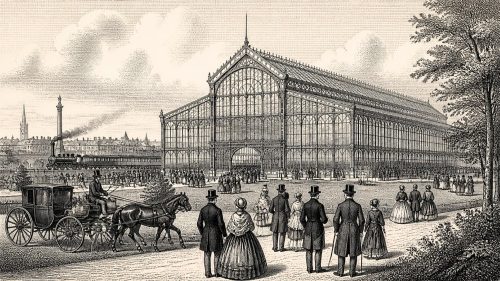
Dublin’s Great Industrial Exhibition opened on Leinster Lawn in May 1853, funded largely by railway contractor William Dargan and organised with the Royal Dublin Society. Its glass-and-iron halls displayed art, manufacture, machinery and Irish antiquities, projecting modernity after the Famine, though access remained socially limited. Queen Victoria’s August visit amplified its civic and imperial significance. Meanwhile, population decline, emigration, workhouses and estate sales showed continuing hardship. Tenant Right politics fractured as leading advocates accepted office. Gladstone extended income tax to Ireland despite objections. Plans for a gallery and Catholic university developed, while John Mitchel escaped transportation, symbolising enduring nationalist exile.
Read Article
Archived: 11 October 2026
Abstract
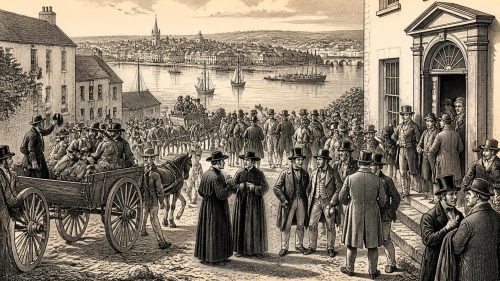
In 1826, Ireland saw organised Catholic politics challenge landlord authority without achieving emancipation. Daniel O’Connell’s reconstituted Catholic Association mobilised parish networks, subscriptions and forty-shilling freeholders around religious rights, education and electoral action. County Waterford’s election symbolised this change: Henry Villiers Stuart, a Protestant emancipation supporter, defeated Lord George Beresford, demonstrating tenants’ capacity to resist estate influence. Pro-emancipation gains elsewhere reinforced warning to government. Sterling replaced Irish currency, integrating financial administration with Britain. An education inquiry exposed fragmented, denominational schooling, while land legislation addressed complex tenancies amid rural hardship. Arklow received Ireland’s lifeboat station, and Tyrone Power advanced his London career.
Read Article
Archived: 11 October 2026
Abstract
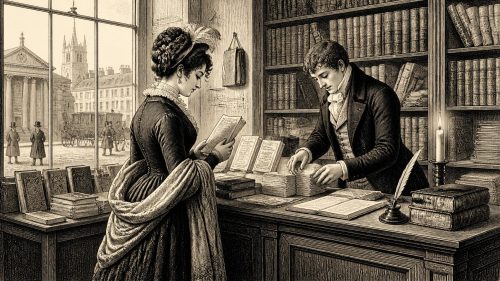
In 1806, five years after the Union, Ireland was governed increasingly through Westminster, while Catholic emancipation remained unrealised despite Lord Grenville’s sympathetic ministry. The United Kingdom election returned Irish MPs through restricted, patronage-driven constituencies, and wartime administration integrated Irish finance, trade and defence into imperial structures. Legislation regulated butter exports, excise, and charitable hospitals, illustrating expanding state oversight without comprehensive poor relief. Coastal defences reflected continuing fear of French invasion. Dublin retained elite social importance, marked by Arthur Wellesley’s marriage. Literary publishing proved significant: Sydney Owenson’s The Wild Irish Girl articulated Gaelic cultural survival, alongside satire and Ulster vernacular verse.
Read Article

Archived: 11 October 2026
Abstract
In 1801 the Act of Union abolished Ireland’s parliament and incorporated the kingdom into the United Kingdom, while Dublin Castle and local administration remained. Ireland received limited Westminster representation, dominated by property and borough influence. Catholic hopes of emancipation collapsed after George III’s opposition, strengthening the established Protestant church and prompting ministerial resignations. Lord Hardwicke became lord lieutenant amid fears after the 1798 rebellion. United Irishman James Napper Tandy, condemned for treason, was pardoned and spared execution. Food scarcity, high prices and uneven relief burdened households. Fiscal and trade integration proceeded gradually, while officials envisaged Ireland within an imperial framework.
Read Article

