
Year by Year
Explore Year by Year articles from the most modern historical year back to the oldest.
3,295 Articles Archived
Osraige Expedition
Archived: 28 October 2026
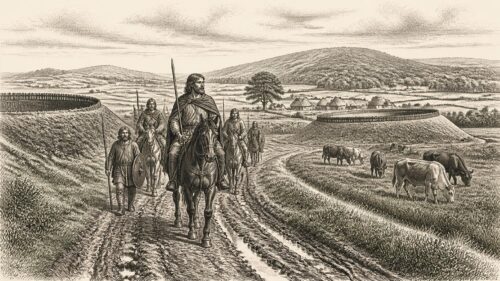
In 905, the Annals of Ulster record Flann Sinna, king of Tara, leading an expedition into strategically important Osraige, amid rivalry with Munster and instability within its ruling dynasty. The source does not specify fighting or outcomes, but the march demonstrated royal pressure in a region linking Leinster and Munster. Máel Ciaráin, bishop of Lann Léire, and Lachtnán, abbot of Ferna, died, highlighting ecclesiastical succession and local power. In the north, Cenél nÉogain prevented battle between Domnall and Niall, sons of Áed Findliath. These sparse notices reveal interconnected kingship, church institutions, rural resources, diplomacy, and tensions preceding wider conflict soon.
Kells Profanation
Archived: 28 October 2026
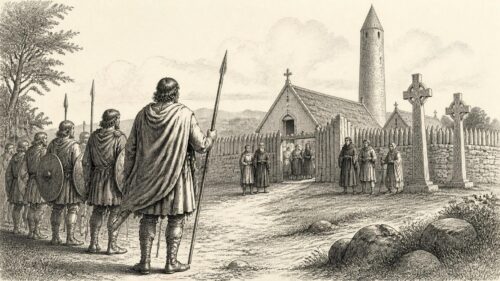
In 904, Flann Sinna, king of Tara, violently confronted his adult son Donnchad at Kells, where the Annals of Ulster record the profanation of the sacred site and the beheading of many men near its oratory. The episode, imperfectly dated, reveals dynastic conflict overriding sanctuary. Deaths of the leaders of Clonmacnoise, Glendalough and Emly marked transitions within influential ecclesiastical centres. Beyond Ireland, Ímar, grandson of Ímar, was killed by men of Foirtriu, reflecting instability after Dublin’s 902 expulsion of Scandinavian rulers. Later attribution of Clonmacnoise’s stone church to 904 is unreliable; evidence dates it to 909 rather than that year.
Treóit Killing
Archived: 28 October 2026
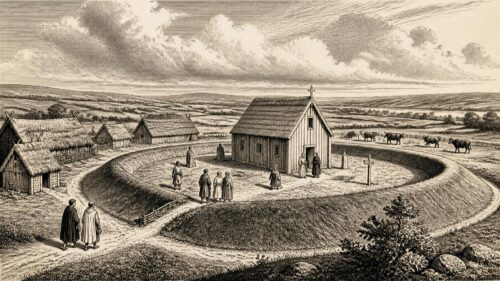
In 903, Irish annals recorded political and ecclesiastical transitions rather than a major campaign. Máel Finnia of Brega, recently associated with Dublin’s Scandinavian expulsion, died and received praise emphasising piety, generosity and martial authority. At Treóit near Tara, Máel Mithig and Áengus committed an unnamed killing at Flann Sinna’s instigation, showing royal influence exercised through kinship and local allies. Deaths among rulers in Laíges, Tuirbe and Uí Cheinnselaig indicated regional succession pressures. Senior churchmen also died, underlining monasteries’ administrative and political importance. Divergent annals require chronological caution. The year reveals power resting on fragile relationships between dynasties, churches and communities.
Dublin Overthrow
Archived: 28 October 2026
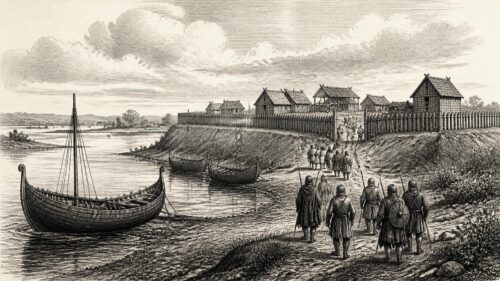
In 902, forces led by Cerball of Leinster and Máel Finnia of Brega expelled Dublin’s Scandinavian rulers from Áth Cliath, ending the city’s phase as a fortified naval and commercial base. Annals describe abandoned ships and wounded fugitives, but do not permit reconstruction of battle details or prove every Scandinavian inhabitant left Ireland. Archaeology indicates a diverse settlement of warriors, traders, craftspeople and families, while residual occupation complicates claims of complete abandonment. Elsewhere, Finnguine of Cashel was killed, enabling Cormac’s accession, and ecclesiastical leadership changed at Lathrach Briúin. The expulsion transformed regional power without ending Scandinavian influence or Dublin’s restoration.
Luigne Burning
Archived: 28 October 2026
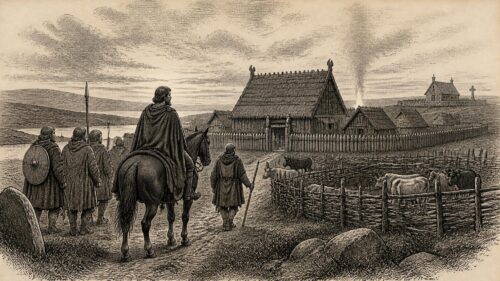
In 901, Máel Ruanaid, designated heir of Ireland and son of high king Flann Sinna, was burned to death with companions by the Luigne, exposing the insecurity of succession and the reach of local rivalries. Among the victims were a neighbouring king and an ecclesiastical superior, illustrating intertwined secular and religious power. Annalistic dating remains uncertain, particularly for Cormac son of Cuilennán's accession as bishop-king of Cashel, generally placed in 901–902. Notices of abbots' deaths show monasteries' regional importance. The article cautions against assigning Dublin's Viking expulsion, famine, or other undocumented events securely to 901, despite gaps in surviving evidence.
Tadc’s Penance
Archived: 28 October 2026
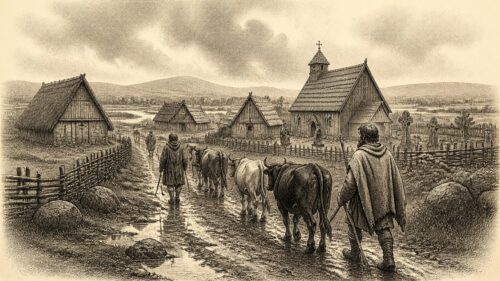
In 900, Irish annals recorded environmental strain, political deaths, ecclesiastical life and raiding across a fragmented island. A rainy year and scarcity among cattle, with related references to bread shortage, exposed dependence on pastoral and arable production, though they do not prove famine. Tadc son of Conchobor, overking of the three Connachta, died after penitential renunciation associated with Ciarán’s Dun Cow; Mac Étig of Dál Araidi also died. Scandinavian raiders plundered Kildare, a wealthy sacred centre. Deaths of prominent churchmen and an Alban king further reveal Irish Sea connections, while Clonmacnoise’s prestige linked lordship, learning and religious authority in Ireland.
Inis Aingin
Archived: 28 October 2026
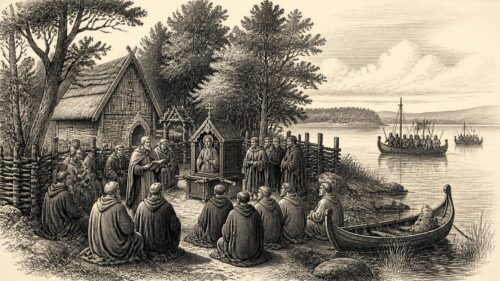
In 899, Chronicon Scotorum recorded a rainy year and bread shortage, alongside political and ecclesiastical disruption in central Ireland. Connacht raiders entered western Mide, profaned Inis Aingin on Lough Ree during a synod attended by Cairbre Crom, bishop of Clonmacnoise, and Ciarán’s shrine, and killed one unnamed man. The men of western Mide defeated the raiders at Áth Luain the same day, leaving unspecified casualties. The annals also note Argadán, abbot of Corcach’s death. These events reveal food insecurity, strategic waterways, regional warfare and church authority as interwoven features of early medieval Irish society. Scholars date these events to 899.
Aidíth’s Killing
Archived: 28 October 2026
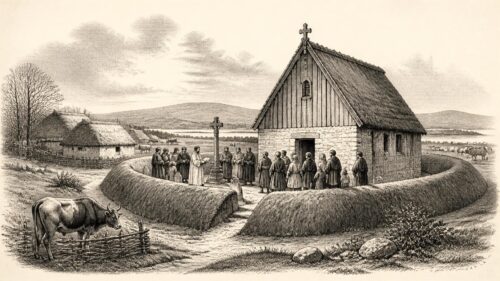
In 898, annalistic records portray Ireland as a landscape of vulnerable regional kingships and influential churches. Aidíth son of Laigne, king of Ulaid, was killed by his associates, probably amid intensified rivalry after military defeat, although motives and successor remain unknown. Cairpre, superior of Lann Léire at Dunleer, died, marking transition within a powerful ecclesiastical community. A reported shower of blood at Ard Cianachta was recorded as an extraordinary, possibly portentous phenomenon. In Corcu Bascinn, west Clare, King Flann son of Cathrannach died and his brother Lennán succeeded, illustrating dynastic continuity. Divergent annalistic chronologies require caution in dating these events.
Rath Cró
Archived: 28 October 2026
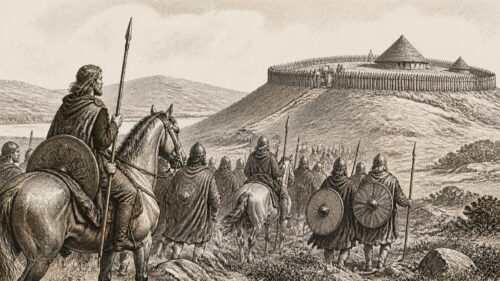
In annalistic 897, Máel Finnia of Brega defeated Ulaid and Dál nAraidi forces at Rath Cró, killing two kings and wounding Aidíth of Ulaid. Flann Sinna of Tara campaigned in Connacht, extracting pledges that demonstrated contested high-kingship. Uathmarán of Uí Fhailgi was killed by his own people, while Cormac of Mothail gained Déisi kingship after killing Máel Bennachta. Cathasach, tanist-abbot of Armagh, died. Aidíth was later murdered by associates. Dublin remained Scandinavian in 897; its expulsion belonged to 902. The sources reveal regional warfare, unstable succession and church politics, but cannot support broader claims about ordinary life or environmental conditions.
Poet Flann
Archived: 28 October 2026
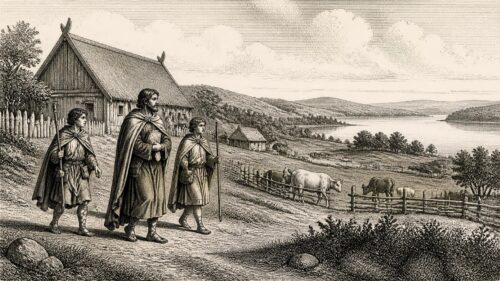
In the annalistic year conventionally rendered 896, Ireland experienced interconnected regional crises rather than a single national conflict. Flann son of Lonán, acclaimed as Ireland’s chief poet, was killed by the Uí Fhothaid in the Déisi. Norse leaders Sitriuc and Amlaíb, linked to Ímar’s dynasty, died in separate violence, revealing Scandinavian divisions and resistance by coastal peoples. Máel Achaid, Clonmacnoise’s designated successor, was killed amid retaliation involving Delbna Bethra, while senior clerics died peacefully. Brega, Ulaid, Osraige and Munster saw killings or rivalry; Cenn Gégáin assumed Cashel’s kingship. Sparse annals show cultural, ecclesiastical and political authority intertwined across fragmented lordships.
Some records do not yet have a verified historical year and are awaiting chronological placement.