
Year by Year
Explore Year by Year articles from the most modern historical year back to the oldest.
3,295 Articles Archived
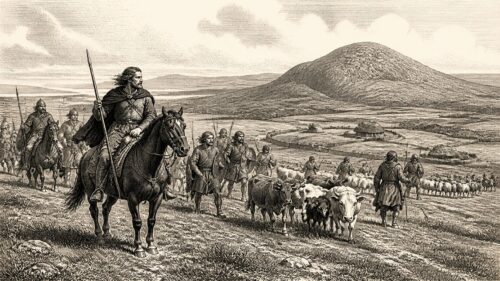
Sliab Monduirn
Archived: 28 October 2026
In 875, Muiredach son of Bran led Leinster’s army on a rapid destructive raid to Sliab Monduirn in the Armagh region, demonstrating provincial rivalry without proving a specific target. Annals also record deaths of prominent churchmen at Clonmacnoise, Kildare, Ferns, Tallaght, Lusk and Glendalough, whose offices combined religious leadership, learning, property and political connections. Across the Irish Sea, Picts suffered heavily against the Dubgaill, while Oistín, son of Dublin-associated Viking ruler Amlaíb, was killed. These fragmentary notices reveal interconnected warfare, ecclesiastical succession and maritime Scandinavian power, rather than a unified Ireland or detailed national narrative. The evidence cautions against invention.
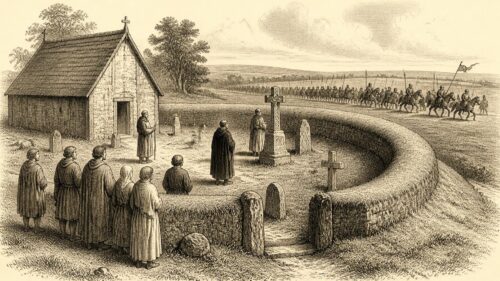
Fethgna Killashee
Archived: 28 October 2026
In 874, Féthgna, successor of Patrick and head of religion in Ireland, died after a long leadership of Armagh, highlighting that church’s political and spiritual authority. Áed Findliath, king of Tara, campaigned in Leinster, profaning Cell Ausili, probably Killashee, and burning other churches, demonstrating the vulnerability of sacred sites during royal coercion. Clerical deaths at Roscommon and Tamlacht emphasised the importance of bishops and scribes in administering wealthy, learned ecclesiastical communities. Foreign raiders plundered Cell Mór of Mag Enir. Against a changing Viking background following Ímar’s death, the year revealed Ireland’s interwoven military, religious, economic and intellectual pressures across society.
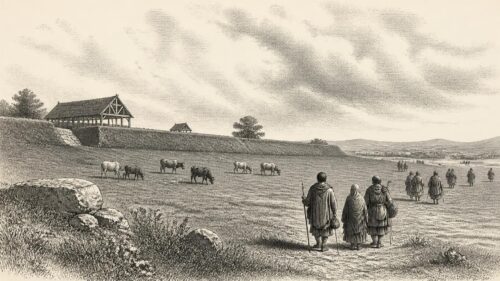
Tailtiu Assembly
Archived: 28 October 2026
In 873, amid uncertain annalistic dating, Ireland experienced political change across local kingdoms and the Irish Sea world. Ímar, pre-eminent Norse ruler associated with Dublin, died, weakening but not ending Scandinavian influence; his dynasty remained important. Irish kings Dúnchad of Cashel and Cerball of Osraige raided Connacht, while Dublin forces plundered Munster. Lethlabar of Dál nAraide died, reshaping succession and rivalry in Ulaid. Several lesser rulers and church leaders also died. Most notably, Tailtiu’s great assembly failed to convene without adequate cause, apparently exposing Áed Findliath’s weakened royal authority. These events reveal resilient communities, enduring institutions, and fragmented, competitive power.
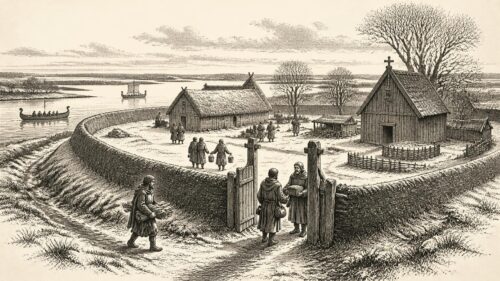
Cenn Fáelad
Archived: 28 October 2026
In 872, Irish annals record deaths, ecclesiastical transitions and an inland winter raid rather than major battles or assemblies. Cenn Fáelad, king of Cashel and abbot of Emly, died after illness, uniting royal and religious authority. Ferdomnach of Clonmacnoise, Gnia of Duleek, and several church leaders also died, highlighting monastic networks of learning, patronage and resources. Mugrón of Connacht and Máel Ruanaid of northern Uí Moccu Uais likewise died. Around 1 February, foreign rulers massacred or raided communities from Trí Maige and Trí Comainn to Slieve Bloom, demonstrating inland vulnerability. The year reveals plural, literate institutions exposed to Scandinavian-led violence.
Dún Sobairche
Archived: 28 October 2026
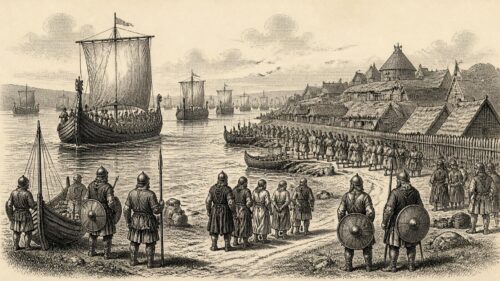
In 871, Amlaíb and Ímar returned to Dublin from Alba with an annalistically reported fleet of 200 ships and captives from Britain, demonstrating Scandinavian maritime power and forced human movement. Dún Sobairche, probably Dunseverick, was stormed in an unprecedented assault involving foreigners and Cenél nEógain, though its circumstances remain unclear. Cathalán, joint king of Ulaid, was deceitfully killed, while Ailill of Leinster died at Norse hands. Annals also recorded prominent ecclesiastical deaths, including the historian Cú Raí. These sparse, uneven records collectively depict regional political instability, enduring church networks, and Dublin’s growing role in Irish Sea warfare, commerce, and communication.
Dún Bolg
Archived: 28 October 2026
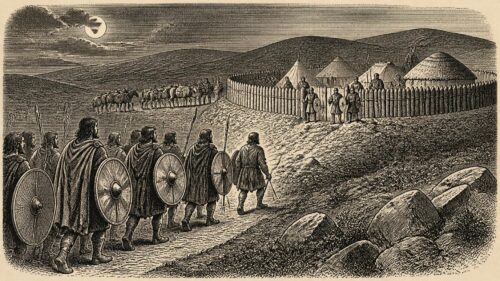
In 870, Áed Findliath, king of Tara, invaded Leinster from the Dublin region, allied with his brother-in-law Cerball of Osraige and Cennétig of Loíches. Leinster’s king Muiredach led resistance, attacking Cerball’s camp at Dún Bolg by night. Despite losses, including Cennétig’s son, the attackers retreated, leaving the wider struggle unresolved and no recorded tribute or hostages. Annals also record deaths of prominent abbots, bishops and anchorites, notably at Clonard and Kildare, illustrating ecclesiastical influence. Meanwhile Dublin’s Norse rulers Amlaíb and Ímar besieged and plundered Dumbarton Rock, demonstrating Ireland’s political and military connections across the Irish Sea during this eventful year.
Suairlech’s Chronology
Archived: 28 October 2026
Ireland’s history for 869 is defined by chronological uncertainty. Annalistic material aligned with AD 869 is conventionally discussed under 870, requiring caution over events including Suairlech’s death at Clonard. Áed Findliath, king of Tara, was consolidating authority after his 868 victory over opponents from Brega, Leinster and Scandinavian groups. Ireland remained tense, with Leinster, Osraige and Dublin poised for conflict. Clonard, a major religious and political centre, faced the impending loss of its influential bishop-abbot. Violence, including Amlaíb’s assault on Armagh, exposed ecclesiastical vulnerability. The following year’s Leinster campaign illuminates pressures building, while Dublin’s Scandinavian power shaped alliances and rivalries.
Áed Victory
Archived: 28 October 2026
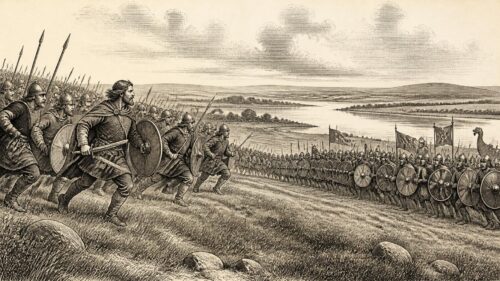
In 868, Áed Findliath, king of Tara, defeated a coalition of Brega, Leinster and Scandinavian fighters at Cell Ua nDaigri, probably near Killineer. Dated to 6 September by Chronicon Scotorum, the battle killed Flann of Brega and many allies, while Áed’s forces also suffered serious losses. It demonstrated both Tara’s contested authority and Vikings’ role as participants in Irish dynastic politics. Annals also recorded deaths of abbots and scribes, including leaders at Clonmacnoise, Glendalough and Tallaght, revealing monastic institutions’ importance. A water event in Sliab Cualann and a Martinmas windstorm completed a year marked by conflict, ecclesiastical change and uncertainty.
Clondalkin Fortress
Archived: 28 October 2026
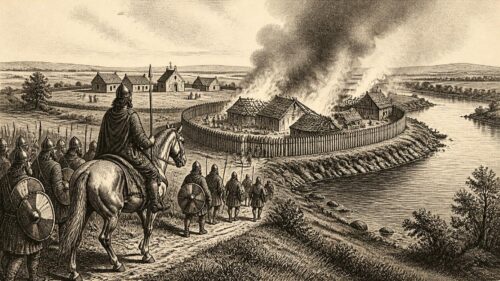
In 867, Cennétig mac Gaíthéne of Loígis and Máel Ciaráin son of Rónán burned Amlaíb’s fort at Clondalkin, near Viking Dublin, reportedly killing one hundred foreign leaders. The attack, recorded with chronological variation in Irish annals, followed or coincided with dynastic division among Dublin’s Scandinavian rulers after Auisle’s killing. It checked, but did not end, Viking power; Dublin remained active and any subsequent assault is uncertain. Clondalkin’s monastic setting illustrates competition for resources and communications. The year also saw Gaelic succession conflicts and clerical deaths, while churches, literacy, trade, craft production and maritime networks endured amid political fragmentation and warfare.
Foyle Longphuirt
Archived: 28 October 2026
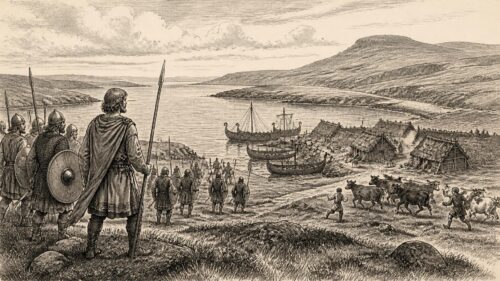
In 866, Áed Findliath, king of Tara, attacked Scandinavian longphuirt in Cenél nÉogain and Dál Araidi, defeated their forces at Lough Foyle, seized livestock and claimed 240 deaths. The campaign damaged northern maritime bases connected to wider Irish Sea networks, though its scope remains uncertain. Meanwhile, Dublin-associated rulers Amlaíb and Auisle raided Pictish Fortriu, taking hostages. In the west, jarl Tomrar plundered Clonfert, exposing monastic vulnerability despite later miraculous accounts of his death. Ecclesiastical notices underline church institutions’ importance. These events portray Ireland as a politically fragmented, interconnected maritime society, where warfare, trade, religious centres and agricultural resources shaped power.
Some records do not yet have a verified historical year and are awaiting chronological placement.