
Year by Year
Explore Year by Year articles from the most modern historical year back to the oldest.
3,295 Articles Archived
Cellach’s Obituary
Archived: 28 October 2026
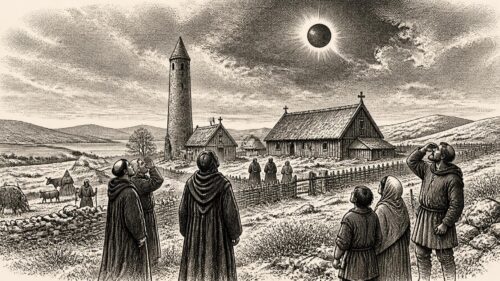
In 865 Irish annals recorded a solar eclipse on 1 January, confirmed by modern astronomy, and a lunar eclipse later that month, providing an unusually secure chronological anchor. Obituaries reveal ecclesiastical networks linking Kildare, Iona, Tallaght and Pictland: Cellach, abbot of Kildare and Iona, died among the Picts. Political instability appeared in the killing of Tadc, king of Uí Chennselaig, by his brothers and supporters, and the death of Tigernach of Loch Gabhair. Áed Findliath’s wider authority remained limited. Norse Dublin shaped the background, but Clondalkin’s burning is securely dated to 867, illustrating annalistic chronological problems within a fragmented polity.
Amlaíb Clonard
Archived: 28 October 2026
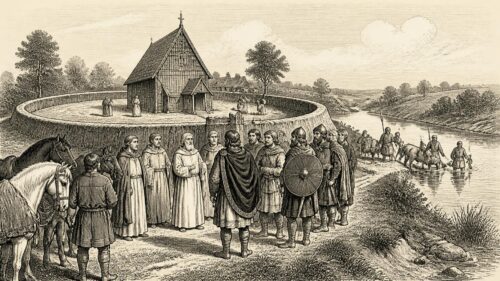
In 864, Ireland’s fragmented politics were marked by coercion, shifting alliances and Scandinavian involvement. Áed Findliath consolidated authority by blinding Lorcán of Mide, while Amlaíb of Dublin drowned Conchobor at Clonard, demonstrating foreign rulers’ influence in inland dynastic struggles. Áed and Flann of Brega defeated the Ulaid, whereas Cerball of Osraige pursued raids, devastation, cattle seizures and hostages across Leinster and Munster. Annals also record ecclesiastical deaths and appointments at Louth, Terryglass and Kildare, alongside a Clare king’s death. Differing annal dates and partisan later narratives require caution, but collectively portray interconnected regional powers, churches and communities vulnerable to warfare.
Cnogba Souterrains
Archived: 28 October 2026
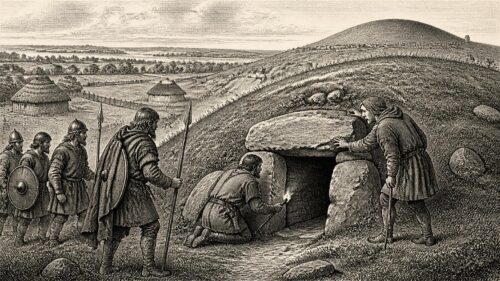
In 863, Scandinavian rulers Amlaíb, Ímar and Auisle, allied with Lorcán of Mide, plundered Flann son of Conaing’s Brega lands and searched named souterrains at Cnogba, Dubad and elsewhere. The unprecedented searches exposed underground refuges as stores or shelters within the contested Boyne landscape. The year also saw Norsemen kill Muirecán of Nás, reshaping Leinster politics, while Muiredach, prior of Armagh and king of the Airthir, died in dynastic violence. Later Fragmentary Annals report Cerball of Osraige defeating foreigners and recovering booty. Together, these notices portray shifting Irish-Scandinavian alliances, politically entangled churches, and insecurity reaching concealed spaces broadly across Ireland.
Máel Sechnaill
Archived: 28 October 2026
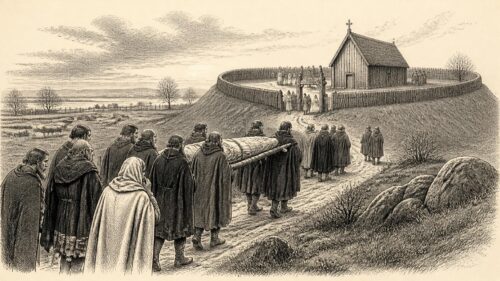
In 862 Máel Sechnaill mac Máele Ruanaid, Clann Cholmáin king of Mide and acclaimed king of all Ireland, died on 27 November after sixteen years, transferring Tara’s kingship to Áed Findliath of Cenél nÉogain. Earlier, Áed, Flann of Cianachta Brega and Scandinavian allies, including Amlaíb, raided Mide, exposing the limits of Máel Sechnaill’s negotiated supremacy. In Osraige, Cerball mac Dúnlainge and Cennétig defeated Rodolb’s Scandinavian fleet. Obituaries for churchmen and physician Máelodar attest religious and learned authority. Beneath dynastic conflict and maritime warfare, rural communities, church estates and agricultural production sustained Ireland’s competing kingdoms and their rulers throughout the year.
Cashel Succession
Archived: 28 October 2026
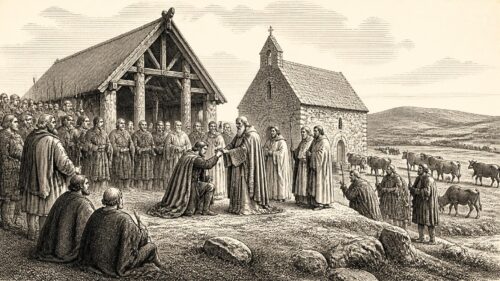
For Ireland, 861 is a year best approached through a small number of sharply focused annalistic notices rather than a continuous national narrative. The surviving records do not permit a day-by-day reconstruction, and their year-numbering sometimes differs between compilations. Yet several entries securely associated with this year illuminate the pressures shaping Irish political life: a change of ruler at Cashel, contention in the midlands involving Áed son of Niall and foreign allies, a victory claimed for the high king Máel Sechnaill, and the continued importance of royal assemblies. Together they show an island governed not by a single settled state, but by overlapping kingships, ecclesiastical centres, kin-groups and military partnerships.
Cerball's Victory
Archived: 28 October 2026
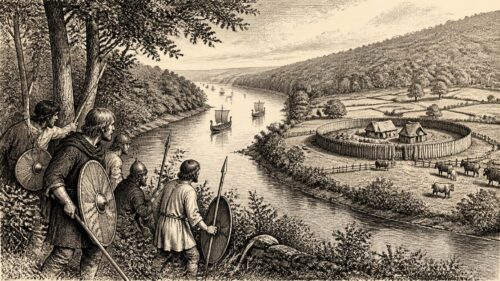
In 860, Irish politics were shaped by warfare, alliance and contested authority. Cerball mac Dúnlainge of Osraige defeated raiders associated with Port Láirge at Achad mic Erclaige, probably Agha near Kilkenny, protecting inland routes and royal prestige. Máel Sechnaill mac Máele Ruanaid assembled a broad coalition for a northern campaign against Áed Findliath, but failed to secure lasting supremacy. Annalistic accounts, especially the Fragmentary Annals, combine historical evidence with pro-Cerball literary embellishment. Armagh’s church leadership mediated oaths and legitimised power, while Scandinavian groups remained political actors. Notices of deaths among rulers and scholars reveal interconnected secular, ecclesiastical and local communities.
Osraige Allegiance
Archived: 29 October 2026
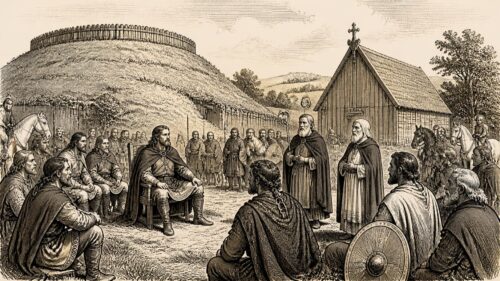
In 859, Máel Sechnaill mac Máele Ruanaid, king of Tara, faced an invasion of Mide by Osraige's Cerball mac Dúnlainge allied with Scandinavian leaders Amlaíb and Ímar. A royal assembly at Ráith Áeda Meic Bric, probably Rahugh, negotiated peace under ecclesiastical witness. Cerball accepted dues to Patrick's community, and Osraige was reoriented from Munster towards Leth Cuinn, strengthening Máel Sechnaill while preserving Cerball's rule. Munster's king, Máel Gualae, guaranteed the settlement but was later killed by Scandinavians. Conflicting annalistic chronologies and narratives complicate details. The settlement demonstrated church-backed negotiation amid shifting Irish-Scandinavian alliances, yet failed to end warfare and instability.
Munster Hostages
Archived: 29 October 2026
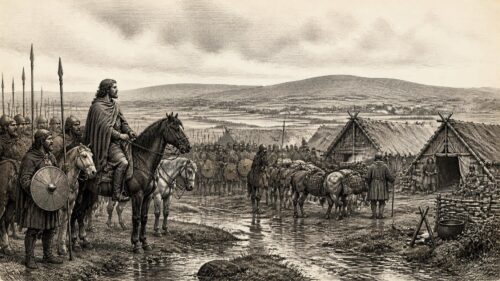
In 858 Máel Sechnaill mac Máel Ruanaid, king of Tara, led a large coalition into Osraige and Munster after resistance to his overlordship and complaints about Cerball of Osraige’s tribute-taking. His forces penetrated Munster, defeated its interests at the unlocated Carn Lugdach, killed Déisi king Máel Cróin, and extracted hostages across the province. Cerball nevertheless raided Leinster and, allied with Scandinavian ruler Ímar, defeated opponents in Ara Tíre. Ecclesiastical and regional royal deaths reflected fragmented authority, while notices of Pictish and West Saxon kings reveal wider connections. A wet autumn damaged crops, compounding disruption from armies, raiding, requisitions and hostage-taking.
Caitil Find
Archived: 29 October 2026
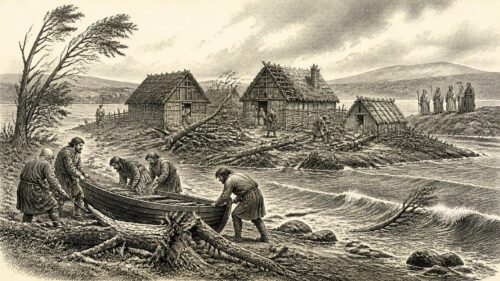
In 857, Ímar and Amlaíb routed Caitil Find and his Gall-Gaídil in Munster, demonstrating competition among Scandinavian-Gaelic forces rather than a simple Irish-Viking conflict. The annals provide no location, casualties or outcome for Caitil. The Annals of Inisfallen also record Búitíne’s fleet arriving in Ireland, without explaining its purpose. Matudán, king of Ulaid, died, possibly after entering clerical life, while Maengal of Fore and Siadal of Dísert Ciaráin also died. At Tailtiu, three people were killed by lightning, and a severe windstorm damaged trees and lake islands. These notices depict Ireland connected through maritime movement, regional power and monastic networks.
Frozen Ireland
Archived: 29 October 2026
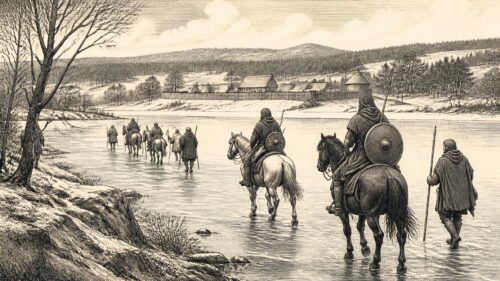
In 856, Ireland experienced severe frost, political coercion and dispersed conflict. Frozen lakes and rivers altered travel across the island. Máel Sechnaill mac Máele Ruanaid visited Cashel and took Munster hostages, demonstrating temporary dominance rather than permanent conquest. He also fought heathen forces with Gall-Goídil allies, reflecting fluid Irish Sea loyalties. Áed son of Niall routed Norse-Irish troops at Glenn Foichle. Norse violence struck ecclesiastical centres, including Lusk’s oratory and Slane’s bishop Sodomna, while Lismore and other churches recorded clerical deaths. Horm, a Scandinavian leader, was killed in Wales, underscoring the wider maritime political world. Annalistic dating remains chronologically uncertain.
Some records do not yet have a verified historical year and are awaiting chronological placement.