
Year by Year
Explore Year by Year articles from the most modern historical year back to the oldest.
3,295 Articles Archived
Rechru Raid
Archived: 30 October 2026
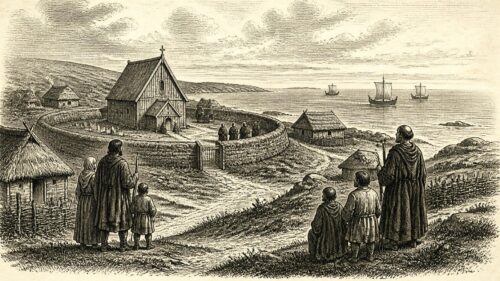
In 795, Irish annals recorded the burning of Rechru by heathens, generally identified as Scandinavian raiders and conventionally regarded as Ireland’s first surviving notice of Viking activity. Rechru’s location, possibly Rathlin or Lambay, and the raid’s scale remain uncertain; associated references may concern Skye or a shrine. The year also saw Leinster’s overking Bran Ardchenn and Queen Eithne killed by a rival dynast, weakening Donnchad Midi’s political alliances, and the death of Armagh’s abbot Faendelach. These events occurred within a rural, church-centred society connected by vulnerable seaways. They signalled emerging maritime insecurity, not immediate Scandinavian permanent settlement or Irish transformation.
Trian’s Relics
Archived: 30 October 2026
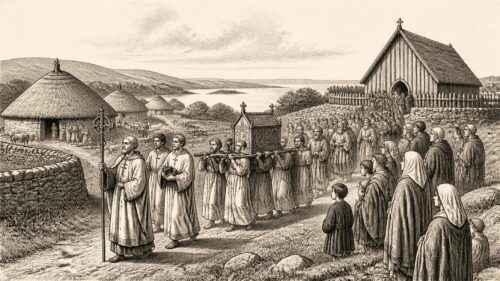
In 794, Irish annals record interconnected religious, political and maritime developments, while remaining sparse about causes and outcomes. The relics of Trian travelled on circuit, extending ecclesiastical authority among communities. Donnchad of Mide led forces supporting Leinster against Munster, while Áed son of Niall invaded Mugdorna Maigen, illustrating regional rivalry rather than national unity. Deaths of senior figures at Armagh, Bangor, Clonmacnoise, Tuaim Gréine and Cluain Bairenn marked significant ecclesiastical transitions, including female leadership. Reports of Scandinavian devastation around Britain warned Irish communities of mounting seaborne danger, preceding securely recorded attacks on Irish islands in following years and transforming horizons.
Ailbe’s Law
Archived: 30 October 2026
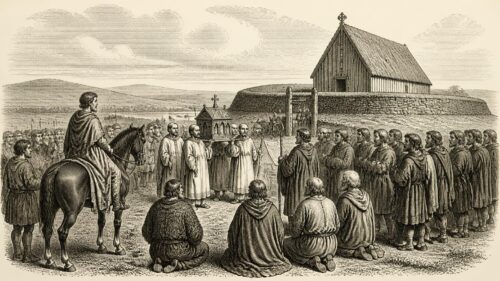
In 793, Ireland’s annals depict religious institutions as instruments of regional power rather than a unified kingdom. Muirgius of Connacht supported the promulgation of Comán’s law, while Munster’s Artrí was formally acknowledged as king alongside Ailbe’s law, probably strengthening Emly’s ecclesiastical claims. Armagh suffered the death of abbot Dub dá Leithe, other notable obituaries, and violent violation by Uí Chremthainn, followed by restoration. Tóla’s relics were taken on circuit, extending sacred authority beyond monasteries. In south-west Munster, the king of Corcu Duibne died at Conchenn. Chronological uncertainties remain, and however no securely recorded Viking raid occurred in Ireland that year.
Connacht Overkingship
Archived: 30 October 2026
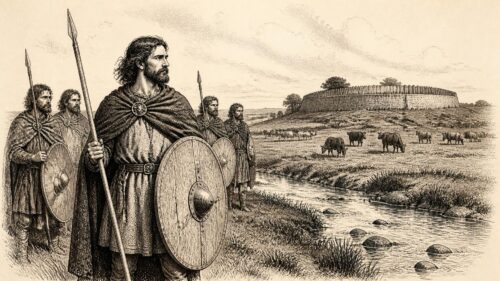
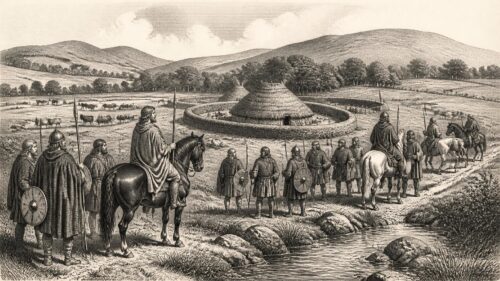
In 792, Muirgius son of Tommaltach of Síl Muiredaig defeated and killed Cináed son of Artgal at Sruth Cluana Argait, probably Cloonargid, establishing his effective overkingship of Connacht. A related battle at Ard Maic Rími crushed Uí Ailello forces and killed rulers from Cairpre and Bréifne, strengthening Muirgius without ending Connacht’s political rivalry. Annals also record deaths of kings in Dál nAraidi, Uí Fhiachrach, Dál Riata and elsewhere. Máel Ruain, founder of Tallaght’s influential religious community, died peacefully. These compressed notices reveal an Ireland shaped by contested dynastic authority, ecclesiastical succession, agricultural communities, and interconnected secular and religious power structures.
Muirgius’s Reign
Archived: 30 October 2026
In 791, Muirgius son of Tommaltach defeated and killed rival claimant Cináed son of Artgal at Sruth Cluana Argait, establishing his reign over Connacht. Both belonged to competing Uí Briúin lineages, and a further defeat of the Uí Ailello, with several regional rulers killed, suggests wider consolidation. The annals date the entry under U792 but identify the year as 791. Muirgius's victory strengthened Uí Briúin Aí, though provincial authority remained contested and dependent on tribute, followers and land. The year also recorded deaths of rulers and churchmen, notably Máel Ruain of Tallaght, influential monastic reformer. No Viking raid is recorded.
Tailtiu Battle
Archived: 30 October 2026
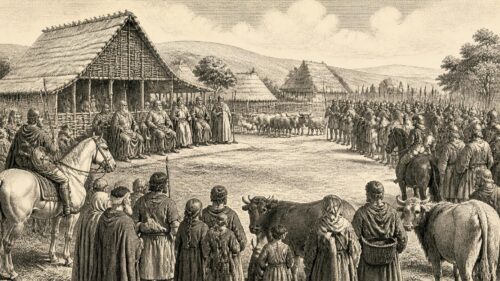
In 790, recorded in the Annals of Ulster under a chronologically disputed heading, Donnchad Midi of Clann Cholmáin defeated Áed Ingor of Cenél nÉogain at Tailtiu, the prestigious Uí Néill assembly site. Allies from Uí Chremthainn died with Áed’s force, demonstrating complex political connections. Diarmait of Tethba was killed at Ard Ablae, while regional kings of Uí Maine and Airthir also died. Obituaries marked leading clerics’ deaths across major churches, and Connacht’s king Artgal died at Iona. Rural farming, ecclesiastical estates and assemblies underpinned society. No securely dated Viking raid belongs to this year; indigenous rivalry dominated political life throughout.
Caemgen’s Relics
Archived: 30 October 2026
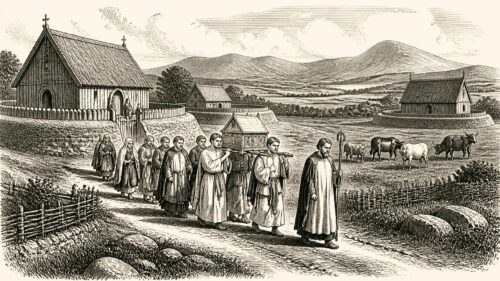
The Irish annal entered under AD 789 in the modern edition of the Annals of Ulster presents a country of intensely local politics, powerful churches and fragile material settlements. Its internal annal number is U790, a reminder that early Irish chronologies require care; nevertheless, the editor’s calendar heading places the cluster of notices considered here in 789 CE. The record does not describe one national event. Instead it preserves sharp glimpses from Connacht, Ulster, Leinster, Munster and the Dublin region: a battle at Áth Rois, deaths among kings and abbots, a major killing in the north-east, a church burned, and, most memorably, a circuit made with the relics of two saints.
Ciarán Authority
Archived: 30 October 2026
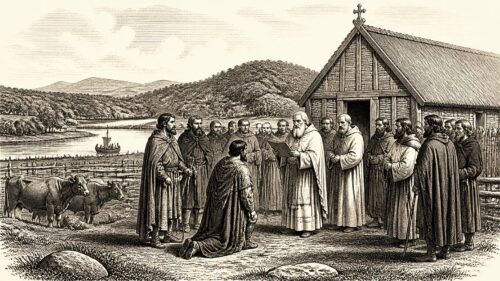
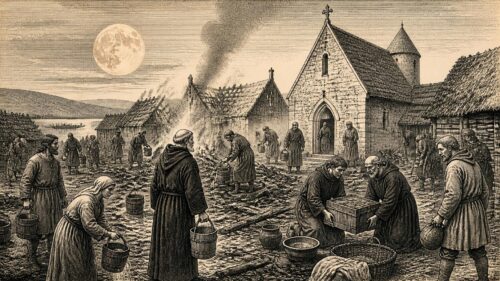
The most consequential Irish notice securely placed in 788 is not a battle or a royal accession, but a brief statement of authority: “Ciarán’s law in force in Connacht.” In an island divided among many kingdoms, dynasties and ecclesiastical federations, such a line signals a major public act. It points to the standing of the saint of Clonmacnoise, to the ability of Connacht’s rulers and clerics to cooperate, and to the practical value of religious protection in a society where cattle, tribute, land and people were vulnerable to seizure. Medieval Irish annals require particular care with dates.
Ciarán’s Proclamation
Archived: 30 October 2026
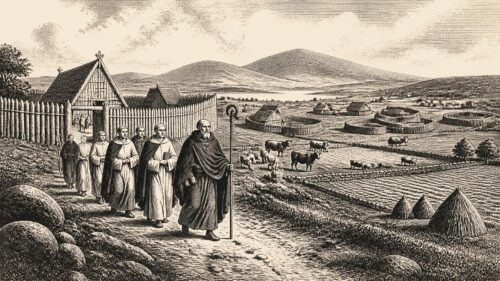
In 787, Irish annals record the death of Máel Dúin, king of In Fochla, creating a transition within the Cenél nÉogain dynasty rather than a national succession. In Connacht, Ciarán of Clonmacnoise’s law was proclaimed, extending ecclesiastical authority and protections with secular support after unrest. Deaths of abbots and bishops at several churches illustrate religious institutions managing land, learning and ritual. Daire Calgaid, probably Derry, suffered a fire of unknown cause. Annalists also noted a blood-red Moon on 18 February, preserving a celestial observation without establishing its explanation. These entries reveal intertwined political, religious and authority in early medieval Ireland.
Connacht Conflict
Archived: 30 October 2026
In 786, annalistic evidence depicts Ireland as politically fragmented but connected by ecclesiastical networks. In Connacht, the Uí Briúin were defeated at Gola, while the Uí Fhiachrach of Muirisc killed Flaithgal of Umall and his nobles; Tipraite of Connacht and Conall of Uí Maine also died. In the north, Máel Dúin of Cenél nEógain defeated and expelled Domnall of Cenél Conaill. Dub dá Bairenn, abbot of Clonard, visited Clonard’s Munster ecclesiastical sphere. Deaths among abbots, bishops, scholars and ascetics, notably at Kildare, underline church institutions’ importance. They nonetheless show clearly volatile local lordship, rural dependence, and durable religious authority throughout.
Some records do not yet have a verified historical year and are awaiting chronological placement.