
Year by Year
Explore Year by Year articles from the most modern historical year back to the oldest.
3,295 Articles Archived
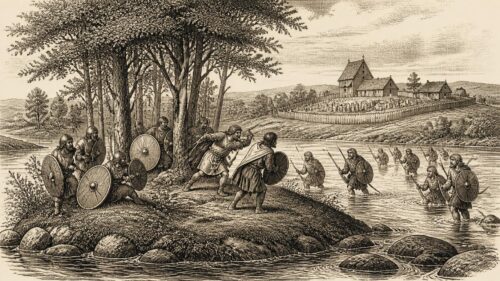
Airthir Victory
Archived: 1 November 2026
In 745, Irish annals recorded a battle at Inis eter dá Dabul between the Uí Thuirtri and Airthir. Congal son of Éicnech led the Airthir to victory; notable opponents were killed or fled. The conflict reflected shifting local power within Airgíalla, despite Domnall Midi’s wider kingship of Tara. The same annalistic year saw the deaths of abbots at Clonard, Lann Léire and Tech Taille, an anchorite, a church superior and the scribe Conall Foltchain. A remarkable night-time celestial sign was also reported. Together, these concise notices illuminate interconnected warfare, ecclesiastical leadership, learning, rural resources and belief in early medieval Ireland.
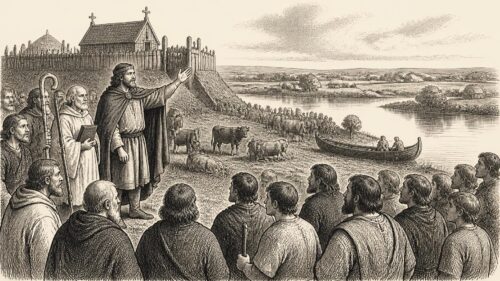
Forggus's Laws
Archived: 1 November 2026
In the political moment around 744, Irish annals record regional deaths, warfare and the close alliance of kingship and church authority. Ardgal, king of Éile, died, while bishops and ecclesiastical leaders including Laidcnén of Saigir and Colmán of Lesán were killed. Conflicts claimed Conchobor of Uí Fhidgente and other elites, and the Déisi defeated Corcu Mo-Druad. Most significantly, Forggus son of Cellach, Uí Briúin king of Connacht, jointly enforced the laws of Saints Ciarán of Clonmacnoise and Brénainn of Clonfert, securing ecclesiastical rights through royal power. Differing annalistic chronologies place much of this cluster in 743 or 744. Sources differ.
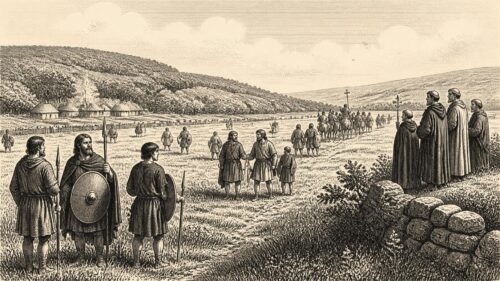
Seredmag Battle
Archived: 1 November 2026
In 743, at Seredmag, probably Kells, Domnall Midi of Clann Cholmáin defeated and killed Áed Allán of Cenél nÉogain, king of Tara, with three Airgíallan allies. The victory shifted Uí Néill pre-eminence from northern to midland hands, though Ireland remained divided among kingships. Annalistic dating differs slightly, but denotes one battle. It occurred during a summer of conflicts across Brega, the midlands, Connacht and the north. Notices also record ecclesiastical law, relics on circuit, a widespread disease called bolgach, deaths of church leaders, and a later tradition of airborne ships. The year reveals contested authority, religious influence and social insecurity.
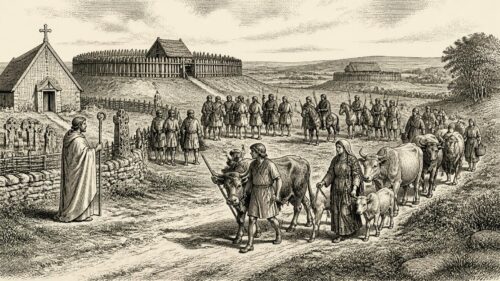
Seredmag Victory
Archived: 1 November 2026
An annalistic dossier assigned to 742 by the Annals of Ulster, but often dated 743, records intense political, ecclesiastical and social change in Ireland. At Seredmag near Kells, Domnall Midi defeated and killed Áed Allán, gaining wider kingship and strengthening Clann Cholmáin against Cenél nÉogain. Other regional battles and killings reveal widespread instability. Deaths of Affrica of Kildare and abbots of Rechru and Mag Bile marked ecclesiastical successions. Suanach’s law was enacted, and relics of Trian of Cell Delge travelled on circuit. The annals also report widespread bolgach, probably a smallpox-like disease, showing warfare, religious authority and illness shaped communities.
Ferns Ciarraige
Archived: 1 November 2026
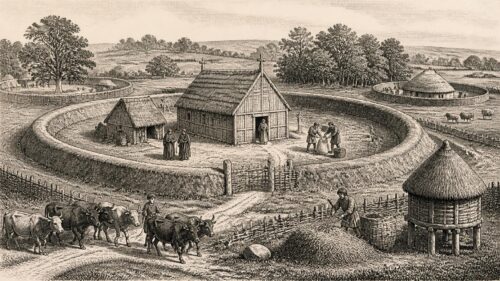
In 741, the Annals of Inisfallen record the death of Cúán, abbot of Ferna, probably Ferns in County Wexford, and Flann Feórna son of Colmán, king of Ciarraige Luachra in western Munster. These brief notices reveal the importance of ecclesiastical and local royal leadership in early medieval Ireland. Ferns was a significant religious and economic community, while Ciarraige Luachra was a petty kingdom within Munster’s layered political order. The entries provide no details of succession or circumstance. They instead demonstrate how annalists preserved selected deaths within Christian chronology, reflecting a rural, hierarchical society shaped by churches, kinship and regional kingship.
Forbasach Osraige
Archived: 1 November 2026
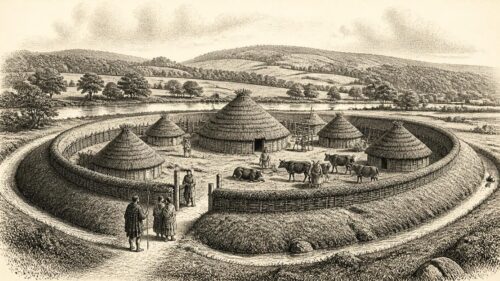
In 740, Irish annals record the killing of Forbasach son of Ailill, ruler of Osraige, revealing the vulnerability of a strategically placed kingdom between Leinster and Munster. They provide no details of his killer, circumstances or successor, limiting interpretation. Another secular leader, Ua Ailello of Cenél Fiachrach, was also killed. Ecclesiastical deaths included Cellach, abbot of Clonmacnoise, Dub dá Boirenn of Fore, Bran of Lann Ela and Flann Febla of Gort Conaig. These losses illustrate changes in authority across political and religious communities. Rural life continued through farming, craftwork and livestock management, while monastic literacy preserved this selective historical record.
Samthann Bodbráith
Archived: 1 November 2026
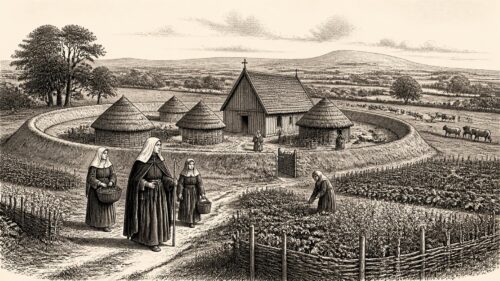
In 739, Irish annals record the death of Samthann, abbess of Cluain Brónaig near Granard, alongside deaths of the scribe Cúán of Treóit, Bishop Flann of Rechru, another bishop, and Ailill, king of Uí Chremthainn. They also describe the burning at Bodbráith of followers belonging to a Domnall, in which Ailill of Brí Léith died in a banqueting hall. The event’s cause and Domnall’s identity remain uncertain. These sparse notices, set after warfare in Leinster, reveal interconnected religious communities, regional dynasties and dependants. Churches were centres of landholding, learning and authority, while rural farming sustained ecclesiastical institutions and political households.
Áth Senaig
Archived: 1 November 2026
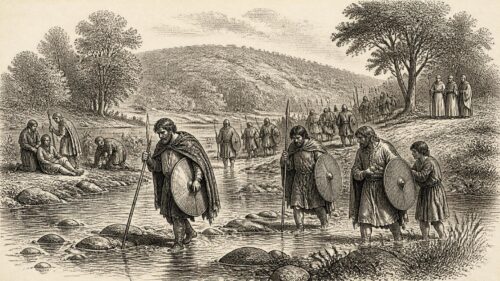
In 738, Áed Allán, king of Tara, defeated Leinster at Áth Senaig, probably near modern Kilcullen, killing Áed mac Colggen, Bran Bec and numerous provincial leaders. Annals date the battle to 19 August, although claims of near-total destruction and 9,000 deaths are rhetorical. The defeat intensified Leinster’s succession crisis, weakened Uí Chennselaig, and preceded long Uí Dúnlainge dominance, without conquering the province. Munster’s Cathal mac Finguine also exacted hostages and treasure from Leinster, though chronology is uncertain. Tólae, bishop of Clonard, died, while Cernach of Brega was murdered, illustrating ecclesiastical influence and continuing dynastic instability across Ireland during the year.
Ecclesiastical Authority
Archived: 1 November 2026
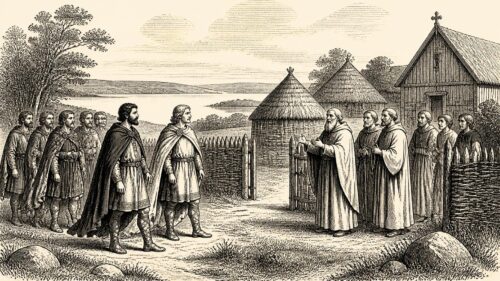
In 737, Áed Allán, northern Uí Néill overking, met Cathal mac Finguine of Munster at the monastery of Tír dá Glas, probably to limit conflict, although terms remain unknown. Annals then declared Patrick’s law effective in Ireland, projecting ecclesiastical legitimacy and wider order rather than recording a uniform national code. The year nevertheless saw dynastic violence in Brega, where Conaing defeated Cernach and Cathal son of Áed died, alongside deaths of regional rulers and abbots. Failbe of Applecross drowned with twenty-two sailors, illustrating Gaelic maritime links. These records reveal negotiation, church influence, instability, and aspirations to unity amid fragmented kingship.
Ecclesiastical Networks
Archived: 1 November 2026
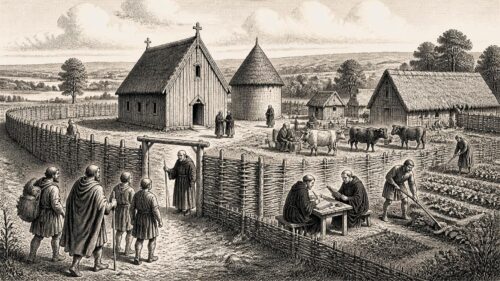
In 736, Irish annals recorded deaths of abbots at Clonard, Lusk, Ardbraccan and Mag Bile, alongside the passing of the scholar-anchorite Duiblitir on Inis Bó Finne. Máel Fothartaig was killed by fellow Leinstermen, while Bodbthach, king of Cairpre, died, illustrating localised political authority and conflict. These terse notices reveal churches as influential economic, social and political centres, though succession details remain unknown. Across the North Channel, Pictish king Óengus devastated Dál Riata, capturing Dúnadd and imprisoning Selbach's sons. The evidence indicates transition rather than collapse, highlighting Ireland's ecclesiastical networks, regional rivalries and maritime connections. Dating uncertain; precise dates remain unrecorded.
Some records do not yet have a verified historical year and are awaiting chronological placement.