
Year by Year
Explore Year by Year articles from the most modern historical year back to the oldest.
3,294 Articles Archived
Swift's Legacy
Archived: 13 October 2026
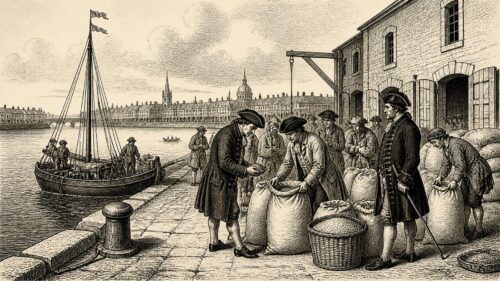
In 1745, Ireland remained peaceful during the Jacobite rising, yet was deeply implicated in the wider Stuart crisis. Lord Lieutenant Chesterfield combined surveillance and preparedness with relative restraint towards Catholics, while restricting provisions exports and proclaiming rewards, fasts and grain controls. Irish expatriates advised Charles Edward Stuart, and the French Irish Brigade distinguished itself at Fontenoy, though no Irish rebellion materialised. Food regulation, markets and linen petitions reflected wartime economic anxieties after scarcity. Dublin retained vitality: Thomas Sheridan managed Smock Alley Theatre, while Jonathan Swift died, leaving funds for St Patrick’s Hospital. Ireland’s calm concealed penal inequality and international entanglements.

Pill Lane
Archived: 13 October 2026
Ireland in 1744 combined political control, social vulnerability and tentative institutional improvement. With the Anglican parliament prorogued, Dublin Castle governed through proclamations addressing foreign military recruitment, disorder, crime, war with France and maritime quarantine. In February, a house collapsed during Catholic Mass in Dublin’s Pill Lane, killing priest and nine worshippers, exposing hazards intensified by penal restrictions. Dublin also founded the Physico-Historical Society and Hospital for Incurables, while cultural life included Spranger Barry’s theatre debut and developing drawing instruction. Arthur Price became archbishop of Cashel. A wet, cold autumn damaged northern oats and potatoes, reviving fears after the 1740–41 famine.

Lucas Remonstrance
Archived: 13 October 2026
In 1743, Charles Lucas challenged Dublin aldermen's control over elections, accounts and patronage, arguing that the Corporation's wider body should choose aldermen. His April Remonstrance and demands to print accounts widened the dispute through print and legal argument, although recorder Eaton Stannard ruled for the aldermen in October. The conflict promoted civic accountability but remained confined to Protestant corporate citizens, excluding Catholics and Dissenters. Arthur Jones Nevill became Surveyor General, linking public works to Castle patronage. Proclamations addressed crime, ports and quarantine, while a linen bounty integrated Irish production into British Atlantic trade. Recovery from the Great Frost remained precarious.
Fishamble Messiah
Archived: 13 October 2026
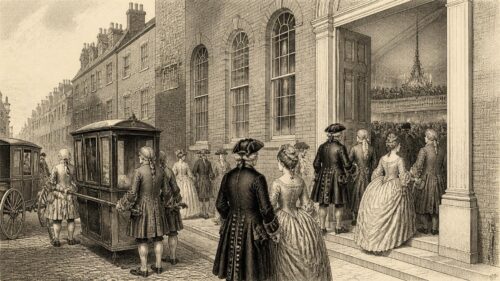
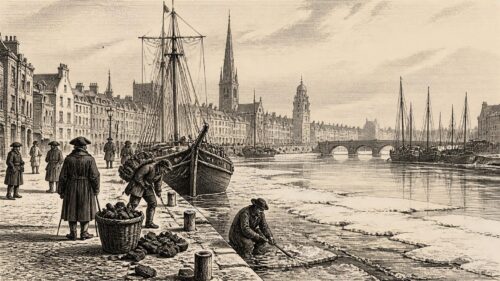
In 1742, Ireland remained weakened by the Great Frost famine, with hunger, disease and poverty continuing despite improving conditions. Recovery efforts included the Cope’s voyage carrying Tyrone coal to Dublin via the new Newry navigation, demonstrating improved transport and trade potential. Dublin’s cultural life produced Handel’s Messiah, first performed in Fishamble Street on 13 April for hospitals and imprisoned debtors. Government operated without a parliamentary session through Dublin Castle proclamations, while religious inequalities persisted. Jonathan Swift’s incapacity and Archbishop Hugh Boulter’s death marked losses within the established order. The year combined charitable action, infrastructure, cultural achievement and lingering social crisis.
Great Frost
Archived: 13 October 2026
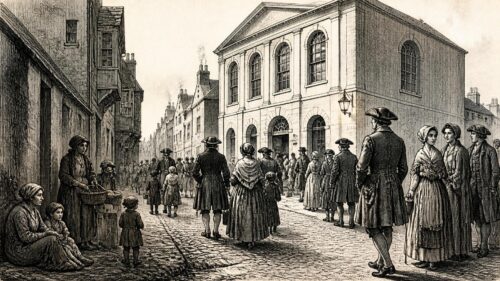
In 1741, Ireland endured the deadliest phase of the 1740–41 Great Frost famine, or Bliain an Áir. Freeze, drought, crop and livestock failures, lost employment and soaring prices caused widespread hunger, while fever and dysentery devastated weakened populations. Estimated deaths across the crisis reached 310,000–480,000, though records remain incomplete. Relief was fragmented, relying on local charity, imports, employment schemes and municipal action. An improved harvest and falling prices eased scarcity late in the year, but disease and hardship persisted. Amid extreme inequality, Dublin opened Fishamble Street’s Music Hall and welcomed Handel, while Killiney Hill relief works commemorated suffering and employment.
Bread Riots
Archived: 13 October 2026
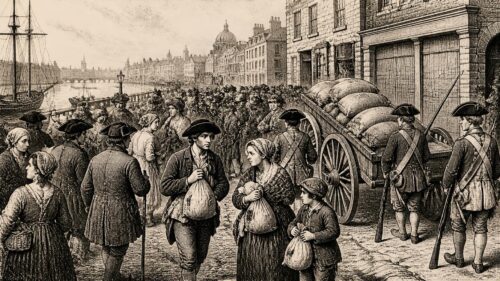
In 1740, severe frost followed by drought disrupted Ireland’s potatoes, grain, livestock and food distribution, initiating the famine 1741. Rising prices made provisions inaccessible to labourers and cottiers, while Dublin crowds rioted from 31 May to 2 June, seizing and redistributing bread, meal and beef at lower prices. Authorities banned food exports, pursued alleged market manipulators, imposed port restrictions and offered rewards, but parliament did not organise comprehensive relief. Archbishop Boulter and charities provided fragmented assistance. The crisis exposed inequalities in landholding, markets and welfare, while autumn brought no recovery before renewed winter, fever and dysentery worsened famine in 1741.
Santry Conviction
Archived: 13 October 2026
In 1739, Ireland’s unequal political and social order faced mounting pressures from justice, taxation, war, religious discrimination, infrastructure and weather. Lord Santry’s conviction for murdering Laughlin Murphy demonstrated aristocratic accountability but also privilege, as petitions later secured his pardon. Parliament raised duties to support imperial needs, while Britain’s war with Spain affected trade and prompted renewed Catholic disarmament; Catholic petitioners sought secure leases. The Dublin Society promoted flax, linen and road improvements, though storms revealed vulnerable bridges, mills and transport. After a wet summer disrupted harvests and turf cutting, severe frost soon arrived in late December, foreshadowing 1740–41’s catastrophic famine.

Madden's Improvement
Archived: 13 October 2026
In 1738, Ireland experienced a wet, delayed farming season, documented in Cathal Ó Conchubhair’s Irish-language diary through delayed harvests and turf work, exposing rural dependence on weather, fuel and mixed crops. Samuel Madden urged Protestant landlords to promote estate management, agriculture, flax, education and manufacture, though his improvement scheme preserved inequalities. Parliament remained prorogued while government addressed robbery through proclamations and rewards. The deaths of harper Turlough O’Carolan and Dublin educator Thomas Sheridan marked losses. Roxborough Castle’s construction and Richard Montgomery’s birth reflected investment and Protestant Atlantic opportunities. The year revealed social division, economic ambition and environmental vulnerability without famine.
Joy's Newspaper
Archived: 13 October 2026
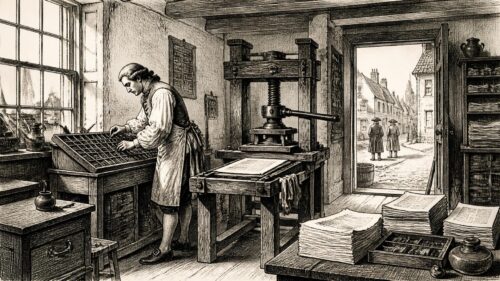
In 1737, William Cavendish, third duke of Devonshire, became lord lieutenant, linking Dublin administration to Walpole’s London government as Parliament convened under Protestant landed dominance. Proclamations addressed gold, silver and copper currency, crime, riots, vagrancy and begging, revealing official dependence on magistrates, rewards and local knowledge. George Berkeley’s Querist advocated economic improvement while reflecting elite assumptions about poverty and labour. Francis Joy founded the Belfast News-Letter, creating a provincial news channel despite limited readership. Religious divisions persisted under penal laws, while trade, linen and agriculture connected Ireland unequally to British and Atlantic markets. The year exposed social vulnerability without crisis.

Agistment Dispute
Archived: 13 October 2026
In 1736, Ireland’s Protestant ruling order was tested and displayed through disputes, legislation, commemoration and print. The Commons opposed tithe on agistment, favouring landed interests against Church of Ireland clergy; Jonathan Swift attacked legislators in The Legion Club. Cork’s new civic arrangements combined cathedral rebuilding with a workhouse providing relief, discipline and compulsory labour. Dorset founded the Boyne obelisk, affirming a Protestant interpretation of Williamite victory. Catholic bishop James Gallagher published Irish-language sermons in Dublin, demonstrating resilient Catholic culture under penal restrictions. James Hamilton’s Dublin Daily Advertiser, the city’s first daily newspaper, reflected expanding commercial communication under unequal Protestant rule.
Some records do not yet have a verified historical year and are awaiting chronological placement.