Santry Conviction1739 CE
In 1739, Ireland’s unequal political and social order faced mounting pressures from justice, taxation, war, religious discrimination, infrastructure and weather. Lord Santry’s conviction for murdering Laughlin Murphy demonstrated aristocratic accountability but also privilege, as petitions later secured his pardon. Parliament raised duties to support imperial needs, while Britain’s war with Spain affected trade and prompted renewed Catholic disarmament; Catholic petitioners sought secure leases. The Dublin Society promoted flax, linen and road improvements, though storms revealed vulnerable bridges, mills and transport. After a wet summer disrupted harvests and turf cutting, severe frost soon arrived in late December, foreshadowing 1740–41’s catastrophic famine.
Dateline
In Ireland, 1739 was a year in which the ordinary business of an unequal kingdom—law, landlordship, tax, roads, trade and religious regulation—was overtaken at its close by extraordinary weather. The disasters conventionally associated with the Great Frost and the famine of 1740–41 lay chiefly ahead. Yet the final days of 1739 already brought the cold that would freeze waterways, interrupt milling and transport, and expose the precariousness of a society dependent on local harvests, turf fuel and insecure rural livelihoods.
Justice on College Green
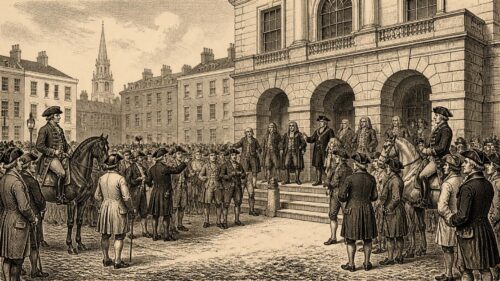
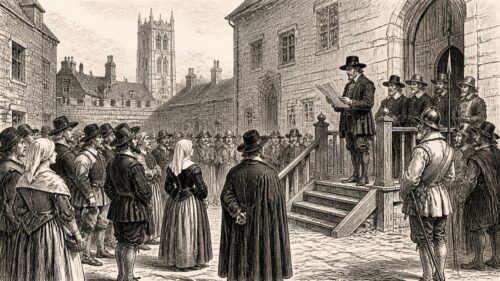
The year’s most conspicuous Dublin event occurred on 27 April, when Henry Barry, fourth Baron Barry of Santry, was tried before the Irish House of Lords for the killing of Laughlin Murphy, a working man from Palmerstown. Murphy had been stabbed after an alcohol-fuelled dispute at a public house during the Palmerstown fair in August 1738 and died the following September. Because Santry was a peer, the ordinary criminal process was displaced by trial before his fellow peers.
The setting made the social distance between accused and victim impossible to miss. Parliament House on College Green was adapted as a court; soldiers and constables guarded the approaches; the Lord Chancellor, Thomas Wyndham, acted as Lord High Steward; and the procession of judges, officers and peers supplied all the ceremony expected in a capital city. Contemporary and later accounts emphasise the considerable public attention. The case gave Dubliners a rare spectacle of aristocratic accountability, but one conducted through the privileges of rank rather than the same machinery available to Murphy’s widow and children.
Santry was found guilty and sentenced to death that day. The verdict was striking: an Irish peer had been convicted of murder by his peers. It should not, however, be mistaken for an uncomplicated triumph of equal justice. The condemned lord remained the focus of lobbying and petitions, while Murphy’s family had lost its principal support. Santry’s eventual royal pardon belongs to June 1740, not to 1739; at the close of this year, the sentence still stood. The affair exposed both the violence possible within elite male drinking culture and the way status shaped access to mercy.
Government, Revenue and Ascendancy
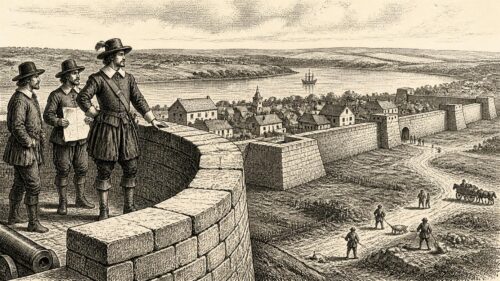
Ireland remained a separate kingdom under George II, with its own parliament and executive at Dublin Castle, but not an autonomous state. The Protestant political establishment dominated parliament, offices, municipal corporations and the established Church. The legislature’s seventh session of the reign opened on 29 October 1739. Its opening coincided with heightened imperial tension and with a government need for dependable revenue.
On 19 December, parliament authorised additional duties on beer, ale, spirits, wine, tobacco and other imported or traded goods. A second measure placed further duties on articles including wine, silk, hops, china and vinegar, and imposed a tax on salaries, official fees, pensions and employment profits to service public debt. Such enactments brought fiscal policy into the routines of merchants, publicans, consumers and office-holders. They also show that the state’s priorities did not stop at local administration: Irish revenues formed part of a wider British imperial and military system.
Rank and patronage were equally visible. On 6 October Brabazon Ponsonby, Viscount Duncannon and a leading revenue commissioner, was created Earl of Bessborough in the Peerage of Ireland. The honour marked the continuing importance of great landed families in the political management of the kingdom. It also came shortly before parliamentary business resumed, a reminder that peerages were instruments of authority as well as inherited social distinction.
War, Security and Catholic Disabilities
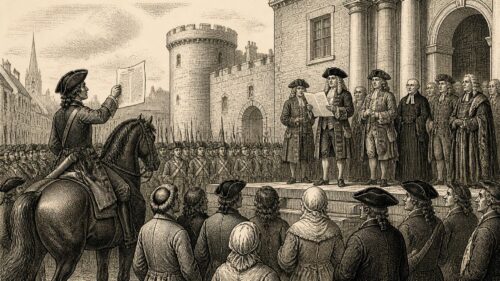
Events overseas sharpened official fears at home. Britain declared war on Spain in October 1739, beginning the conflict later known as the War of Jenkins’ Ear. Ireland’s ports, merchants, soldiers and seamen were connected to this Atlantic war, even though no campaign was fought on Irish soil in 1739. An Irish proclamation publicised the declaration of war, and estate correspondence from Dublin recorded the immediate concern that war affected prices and commerce.
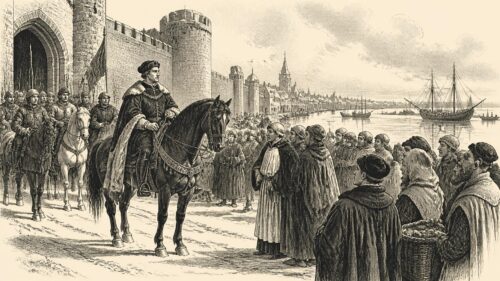
Security policy was directed inward as well as outward. On 19 November, a proclamation ordered officials to search for and seize arms and ammunition held by Catholics. This was not an isolated emergency measure but part of the long penal-law regime that excluded Catholics from political power and constrained their property, education, public worship and military security. A further bill to strengthen the disarming legislation was before parliament during the winter session; its royal assent came only on 31 March 1740, so it should not be described as a 1739 statute. Its discussion nevertheless reveals the assumptions already operating in 1739: Catholic possession of weapons was treated by the Protestant state as a political danger.
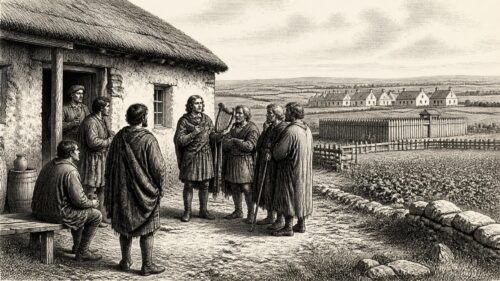
Against that background, an address of Roman Catholics to George II, dated 26 September, sought longer and more secure leases. The request was practical rather than revolutionary. Short and uncertain tenures discouraged tenants from investing in drainage, buildings, stock and improvement, while Catholic families endured legal disadvantages in holding land. The address is important precisely because it framed security of tenure as a condition of productive agriculture and ordinary family stability. There was no general relief in 1739.
Roads, Rivers and Productive Improvement
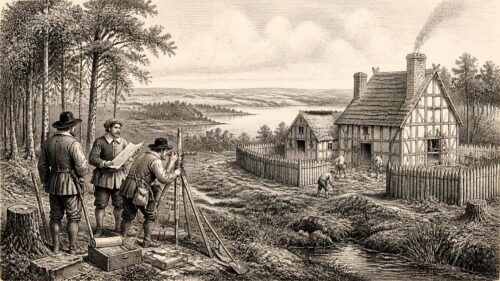
Improvement was a prominent language of the period, though its benefits were unevenly distributed. The Dublin Society continued to encourage agricultural and manufacturing knowledge. Its printed observations promoted flax growing and linen production, offering advice on soil, seed, cultivation, processing and the handling of fibre. Linen was one of Ireland’s principal permitted manufactures and a major hope for export-led development. The Society’s practical publications addressed landlords, substantial farmers and manufacturers, but the labour of sowing, pulling, scutching, spinning and weaving fell heavily upon rural households and wage workers.
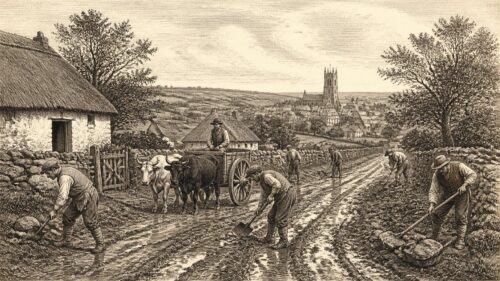
Road legislation gives a more local view of the same ambition. Measures in the 1739–40 parliamentary session included provision for repairing the road from Belfast through Carnmoney to Antrim and from Randalstown to Toome Ferry. Such routes mattered for market traffic, linen and agricultural produce, the carriage of people, and communications between Ulster settlements. Yet road making could also impose tolls, compulsory work and disruptions on those living beside the route. ‘Improvement’ was therefore experienced not only as a promise of easier travel but as an intervention in land, labour and local authority.
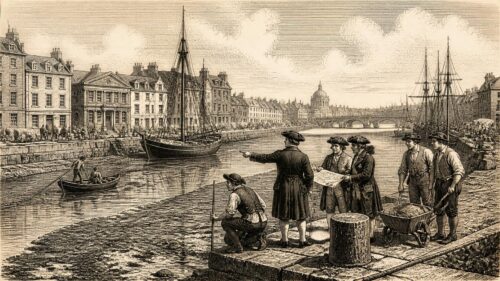
The weather showed how vulnerable this infrastructure remained. Pembroke estate correspondence reports severe weather and thefts of fuel early in the year, alongside plans to rebuild Donnybrook Bridge. In September, storms damaged Donnybrook Bridge, Ballsbridge Mill and a brick field; in December, flooding and tides damaged property around Ringsend and the Dodder. These are securely dated local notices rather than proof of a uniform national calamity, but they convey the practical fragility of a growing capital’s roads, mills, bridges and waterfront.
A Wet Year Turns to Ice
Accounts of 1739 describe a wet summer that complicated harvesting and turf cutting. Turf was not merely a rural convenience: it was the essential domestic fuel for many households and a commodity transported into towns. Poor conditions in summer and autumn could therefore threaten winter warmth as well as food supplies. Farmers and labourers faced the familiar difficulty of getting grain, hay and fuel secured before weather spoiled them; urban consumers depended on the successful movement of those materials by road, river and coastal shipping.
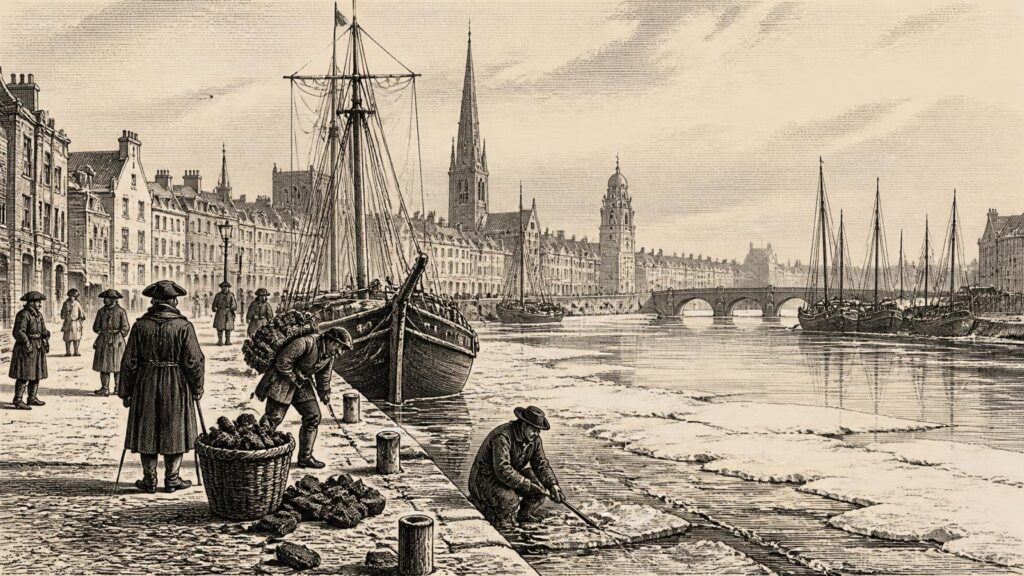
Then, in the last days of December, a severe easterly frost began. The precise date is reported differently in surviving accounts, so it is safest to say that the cold had taken hold by 31 December. Jonathan Swift, writing from Dublin on that date, described Ireland as turned into ‘a Muscovy, or worse’. The phrase captures astonishment, not a meteorological measurement. What can be stated firmly is that the frost continued into 1740 and became one of the most severe remembered Irish winters.
For the moment, late December brought disruption rather than the full-scale famine later remembered as Bliain an Áir, the Year of Slaughter. Water could freeze, mills could cease working, coastal and river movement could be hindered, and stored potatoes were at risk where frost penetrated the ground. A violent Dublin storm on 29 December also damaged shipping in the river before the freeze intensified. These were alarming conditions at the threshold of winter; the later mortality, disease and crop failures must not be compressed falsely into 1739 itself.
At the Year’s Edge
Thus 1739 closed with several forms of insecurity converging. The verdict against Lord Santry made hierarchy and justice visible in Dublin. Revenue acts and war proclamations connected Ireland to imperial conflict. Catholic petitioners sought a modest security of tenure while the state renewed its attention to disarmament. Advocates of improvement promoted flax, linen and roads, but storms exposed the limits of physical infrastructure. Above all, the sudden cold made clear how quickly weather could turn an already unequal social order into a crisis of fuel, food and survival. Ireland entered 1740 not yet in the famine’s worst phase, but already in the grip of the frost that would define it.

Primary Sources
- A History of the Royal Dublin Society
- Part 8 of The Industrial Resources of Ireland
- The Trials of James Cotter and Henry, Baron Barry of Santry: Two Case Studies in the Administration of Criminal Justice in Early Eighteenth-Century Ireland
- Official Account of the Trial of Lord Santry
- Lord Chancellor Lord Wyndham
- Private Sources at the National Archives
- Pre-Union British Statutes
- Statute Law Revision Act 2015
- Statutes in Chronological Order — The Reigns of King George I and II
- Statutes by Subject — Weapons
- Irish Legislation Database: Display Record
- Statutes Passed by the Irish Parliament, 1692–1800: 13 Geo. II, c. 2
- Statutes Passed by the Irish Parliament, 1692–1800: 13 Geo. II, c. 13
- By the Lords Justices and Council of Ireland, a Proclamation: Declaration of War against Spain
- The Causes of the War of Jenkins’ Ear, 1739
- A Short History of Extreme Weather Events at Christmas in Ireland
- On This Day in History… a Forgotten Irish Famine Started
- The Great Irish Famine
- Holdings: The Dublin Daily Post and General Advertiser
- Holdings: The Petition Signed by the Catholics Residing in Ireland, and Roman Catholic Petition for Emancipation
- The Proclamations of Ireland 1660–1820
- Statute Law Revision Act 2007, Schedule 2