
Year by Year
Explore Year by Year articles from the most modern historical year back to the oldest.
3,295 Articles Archived
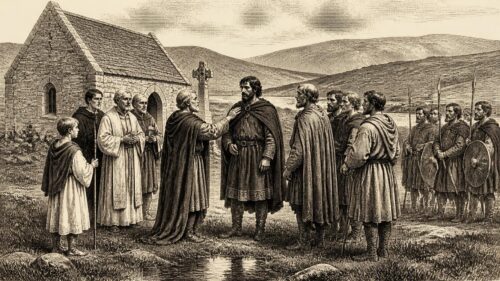
Donegal Succession
Archived: 19 October 2026
In 1505, Aodh Ruadh Ó Domhnaill died at Donegal after forty-four years as lord of Tír Chonaill and was buried in its Franciscan friary. His son, Aodh Dubh, secured succession through a campaign in Tír Eógain, taking Castlederg, before inauguration at Kilmacrenan. Feuds killed military and local leaders, while drowning claimed travellers on Finn Lough. Persistent rain ruined crops, particularly in Fermanagh, and plague affected Anglo-Irish nobles. Churchmen experienced both institutional continuity and violence. Meanwhile, Gerald FitzGerald received the Garter and Piers Butler became seneschal of Tipperary, illustrating Ireland’s plural, alliance-based political order during a year of contested regional authority.
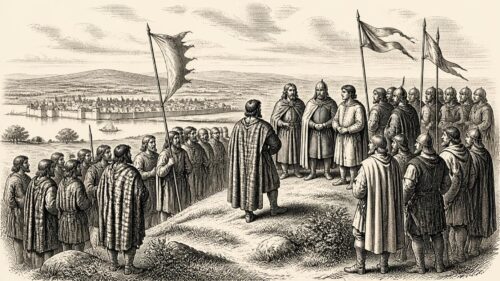
Knockdoe Battle
Archived: 19 October 2026
In 1504, Gerald FitzGerald, eighth earl of Kildare and king’s deputy, led a broad Gaelic and settler-descended coalition against Uilleag Fionn Burke of Clanricard and Turlough Donn O’Brien. The conflict arose from Burke’s attacks on O’Kelly territory and seizure of Galway, but reflected wider struggles for Connacht. At Knockdoe near Galway on 19 August, Kildare’s army won a devastating battle, with annals reporting nine gallowglass battalions almost destroyed. Burke surrendered hostages, restoring Kildare’s influence without securing lasting royal control. The year’s annals also commemorate clerics, scholars, physicians and patrons, revealing religious, learned and hospitable networks alongside warfare across medieval Ireland.

Maguire's Death
Archived: 19 October 2026
Ireland in 1503 was shaped by overlapping lordships, kin groups, towns and church jurisdictions rather than a national government. The death of Seán Mag Uidhir, lord of Fermanagh, at Enniskillen on 26 March provides the year’s most precisely dated event. Annalistic accounts also record Kildare’s northern campaign, conflict among O’Neill and O’Donnell rulers, warfare in Connacht and important deaths elsewhere. Castles, marriages, fosterage, military followings and control of routes underpinned political authority. The evidence reveals a landscape of regional bargaining and rivalry, where changing leadership could disturb alliances and alter relations between Gaelic rulers and the English crown’s limited administration.
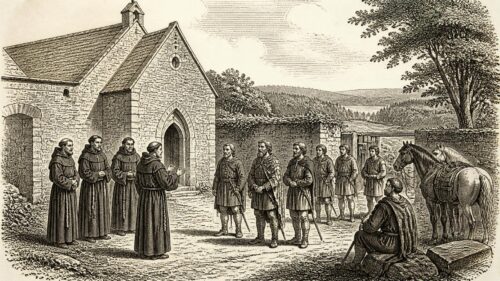
Cavan Observance
Archived: 19 October 2026
In 1502, Ireland was shaped by local lordship, dynastic violence, religious reform and environmental hardship. Raids and feuds across East Breifne, Fermanagh, Monaghan and Ulster killed warriors, professionals and kin, while alliances enabled armed retinues to cross boundaries. John O’Reilly secured Cavan’s Franciscan monastery for the Strict Observance through Rome, demonstrating both reforming connections and secular authority. Church offices remained contested and hereditary. Severe weather killed cattle and disrupted cultivation throughout Ireland, threatening subsistence and lordly resources. The deaths of poet Domnall Ó hUiginn and learned figures show scholarly networks. Munster experienced change, while English administration remained limited around Dublin.

Sligo Capture
Archived: 19 October 2026
During 1501, Ireland’s political life remained intensely regional despite Gerald FitzGerald, eighth earl of Kildare, serving as lord deputy. In Oriel, rival Mac Mahon branches fought, displacing opponents and causing significant deaths, while Maguire forces suffered heavily at Slieve Beagh. Rival O’Conor kinsmen captured Sligo castle by ladders, killing leading combatants. Churchman John Maguire and poet Donnell O’Higgin were commemorated for learning and hospitality. Edmund Burke was seized returning from pilgrimage to Spain and held for ransom. Finally, Turlough O’Brien of Thomond burned parts of Limerick and the Maigue plain, demonstrating warfare’s continuing economic and human impact throughout the island.

Galway Fire
Archived: 19 October 2026
In 1500, Ireland experienced local conflicts, disasters and environmental hardship rather than a single national crisis. Aodh Ruadh Ó Domhnaill raided Tír Eógain, burning Dungannon and its strongholds, while Kildare’s intervention in Ó Néill territory proved temporary. Succession changed Breifne’s rulership, and killings, livestock raids and castle-building marked Fermanagh. Galway was largely destroyed by fire, threatening an important trading port. In Munster, the Barry family feud brought murder and posthumous punishment, while John Maguire executed a notorious horse thief. Prolonged wet weather damaged wheat. The death of Derry’s Franciscan bishop also reflected active religious networks across fragmented but connected lordships.
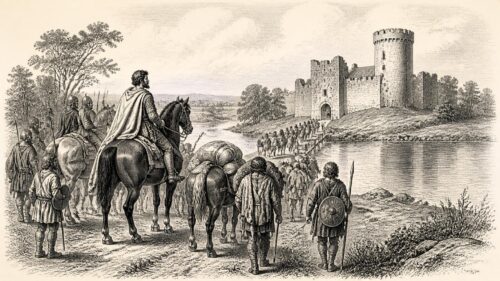
Athleague Recovery
Archived: 19 October 2026
In 1499, Gerald FitzGerald, earl of Kildare and royal deputy, campaigned in Connacht, seizing Athleague, Tulsk, Roscommon and Castlerea, redistributing lordship and hostages among allied factions. Mac William Burke and displaced O’Kelly forces soon recovered Athleague and Tulsk, demonstrating the fragility of imposed authority. Succession and conflict reshaped Moylurg, Tír Chonaill, Fermanagh and Thomond, where O’Donnell raided, negotiated with Kildare and suppressed internal rebellion, while an O’Brien force defeated Butler followers. Annals also record religious and aristocratic hospitality, and Pale parliamentary regulation. Warfare, castles, cattle, hostages, tribute and negotiation repeatedly remade Ireland’s overlapping political order across Ireland’s contested regional frontiers.

Dungannon Artillery
Archived: 19 October 2026
In 1498, Gerald FitzGerald, earl of Kildare and royal deputy, led Gaelic and Anglo-Irish allies to capture Dungannon Castle with artillery, intervening in the violent O’Neill succession struggle. The campaign displayed military capacity but reinforced a factional settlement rather than extending durable Dublin control. Kildare’s restored administration also summoned parliament, pursuing taxation, customs and measures promoting English elite practice. Ireland endured famine and recorded smallpox deaths, including scholar Cathal Óg Mac Maghnusa, compiler of the Annals of Ulster. Conflict in Munster, religious patronage by Margaret Maguire, and scattered annalistic reports reveal interconnected yet locally experienced political, social and cultural life.

Conn O’Donnell
Archived: 19 October 2026
In 1497, Ireland remained divided among competing Gaelic and Anglo-Irish lordships despite Henry VII’s nominal authority and Kildare’s Dublin administration. Perkin Warbeck briefly landed at Cork but gained no support before departing for Cornwall. In the south-east, Piers Ruadh Butler killed Sir James Ormond, strengthening his territorial position. Conn Ó Domhnaill succeeded in Tír Chonaill in May, yet succession conflict, defeat and invasion brought his death in October. Local peace-making and raiding continued elsewhere. A severe island-wide famine caused hunger, mortality and extraordinary food prices for communities. Religious developments included regulation of Lough Derg pilgrimage and Franciscan reform at Carrickfergus.
Kildare Return
Archived: 19 October 2026
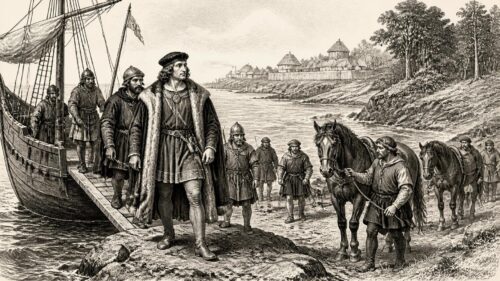
In 1496 Henry VII restored Gerald FitzGerald, eighth earl of Kildare, as lord deputy, ending the immediate crisis of direct Tudor rule. Landing at Howth with royal favour and a new marriage, Kildare accepted conditions including Poynings’ Law, while his heir remained in England. Efforts to dig defensive boundaries around the Pale reflected insecure frontier government. Elsewhere, MacMahon feuds in Oriel, O’Donnell conflicts and regional successions demonstrated fragmented authority. Severe weather destroyed crops and cattle, causing widespread dearth and disrupting husbandry. Annals nevertheless recorded musicians, learned families and religious patrons, revealing cultural prestige amid warfare, political competition and agricultural hardship.
Some records do not yet have a verified historical year and are awaiting chronological placement.