
Year by Year
Explore Year by Year articles from the most modern historical year back to the oldest.
3,295 Articles Archived

Waterford Defence
Archived: 19 October 2026
In 1495, Sir Edward Poynings sought to strengthen Henry VII’s authority in Ireland through the Drogheda parliament, whose measures restricted Irish legislative initiative, while arresting the eighth earl of Kildare; his attainder was reversed later that year. Perkin Warbeck, backed by Desmond and Cork interests, failed after Waterford’s eleven-day land-and-sea defence, preserving a loyal harbour. Elsewhere, Aodh Ruadh Ó Domhnaill’s Scottish alliance and warfare around Sligo, conflicts in Breifne, and lordly rivalries demonstrated fragmented power. Church councils, monasteries, guesthouses, learned families and physicians reveal institutions supporting society. The year exposed Tudor ambitions but confirmed fragmented Irish power across the island.
Poynings Mission
Archived: 19 October 2026
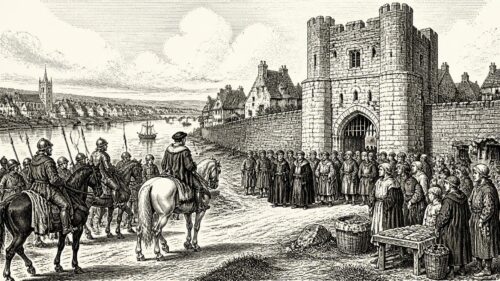
In 1494 Henry VII sent Sir Edward Poynings to Ireland to strengthen Tudor control, counter Yorkist support and reduce reliance on Gerald FitzGerald, earl of Kildare. Landing in October, Poynings led an Ulster expedition, securing submissions from O’Hanlon and Magennis, but relations with Kildare deteriorated. His Drogheda parliament, opened in December and continuing into 1495, began legislation, including the measure later called Poynings’ Law, restricting Irish parliamentary initiative. Elsewhere, regional lordships remained autonomous: dynastic killings, sieges around Sligo, conflicts in Fermanagh and Cavan, raiding and hostage-taking continued. Church, trade and daily life were shaped by warfare, contested authority and insecurity.
Glasdromainn Succession
Archived: 19 October 2026
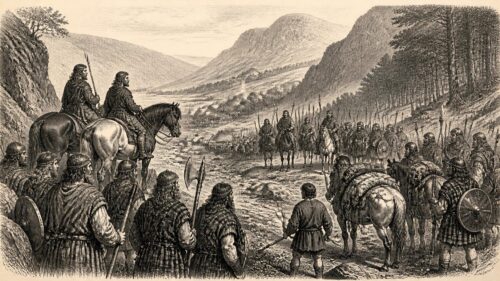
In 1493, Conn Ó Néill’s treacherous killing by his brother Henry Óg triggered a contested succession in Tír Eóghain. Backed respectively by Ó Domhnaill and by Uí Chatháin and Uí Mhealláin, Domhnall Clárach and Henry Óg fought at Glasdromainn, where Henry prevailed, though instability continued. Ó Domhnaill’s later Ulster hosting ravaged territories but won no settlement. Across Ireland, killings, raids, burnings and changes of lordship affected Leinster, Offaly, Breifne and Connacht. Gerald FitzGerald, earl of Kildare, visited Henry VII amid political scrutiny. Annals also recorded deaths of clerics, poets and aristocratic women, revealing cultural ties and piety during the year.
Fitzsimons Deputation
Archived: 19 October 2026
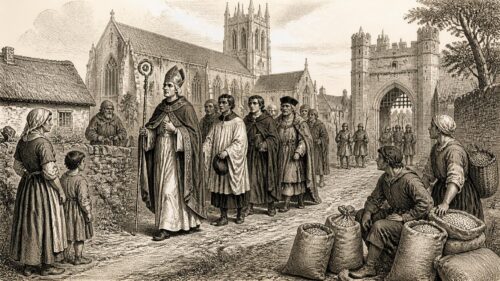
In 1492, Ireland endured famine, disease and conflict amid Henry VII’s attempt to weaken Gerald FitzGerald, earl of Kildare. Suspected because of Yorkist links and Perkin Warbeck’s Cork landing, Kildare was replaced in government by Archbishop Walter Fitzsimons and Sir James Ormond. The changes intensified rivalries across the Pale, Leinster, the midlands and East Breifne, where Gaelic and Anglo-Irish lords fought, raided and contested succession. Poor weather damaged grain before famine; a hot summer and sweating sickness compounded insecurity. Ulster saw truces, killings, imprisonments and raids. Ecclesiastical life continued, while Thaddeus MacCarthy died returning from Rome. Central authority remained fragile.

Kildare Arbitration
Archived: 19 October 2026
In 1491 Conn Ó Néill of Tír Eógain and Aodh Ruadh Ó Domhnaill of Tír Chonaill sought Gerald FitzGerald, earl of Kildare, to arbitrate their Ulster conflict, but no peace resulted, demonstrating limits to Kildare’s authority. Warfare continued through raids, killings, captivity and contested castles across Ulster, Breifne and borderlands. In east Breifne, John Ua Raghallaigh died, prompting a disputed succession and Kildare’s destructive intervention. Persistent summer and autumn rain ruined Ireland’s grain, particularly in Fermanagh, worsening pressures created by campaigning. Ecclesiastical offices and monasteries remained significant. A post-Christmas wind concluded a year marked by insecurity, authority and environmental hardship.
Croghan Succession
Archived: 19 October 2026
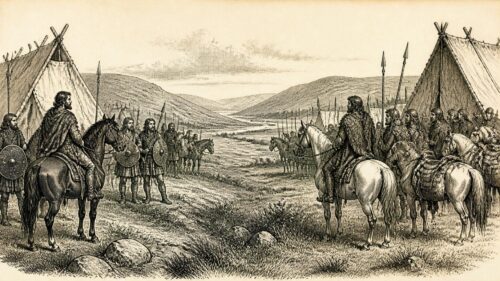
In 1490, Ireland’s fragmented political order was shaped by local warfare, disputed succession and negotiated authority. Feidhlimidh Fionn Ó Conchobhair Ruadh defeated rival kinsmen near Croghan before dying, prompting Ruaidhrí’s election and further instability in Connacht. Raids, cattle seizures and crop destruction burdened communities. In Ulster, Ó Néill factions fought over castles, Aodh Óg Ó Domhnaill seized Ballyshannon, and Conn Ó Néill and Aodh Ruadh Ó Domhnaill maintained an armed stalemate. Henry VII summoned Kildare, whose indispensability reflected Dublin’s limited reach. Papal appointments, learned deaths, maritime links and a cautiously reported earthquake reveal an interconnected, unsettled society across the island.

Dublin Pestilence
Archived: 19 October 2026
In 1489, Ireland experienced a severe epidemic, recorded by the annals among ruling, learned, military and ecclesiastical households, though its precise nature and scale remain unknown. A November royal order demanded Dublin remove refuse, dung and swine, reflecting fears that polluted air caused pestilence and harmed commerce and government. Northern lordships remained violent: Conn Ó Néill raided Ó Catháin territory and seized hostages, while dynastic deaths altered regional politics. After harvest, Aodh Ruadh Ó Domhnaill campaigned eastwards, raided the Route, captured Belfast Castle and reportedly demolished it. Despite disaster and conflict, civic, religious, learned and lordly institutions continued functioning precariously.
Edgecombe Oaths
Archived: 19 October 2026
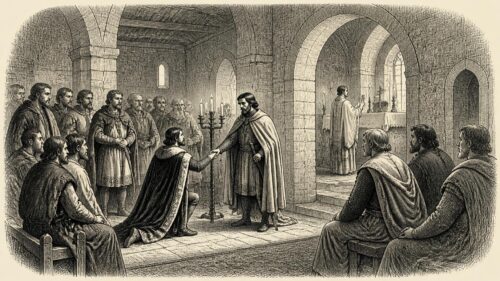
In 1488 Sir Richard Edgecombe secured renewed allegiance to Henry VII after Ireland’s leaders had supported Lambert Simnel. At Kinsale, Waterford, Dublin, Drogheda and Trim, towns and magnates received pardons and swore fealty. Gerald FitzGerald, earl of Kildare, negotiated rather than submitted unconditionally, taking a solemn oath at St Thomas’s while retaining his regional power; royal control was reinforced through Dublin Castle. Beyond the Pale, warfare, succession disputes, hostage-taking and alliances shaped Gaelic and Anglo-Irish lordships. Religious reform flourished at Donegal, while deaths from smallpox, losses among learned figures and destructive weather exposed insecurity. The settlement restored cooperation, not rule.
Simnel Coronation
Archived: 19 October 2026
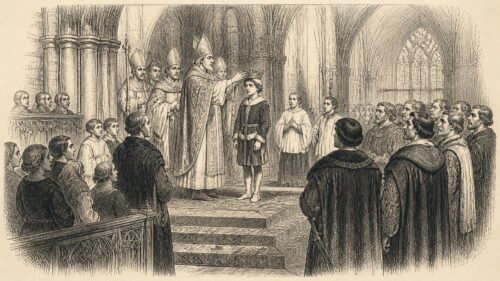
In 1487 Dublin became the base for a Yorkist challenge to Henry VII. Lambert Simnel, presented as Edward, earl of Warwick, was crowned Edward VI at Christ Church, backed by Kildare and elements of the Anglo-Irish clergy and administration. With Lincoln, German mercenaries and approximately 4,000 Irish kerns, the coalition invaded England, but was defeated at Stoke, where many Irishmen, including Thomas FitzGerald, died. Meanwhile, Gaelic lordships endured warfare, killings and contested successions. Severe storms and summer rain damaged buildings and crops. Churches suffered in raids, while poet, historian and legal scholar died. Desmond’s earl was murdered, highlighting FitzGerald instability.
Drogheda Synod
Archived: 19 October 2026
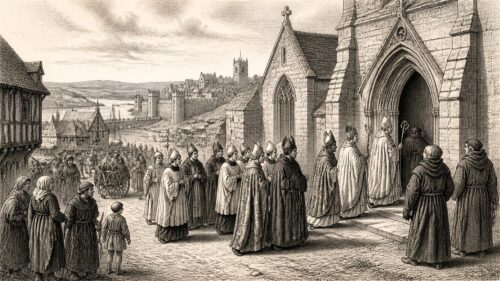
In 1486 Ireland remained politically fragmented, with Kildare dominating the English lordship around Dublin while Gaelic and Anglo-Irish powers contested local authority. Ulster saw raids, killings, captures and burnings among Maguire, MacMahon, Ó Néill and allied groups, including the capture of a castle at Belfast. Connacht experienced disputed kingship, lordship successions and a significant battle involving Aodh Ruadh Ó Domhnaill and Mac William. Archbishop Octavian de Palatio convened a northern synod at Drogheda, while Roland FitzEustace founded an Observant Franciscan friary near Kilcullen. Abundant apples contrasted with severe salt scarcity and high horse prices, linking conflict, markets and everyday life.
Some records do not yet have a verified historical year and are awaiting chronological placement.