
Difficult Ally(c.1900s)
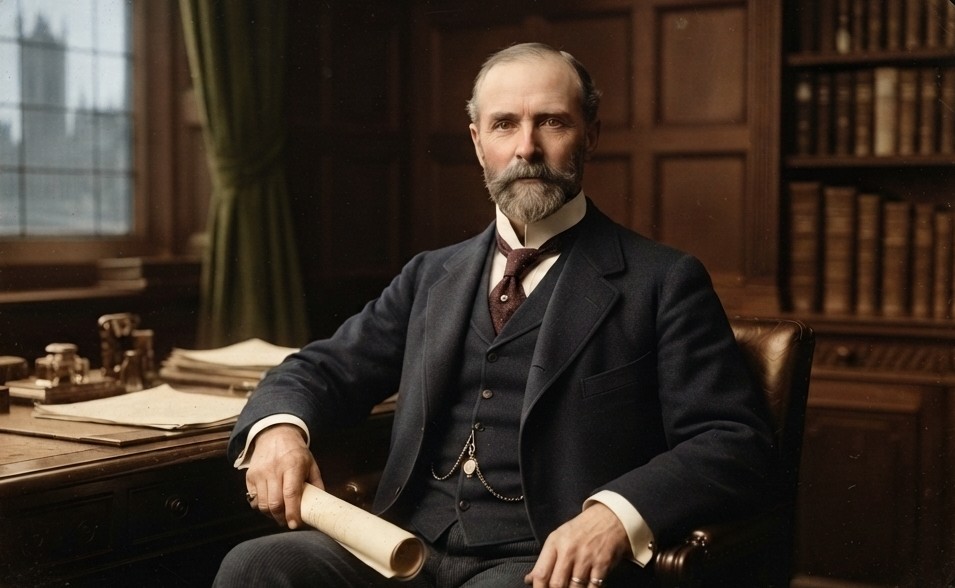
Tim Healy remained one of the most influential yet troublesome figures involved in the effort to reunite Ireland’s divided parliamentary nationalists during January 1900. A formidable barrister, experienced Member of Parliament and devastating political speaker, Healy possessed an authority that could not easily be ignored. He had opposed Charles Stewart Parnell during the leadership crisis of 1890 and subsequently quarrelled with leading anti-Parnellites, particularly John Dillon. By the end of the decade, Healy commanded his own following of MPs and local activists. Any credible agreement restoring nationalist unity therefore required his cooperation, even though many former colleagues distrusted his intentions and feared his independence.
The nationalist divisions had weakened the Home Rule movement for almost ten years. John Redmond led the surviving Parnellite minority, while Dillon remained the most prominent leader among the larger anti-Parnellite body. Healy belonged comfortably to neither camp and had established the People’s Rights Association as a separate political organisation. Negotiations during 1899 and January 1900 brought Healy, Redmond and representatives of the rival groups into increasingly serious discussions. Healy encouraged reunion but resisted any settlement that would leave Dillon’s allies controlling parliamentary organisation, candidate selection and party funds. His involvement consequently advanced the negotiations while simultaneously making agreement more difficult to secure.
Healy’s political methods contributed greatly to the suspicion surrounding him. He possessed a remarkable knowledge of parliamentary procedure and the Irish land question, but his sharp tongue, personal feuds and willingness to challenge recognised leaders repeatedly fractured political alliances. Supporters regarded him as an independent defender of constituencies, tenant farmers and Catholic interests. Opponents believed that he placed personal influence before party discipline. During the reunion discussions, both interpretations appeared plausible. He understood that division had damaged nationalism, yet he also sought organisational arrangements that would prevent his followers from being marginalised when the factions were brought together under a common parliamentary leadership.
The dispute was closely watched in Limerick, where nationalist politics had also been shaped by the Parnell split, clerical influence, land agitation and competing loyalties among local organisers. Newspapers circulating in the city and county carried reports of the Mansion House unity discussions and the manoeuvring of Redmond, Dillon, William O’Brien and Healy. For Limerick farmers, workers and Home Rule supporters, reunion promised a stronger Irish voice at Westminster, but the continuing personal rivalry among national leaders showed how fragile that prospect remained. Healy’s prominence reminded local nationalists that unity required more than public declarations; it demanded agreement over leadership, candidates, money and political discipline.
Representatives of the nationalist factions met in Dublin’s Mansion House on 17 January, and the negotiations continued towards the decisive parliamentary gathering held on 30 January. The process eventually enabled the Irish Parliamentary Party to reunite under John Redmond in early February. Healy accepted the broad settlement and helped make reunion possible, but his uneasy relationship with the restored organisation did not disappear. His followers remained a recognisable force, while disputes over election candidates soon revived old resentments. January therefore revealed Healy as both a necessary participant and a persistent source of uncertainty: a politician powerful enough to assist nationalist unity, but too independent and combative to be absorbed without further conflict.
- Philip Bull, “The United Irish League and the Reunion of the Irish Parliamentary Party, 1898–1900,” Irish Historical Studies, vol. 26, no. 101, May 1988, pp. 51–78.
- F. S. L. Lyons, The Irish Parliamentary Party, 1890–1910, London: Faber and Faber, 1951, particularly the discussion of the reunion negotiations of 1899–1900.
- Frank Callanan, T. M. Healy, Cork: Cork University Press, 1996, particularly the chapters covering Healy’s estrangement from the nationalist factions and his part in the 1900 reunion.
- William O’Brien Papers, University College Cork Archives, including correspondence concerning the January 1900 reunion negotiations.
- Michael Davitt Papers, National Library of Ireland, MS 914, including correspondence dated 23 January 1900 concerning Healy and the reunion discussions.
- Freeman’s Journal, Dublin, January 1900, reports of the Mansion House conference, nationalist reunion negotiations and parliamentary preparations.
- Limerick Chronicle and Limerick Leader, January and February 1900, for contemporary Limerick reporting and local reception of nationalist reunion.