
Mammoth Cave’s Reindeer Signal
Around 31,505 BCE, Ireland lay within a cold, unstable Middle Upper Palaeolithic landscape, before the Last Glacial Maximum. Evidence from Derryvree, County Fermanagh, records freshwater wetlands amid open, treeless tundra-like terrain, with grasses, sedges, juniper, mosses and cold-adapted insects. Castlepook Cave in County Cork preserves a mixed fauna including mammoth, giant deer, reindeer, horse, wolves and hyaenas, indicating a diverse cold-stage ecology. A marked reindeer femur, dated approximately 33,000 years ago, may show stone-tool processing by humans. However, its interpretation remains uncertain, and no settlement, tools, burials or other unequivocal evidence establishes human occupation. This evidence indicates possibility, not habitation.
View Record
Castlepook’s Deep-Time Femur
At roughly 33,455 calibrated years BP, Ireland lay within the climatically unstable Marine Isotope Stage 3, when shifting ice, lower seas and altered coastlines created a cold, changing landscape. Later glaciation and submergence have erased much evidence, but Castlepook Cave in County Cork preserves Pleistocene fauna, including reindeer, mammoth, horse, giant deer and predators, demonstrating that parts of Ireland supported open-country ecosystems. A deeply incised reindeer femur may record fresh-bone processing with a stone tool and thus a brief Upper Palaeolithic human visit. However, uncertain dating and disturbed deposits preclude claims for settlement, hunting, identity or political and social institutions.
View Record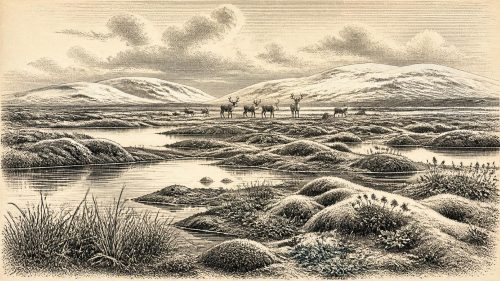
Maguirebridge Under Two Tills
Around 31,507 BCE, Ireland was a climatically unstable Late Pleistocene landscape, not a documented historical year. At Derryvree near Maguiresbridge, freshwater organic sediments between glacial tills preserve pollen, plants and insects indicating treeless, cold wetland with pools, sedges, herbs, mosses and juniper during an ice-free interval. Castlepook Cave in Cork records diverse MIS 3 fauna, including mammoth, reindeer, hyaena and predators, although dates and deposits remain chronologically complex. The British–Irish Ice Sheet expanded unevenly, reshaping habitats and routes. A possibly cut-marked reindeer bone may suggest human visitation, but no settlement evidence exists. Surviving evidence instead documents an uncertain ecological frontier.
View Record
Rangifer at the Ballyhouras
Although 31,508 BCE falls within a broad calibrated MIS 3 range, it is not a precisely dated Irish event. Geological and palaeoenvironmental evidence, rather than written or archaeological records, describes a cold, variable landscape reshaped by later glaciation. Derryvree, County Fermanagh, preserves freshwater wetland deposits indicating treeless tundra vegetation between ice advances. Southern caves, notably Castlepook, contain reindeer, mammoth, giant deer and predators, demonstrating recurring cold-adapted fauna. Human presence remains unproven: no secure occupation dates to this period, while a possibly cut-marked reindeer bone is inconclusive. Ireland was changing open landscape, certainly used by animals and potentially visited by people.
View Record
Bogbean Below the Drumlin
About 31,509 BCE is an archaeological horizon, not a recorded Irish date. At Derryvree, County Fermanagh, organic silts beneath glacial till, broadly dated to 36,900–31,700 calibrated BP, preserve an ice-free periglacial wetland of sedges, grasses, mosses, juniper, dwarf willow and bogbean. Castlepook Cave, County Cork, documents a diverse Marine Isotope Stage 3 fauna, including reindeer, mammoth, giant deer, predators and lemmings. A possible stone-tool mark on a reindeer bone may indicate exceptionally early human butchery, but proves neither settlement nor sustained occupation. Subsequent ice-sheet expansion transformed habitats, while changing seas and terrain complicated animal and potential human movement across Ireland.
View Record
Castlepook’s Solitary Incision
31,510 BCE is a modern label for an imprecisely dated Late Pleistocene interval, rather than a recoverable Irish event. During Marine Isotope Stage 3, Ireland experienced severe, fluctuating cold before the later maximum of the Irish Ice Sheet; glaciers and postglacial seas destroyed or concealed much evidence. Derryvree, County Fermanagh, preserves a cold, treeless wetland ecosystem dating broadly to this period. Castlepook Cave, County Cork, yielded fauna including reindeer and a femur with a possible stone-tool incision. This may indicate Upper Palaeolithic human activity, but cannot prove settlement, hunting, or population continuity. No political, cultural or religious history is recoverable.
View Record
Derryvree’s Trifoliate Pools
Thirty-one thousand five hundred and eleven BCE is not a recoverable Irish year but falls within a later Pleistocene interval of unstable climate. At Derryvree, Fermanagh, freshwater silts enclosed between tills record an ice-free or locally ice-free tundra landscape of pools, mosses, sedges, plants and insects, later sealed by renewed glaciation. Radiocarbon dating provides only a broad calibrated range, not a precise moment. Castlepook Cave, Cork, preserves cold-climate animal remains, including reindeer and mammoth. A cut-marked reindeer femur may indicate early human carcass processing, but cannot prove settlement. Glacial destruction and evidence preclude conclusions about Irish society, culture or occupation.
View Record
Cork’s Reindeer Butchery
Around 31,512 BCE, Ireland was a fluctuating, cold MIS 3 landscape rather than a uniformly ice-covered wilderness. Dating cannot identify events in a precise calendar year, and evidence is fragmentary after glacial erosion. Freshwater deposits at Derryvree, Fermanagh, show locally open tundra wetlands with hardy vegetation between 36,900 and 31,700 years ago. Castlepook Cave, Cork, preserves diverse fauna including reindeer, mammoth, giant deer, predators and smaller cold-adapted animals. Cutmarks on a reindeer femur, dated about 33,000 years ago, may record Ireland’s earliest human butchery. They suggest brief mobile hunter visits, not settlement, while routes, cultural identity and continuity remain unknown.
View Record
Derryvree’s Mountain-Avens Wetland
Around 31,513 BCE, Ireland has no recoverable annual history, only sparse Late Pleistocene evidence from climatically unstable Marine Isotope Stage 3. At Derryvree, County Fermanagh, organic sediments trapped between glacial tills show an ice-free, cold freshwater wetland supporting tundra vegetation, insects and seasonal pools before renewed glaciation. Castlepook Cave, County Cork, preserves mixed remains of mammoth, giant deer, reindeer, bears and hyenas, demonstrating connections with wider European fauna. A cut-marked reindeer femur may indicate early human butchery, but proves neither settlement nor population. Later glaciation destroyed much evidence, leaving a complex, changing landscape and major uncertainties about people and environments.
View Record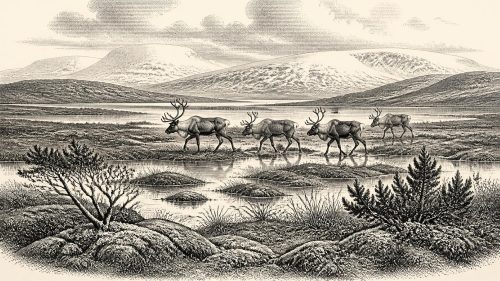
Doneraile’s Ice-Age Corridor
31,514 BCE is a modern label within Ireland’s unstable MIS 3 Late Pleistocene, not a recoverable historical year. Derryvree, County Fermanagh, preserves freshwater sediments dated broadly to this period, showing cold, open, locally ice-free wetlands with tundra vegetation. The major British–Irish Ice Sheet expansion followed later, subsequently erasing much evidence. Castlepook Cave, County Cork, contains time-mixed remains of mammoth, reindeer, giant deer, hyaena and other cold-stage fauna, demonstrating ecological connections. A marked reindeer femur may indicate Upper Palaeolithic butchery, but cannot establish settlement. Ireland was a changing glacial-edge environment; early human presence remains possible yet unproven at the notional date.
View Record