
Castlepook’s Reindeer Notch
31,515 BCE is a modern, misleadingly precise label for a fluctuating Marine Isotope Stage 3 environment rather than a recordable Irish year. Castlepook Cave, north County Cork, preserves disturbed deposits containing mammoth, reindeer, giant deer, hyaena, bear, wolf and cold-adapted species, demonstrating a diverse Pleistocene fauna amid shifting open habitats and variable ice. Radiocarbon results require cautious calibration, and revised dating places elements of the fauna before the Last Glacial Maximum. A notched reindeer femur may indicate stone-tool butchery and a human visit, but cannot prove settlement. The evidence supports ecological history, not claims of communities, routes, culture or events.
View Record
Doneraile’s Cutmarked Femur
Around 31,516 BCE, Ireland was an unstable Late Pleistocene landscape, shaped by fluctuating ice, low sea levels and changing ecological connections. Derryvree sediments in Fermanagh record an ice-free interval with freshwater wetlands, tundra vegetation and insects, later buried beneath glacier deposits. Castlepook Cave in County Cork produced remains of reindeer, mammoth, giant deer, predators and other cold-adapted animals, though bones represent episodes spanning millennia. A cutmarked reindeer femur may indicate Upper Palaeolithic butchery, but disturbed context and absent associated artefacts make human presence provisional. Evidence supports temporary habitable environments, not settled communities, political history or continuous occupation on the island.
View Record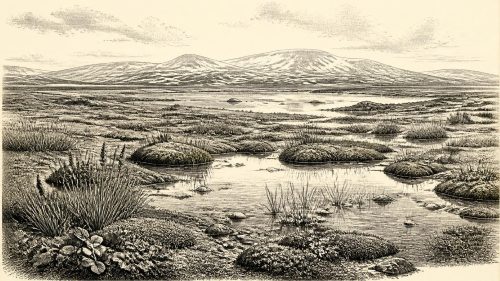
Derryvree’s Tundra Mosses
At the notional date of 31,517 BCE, Ireland cannot be described through annual events or societies, but through uncertain environmental evidence. Derryvree, County Fermanagh, preserves freshwater organic sediments dated broadly to 36,900–31,700 cal BP, showing an ice-free, periglacial tundra of mosses, wet ground and shallow water before later glaciation. MIS 3 climates fluctuated sharply, with ice conditions uncertain; Crag Cave confirms milder conditions. Castlepook Cave records cold-stage animals, though its mixed deposits require caution. A cut-marked reindeer bone may indicate human activity, not settlement. No institutions or securely dated habitation are known; plants, ice and fauna provide the firmest record.
View Record
Derryvree’s Wind-Scoured Pools
Around 31,518 BCE, Ireland cannot be described through annual historical events, but environmental evidence illuminates a broad Late Pleistocene interval. The Derryvree deposit in County Fermanagh, preserved beneath later glacial till, records cold, open periglacial wetlands with pools, sedges, mosses, grasses and sparse low vegetation. Castlepook Cave in County Cork yielded mammals including mammoth, reindeer, giant deer, hyaena, wolves and lemmings, indicating shifting cold-stage habitats. A marked reindeer bone may represent Ireland’s earliest human activity, though evidence remains inconclusive. No political or social history is recoverable. Increasing glaciation later buried and disturbed these fragile traces across the island's varied landscapes.
View Record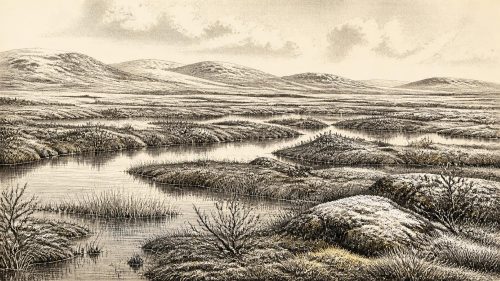
Derryvree’s Frozen Waterline
At the notional date of 31,519 BCE, Ireland’s history can be reconstructed only through environmental ranges, not annual events. Freshwater sediments at Derryvree, County Fermanagh, dated roughly 36,900–31,700 calibrated BP, show that this locality was temporarily ice-free, supporting tundra vegetation, shallow water and severe periglacial conditions. Greenagho and Crag Cave confirm regional climatic variability before the Last Glacial Maximum. Cave remains indicate a diverse cold-adapted fauna, but dating and depositional uncertainties prevent a precise contemporary census. No secure evidence establishes human residence, society or activity. Surviving evidence records shifting ice, wetlands, plants and animals rather than political or cultural history.
View Record
Derryvree’s Rosy Saxifrage
About 31,520 BCE, Ireland cannot be described through dated events, but through the volatile Late Pleistocene environment of Marine Isotope Stage 3. At Derryvree, County Fermanagh, freshwater sediments between glacial tills record an ice-free interval, broadly dated to 34,950–29,750 BCE. Mosses, sedges, aquatic plants, mountain avens, bogbean and rosy saxifrage indicate cold, wet tundra-like ground, not temperate forest. Climate fluctuated sharply, with ice advances later sealing the deposits. Southern cave fauna confirms intermittent habitats for cold-adapted animals. A marked reindeer bone may suggest human carcass processing, but no secure evidence establishes settlement, society or sustained occupation during this glacial interval.
View Record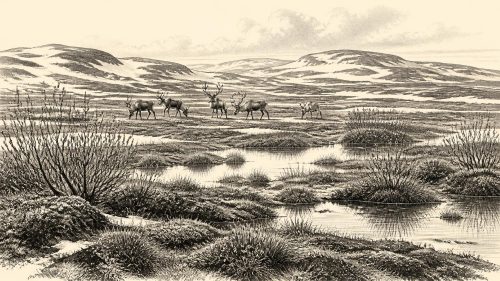
Derryvree Organic Horizon
31,521 BCE is an imprecise modern label within Marine Isotope Stage 3, not a datable Irish event. At Derryvree, County Fermanagh, freshwater organic silts between glacial tills, dated broadly to 36,900–31,700 calibrated years BP, show an earlier ice-free interval before renewed glaciation. Plants indicate a cold, treeless wetland of mosses, sedges, dwarf shrubs and freshwater pools. Cave fauna demonstrate that parts of Ireland supported diverse cold-adapted animals, though records are uneven. No secure human settlement exists. A possibly cut-marked reindeer bone suggests transient Upper Palaeolithic visitors, but remains inconclusive. Ireland experienced shifting ice margins, open habitats and changing land connections.
View Record
Maguiresbridge Plant Bed
31,522 BCE is a modern label within the climatically unstable Late Pleistocene, not a datable Irish event. At Derryvree near Maguiresbridge, Fermanagh, organic sediments between glacial tills indicate a cold, ice-free interval, dated broadly to 34,950–29,750 BCE. Pollen and insects reveal treeless, wet tundra or muskeg. Castlepook Cave in Cork preserves MIS 3 fauna, including reindeer, mammoth, giant deer, bears and hyenas, although its mixed deposits cannot prove coexistence. A scored reindeer femur may record stone-tool butchery, suggesting fleeting Upper Palaeolithic human presence. No associated settlement evidence exists; Ireland remained a fragmented, changing landscape before the later major ice-sheet expansion.
View Record
BIRM-166’s Frozen Marsh
Labelled 31,523 BCE, this poorly dateable interval belongs to Late Pleistocene Ireland, before maximum expansion of the British–Irish Ice Sheet. BIRM-166, from freshwater deposits buried beneath a Fermanagh drumlin, records a treeless periglacial mosaic of marshes, sedges, mosses, aquatic plants and limited dwarf shrubs. It demonstrates locally varied, seasonally productive habitats rather than uniform ice or grassland. Castlepook Cave in Cork preserves MIS 3 fauna including reindeer, mammoth, giant deer, bear and hyaena, though its mixed deposits cannot date coexisting animals. A possibly butchered reindeer bone suggests human visitation, but no secure Palaeolithic settlement evidence exists. Later ice concealed evidence.
View Record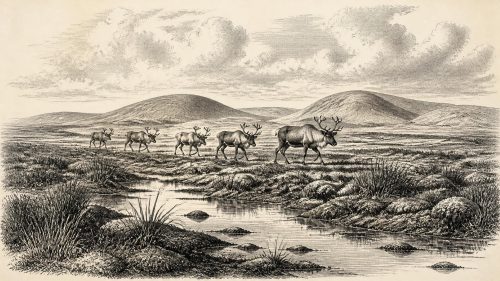
Derryvree’s Freshwater Interlude
31,524 BCE is an imprecise modern label for a Late Pleistocene MIS 3 interval, not a recoverable Irish event. Ireland’s sparse evidence, often disturbed by later glaciation, nevertheless indicates fluctuating cold environments before the Last Glacial Maximum. At Derryvree, Fermanagh, freshwater sediments between tills preserve wetland plants, including mountain avens and bogbean, showing locally ice-free, open ground. Castlepook Cave, Cork, contains remains of reindeer, mammoth, predators and other cold-adapted fauna, accumulated across lengthy periods. A cut-marked reindeer bone may indicate fleeting Upper Palaeolithic human activity, but cannot prove settlement. The period is chiefly reconstructed through fragmented environmental and faunal evidence.
View Record