
Elephant Hall Bone Sands
About 33,900 calendar years before 1950, Ireland’s history is reconstructed from cave deposits rather than dated events. Castlepook Cave, County Cork, preserves a mixed Late Pleistocene bone archive accumulated over millennia, containing mammoth, reindeer, giant deer, bears, hyaenas, wolves, Arctic foxes and lemmings. These remains indicate cold, open MIS 3 environments and functioning food webs, not a single community. A marked reindeer femur, dated roughly 33,000 years ago, may record human butchery, but cannot prove settlement, identity or continuity. Approaching the Last Glacial Maximum, advancing ice transformed landscapes and obscured earlier evidence. Further excavation and dating may clarify human presence.
View Record
Doneraile’s Reindeer Cutmark
Labelled 31,913 BCE, this period cannot be treated as an observable calendar year, but lies within late Marine Isotope Stage 3, before the Last Glacial Maximum. Ireland was a cold, unstable mosaic of open vegetation, with advancing yet regionally variable ice. Castlepook Cave, County Cork, preserves crucial fossil evidence, including reindeer, mammoth, giant deer and predators, accumulated across different episodes. A reindeer femur reportedly bearing a stone-tool cut mark may indicate early human butchery, but remains unconfirmed and cannot prove settlement. Secure evidence places humans in Ireland only during the terminal Pleistocene. The era chiefly represents ecological change preceding glaciation.
View Record
Doneraile’s Mammoth Cave
Around 31,914 BCE, Ireland lay within the climatically unstable Marine Isotope Stage 3, before the Last Glacial Maximum. Castlepook Cave near Doneraile preserves Ireland’s richest vertebrate evidence from this period: mammoth, reindeer, giant deer, bear, spotted hyaena, wolf, Arctic fox, hare and lemmings, indicating cold, open steppe-tundra habitats. Cave deposits were accumulated and disturbed by water, animals and excavation, limiting interpretation. Revised radiocarbon dating supports an older MIS 3 fauna. Cut-like marks on a reindeer femur plausibly indicate Upper Palaeolithic butchery, but cannot prove settlement, population continuity, culture or social organisation. Castlepook nevertheless demonstrates human visits within European ecological connections.
View Record
Castlepook’s Marked Reindeer Femur Revisited
At roughly 31,915 BCE, Ireland lay within the unstable Late Pleistocene, before maximum glaciation, with open cold landscapes supporting diverse mammals. Castlepook Cave, County Cork, preserves bones of reindeer, mammoth, giant deer, predators and smaller cold-adapted species, although its deposits combine material from different periods and processes. A marked reindeer femur, approximately 33,000 radiocarbon years old, may record stone-tool butchery and potentially very early human activity. Yet it cannot prove settlement, population or social life. Ireland lacks securely contemporary human remains, tools, camps or ritual evidence. Subsequent ice advance destroyed much surviving evidence, leaving Castlepook a vital but uncertain archive.
View Record
The Doneraile Tundra
Around 31,916 BCE, Ireland lay in the unstable, pre-Last Glacial Maximum conditions of Marine Isotope Stage 3, not beneath uniform ice. Open, treeless habitats in southern Ireland supported cold-adapted fauna. Castlepook Cave near Doneraile preserves Ireland’s richest pre-maximum vertebrate assemblage, including mammoth, reindeer, giant deer, hyaena, wolves and Arctic foxes, although its bones accumulated across long periods and contexts are disturbed. Redating confirms several animals lived during MIS 3. A possibly cut-marked reindeer femur suggests human butchery, but no secure tools, hearths or settlement evidence exists. Thus Castlepook documents an Ice Age ecosystem while human presence remains plausible yet unproven.
View Record
Castlepook Cave Assemblage
Castlepook Cave near Doneraile, County Cork, preserves a Pleistocene archive from Marine Isotope Stage 3, around 34,000 years ago, before the Last Glacial Maximum. Ireland then experienced cold, unstable conditions, yet retained open tundra, grassland and sheltered habitats supporting mammoth, reindeer, giant deer, bear, wolf, Arctic fox, lemmings and hyaena. Cave processes, predators and poorly recorded early excavations limit interpretation. A dated reindeer bone may bear stone-tool cut marks, suggesting an exceptionally early human encounter, but cannot demonstrate settlement. No communities, structures or cultural traditions are evidenced. The assemblage instead reveals a pre-glacial landscape and unresolved possibility of human presence.
View Record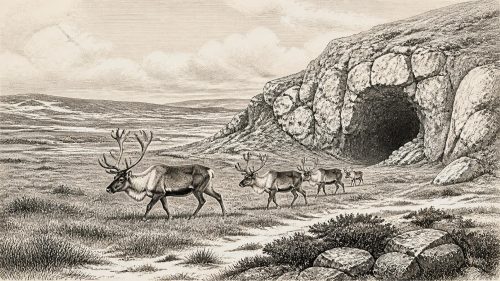
Reindeer at Doneraile
About 31,918 BCE, Ireland lay within the later Last Glacial Period, as climate deteriorated before the Last Glacial Maximum. Castlepook Cave near Doneraile, County Cork, preserves remains of reindeer, mammoth, hyaena and other cold-adapted fauna, demonstrating repeated animal presence rather than one contemporaneous landscape. A reindeer femur bearing probable stone-tool butchery marks, dated to roughly 33,000 years ago, may indicate Ireland's earliest human visit. However, disturbed cave deposits and limited evidence preclude claims of settlement. Lower sea levels may have facilitated movement, though routes remain uncertain. Expanding ice later transformed this exposed, seasonal frontier. Research may revise this fragile picture.
View Record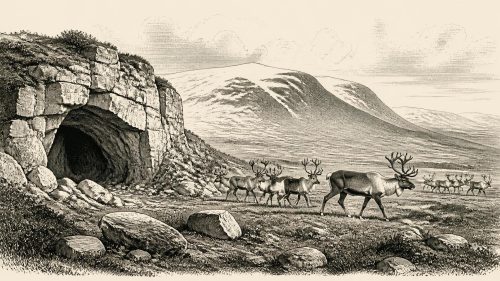
The Cut-Marked Reindeer
31,919 BCE is a modern label for a Late Pleistocene period, not a recoverable Irish historical year. Before the Last Glacial Maximum, deposits in Fermanagh indicate that some Irish landscapes were intermittently ice-free, although conditions varied regionally. Castlepook Cave in County Cork preserves a chronologically mixed fauna including reindeer, mammoth, giant deer, hyaena and other cold-stage animals, demonstrating habitable environments. A cut-marked reindeer femur may indicate human butchery around 33,000 BCE, but disturbed deposits, alternative explanations and absent artefacts prevent confirmation. Later glaciation created a vast gap; securely dated human activity appears only over twenty millennia later in County Clare.
View Record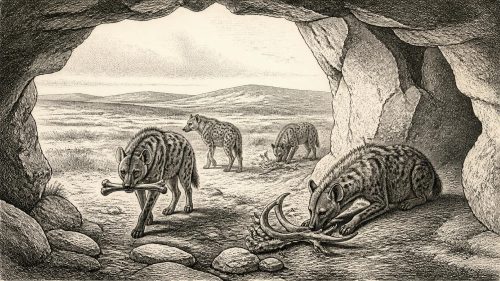
Hyaena Land, Castlepook
Castlepook Cave near Doneraile, County Cork, preserves a disturbed, important Late Pleistocene animal archive rather than evidence for a dated event in 31,920 BCE. Fossils, individually dated across approximately 45,700–19,950 years ago, include mammoth, giant deer, reindeer, bear, spotted hyaena, wolf, Arctic fox and lemmings. Gnawed bones indicate repeated hyaena use, not a local fauna. Revised dating suggests giant deer and hyaenas may have vanished locally before 40,000 years ago. A reindeer femur possibly bearing butchery marks suggests an early Upper Palaeolithic human visit, but proves neither settlement nor community. These changing landscapes supported habitats before ice-sheet advance erased evidence.
View Record
Castlepook’s Reindeer Country
Around 34,000 calibrated years BP, Ireland experienced severe climatic change before the Last Glacial Maximum. Cold open grassland, steppe and tundra supported diverse mammals, documented chiefly at Castlepook Cave, County Cork. Its disturbed, long-lived deposits contain reindeer, bears, wolves, arctic foxes, mammoths, giant deer and Ireland’s only spotted-hyaena remains, but do not represent one moment. A reindeer bone possibly cut by tools suggests human contact around 33,000 years ago, yet lacks secure context. No hearths, tools, settlements or burials confirm permanent occupation. Expanding ice later erased landscapes and deposits, leaving Castlepook crucial evidence for pre-glacial environments but unresolved human history.
View Record