
Archived: 26 September 2026
Abstract
In 1219, Ireland’s power remained fragmented among Gaelic kings, Anglo-Norman lordships, churches and Henry III’s wider dominions. William Marshal died, prompting a managed succession in Leinster under Isabel de Clare’s continuing inheritance, supported by officials including seneschal Walter Purcell. In Munster, Diarmait Mac Carthaig captured Henry Butler’s Timoleague castle and its hostages, exposing colonial vulnerabilities. Domnall Mór Ó Domnaill secured submissions in northern borderlands, while Cathal Crobderg Ua Conchobair exercised authority in Connacht amid Richard de Burgh’s competing claims. Ecclesiastical deaths and succession, alongside papal involvement in the Ferns dispute, underscored church influence. Events revealed shifting, contested lordships throughout Ireland.
Read Article

Archived: 26 September 2026
Abstract
In 1218, Ireland remained a patchwork of competing royal, Anglo-Norman, Gaelic and ecclesiastical powers. Under Henry III’s regency, William Marshal’s Leinster interests shaped lordship government, including regulation of shipping. His land dispute with Ailbe, bishop of Ferns, exposed conflict between royal procedure, papal intervention and Irish clerical rights. Annals recorded northern killings, a failed Meath raid into Connacht and burning at Athlone, demonstrating frontier insecurity. Deaths and successions confirmed resilient local kingships. The consecration of Boyle Abbey, church administrators’ careers, pilgrimage, and losses among poets and scholars also reveal religious patronage, learning and communal institutions amid persistent nationwide political contestation.
Read Article

Archived: 26 September 2026
Abstract
In 1217, Ireland was a fragile lordship governed for the child Henry III from Dublin, alongside powerful Anglo-Norman magnates and resilient Irish kingdoms. Royal orders promised liberties to loyal subjects, promoted markets, Waterford settlement, land claims, engineers, castle defence and exchequer control. Strategic tensions surrounded the Lacys, Carrickfergus and Carlingford. Government policy sought English dominance in senior church appointments, despite continuing local influence. Annals record Irish fishermen killed on Man, Anglo-Norman raiding near Armagh, retaliatory cattle seizures and a favourable harvest. Marriage, commerce, ecclesiastical links and maritime travel connected communities, but coercion, exclusion and contested authority exposed the Crown’s reach.
Read Article

Archived: 26 September 2026
Abstract
In 1216, Ireland remained divided between Gaelic lordships, the Anglo-Norman Lordship and wider Plantagenet rule. King John’s final orders concerning Walter de Lacy’s estates illustrated royal administration and cross-channel aristocratic ties. After John died, the child Henry III inherited the Lordship, governed through councillors, William Marshal and Dublin justiciar Geoffrey de Marisco. Castle-building and Robert Travers’s disputed appointment at Killaloe exposed coercive colonial expansion. Church affairs linked Ireland closely to Rome through vacancies, papal interventions and diocesan reform. Gaelic rulers maintained authority, including Cathal Crobhdearg’s Ballintubber foundation, while annals recorded killings and legal scholarship, revealing overlapping jurisdictions, allegiances and cultures.
Read Article

Archived: 26 September 2026
Abstract
In 1215, Ireland remained politically fragmented: King John controlled ports, towns, castles and lordships, while Irish kings and kindreds retained power. Magna Carta concerned England, but John’s crisis affected Ireland, prompting efforts to raise revenue and reconcile magnates, notably Walter de Lacy. Royal rule relied on fines, hostages, castles and negotiated claims, while frontier insecurity persisted. Geoffrey de Marisco became justiciar. Irish forces under Áed Ua Néill defeated Ulster’s settlers. New Ross gained limited shipping rights, Cratloe was granted, and Armagh’s archbishop attended Lateran IV. Warfare, commerce, church reform and regional rivalries showed Ireland connected to John’s dominions yet divided.
Read Article

Archived: 26 September 2026
Abstract
Irish annals portray 1214 as a period of contested lordship rather than national unity. Anglo-Norman castles at Clonmacnoise and Durrow provoked Cormac Ó Máel Sechlainn’s raids, involving cattle seizure, burning and attacks on church resources. Ualgarg Ó Ruairc raided settler-held Carbury, while deaths among Connacht lords and churchmen marked shifting local authority. Ulster records, though chronologically disputed, describe plunder at Derry, castle-building at Coleraine, resistance to settlers and destruction at Carlingford. Ecclesiastical communities remained influential yet vulnerable. Dublin received authority for commercial infrastructure. King John’s papal settlement formally included Ireland, but did not establish uniform control over its competing regions.
Read Article
Archived: 26 September 2026
Abstract
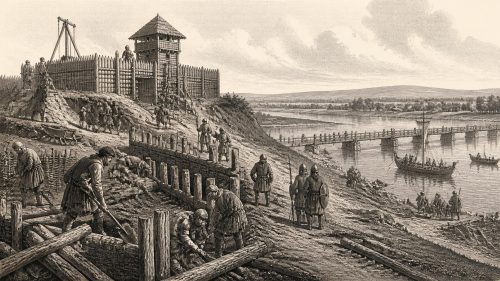
In 1213, King John’s submission of England and Ireland to Pope Innocent III altered the lordship’s international status, while Henry of London became archbishop of Dublin and justiciar. Royal and settler forces campaigned in Mide, defeating Cormac Ó Máel Sechlainn’s allies and building castles at Athlone, Birr, Durrow and Kinnitty to control crossings and routes. Cormac nevertheless recovered influence, illustrating frontier instability. Ulster saw Gaelic feuds, Anglo-Norman attacks, church plundering, Coleraine Castle’s construction and Áed Ó Néill’s raids. Clerical deaths highlighted enduring ecclesiastical centres. Ireland remained politically plural, as castles, warfare, alliances and royal administration reshaped contested regions across Ireland.
Read Article

Archived: 26 September 2026
Abstract
In 1212, royal efforts to extend King John’s Irish lordship through castles, taxation and military campaigns met persistent resistance. John de Gray’s northern offensive built Clones and Cáel Uisce castles, but forces associated with Áed Méith Ua Néill and other Gaelic leaders defeated raiders and destroyed both strongholds. Seaborne warriors from Galloway and the Isles ravaged Derry and Inishowen, aided by Cenél Conaill. In Meath, Cormac Ua Máel Sechlainn defeated English forces, while Munster and Desmond saw fort-building and dynastic conflict. Administrative records reveal expanding royal finance, yet authority remained uneven, shaped by alliances, tribute, churches, raids and regional rivalries.
Read Article
Archived: 26 September 2026
Abstract
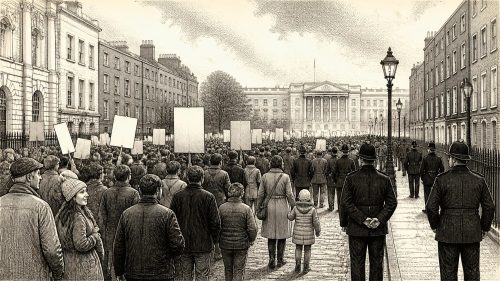
Ireland in 2014 emerged economically from crisis, but austerity and distrust fuelled protests against Irish Water’s meters and household charges. The Government delayed charges, capped bills and legislated safeguards, while electoral losses reflected wider discontent. Severe Atlantic storms caused flooding, coastal damage and power failures. Garda controversies prompted ministerial resignations and reforms including protected-disclosure, human-rights and freedom-of-information measures. Catherine Corless’s Tuam research provoked national reckoning with mother-and-baby institutions. President Higgins’s state visit to Britain affirmed improving relations. In Northern Ireland, the Stormont House Agreement addressed finances, institutions and conflict legacies. The Wild Atlantic Way promoted coastal tourism amid uneven recovery.
Read Article
Archived: 26 September 2026
Abstract
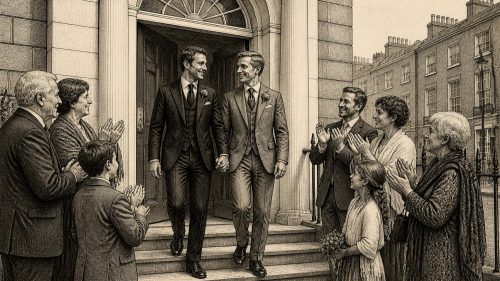
In 2015, Ireland experienced uneven recovery from the financial crash amid water-charge protests, emigration and approaching elections. Voters overwhelmingly approved marriage equality in May, followed by legislation enabling same-sex marriage, while family-law and gender-recognition reforms broadened legal recognition. The State established an inquiry into mother-and-baby homes, confronting institutional abuses. Economic growth and falling unemployment coexisted with insecurity, outward migration and misleading GDP expansion driven by multinational restructuring. Ireland expanded Mediterranean rescue and refugee commitments, supported Northern Ireland's Fresh Start Agreement, and enacted climate-governance legislation. The year combined change with disputes over austerity, historical accountability, public services, peace and international responsibility.
Read Article


