Lordship And Frontiers1215 CE
In 1215, Ireland remained politically fragmented: King John controlled ports, towns, castles and lordships, while Irish kings and kindreds retained power. Magna Carta concerned England, but John’s crisis affected Ireland, prompting efforts to raise revenue and reconcile magnates, notably Walter de Lacy. Royal rule relied on fines, hostages, castles and negotiated claims, while frontier insecurity persisted. Geoffrey de Marisco became justiciar. Irish forces under Áed Ua Néill defeated Ulster’s settlers. New Ross gained limited shipping rights, Cratloe was granted, and Armagh’s archbishop attended Lateran IV. Warfare, commerce, church reform and regional rivalries showed Ireland connected to John’s dominions yet divided.
Dateline
In 1215 Ireland was not a single state governed evenly from one centre. King John was lord of Ireland, and royal administration operated most visibly in the ports, towns, castles and lordships held by his servants and Anglo-French/English magnates. Beyond and across those areas, powerful Irish kings and lordly kindreds retained authority. The year is therefore best understood not as a quiet provincial echo of Magna Carta, but as a period in which John’s crisis in England, the recovery of royal control after his 1210 Irish expedition, and continuing local warfare all intersected.
An English Crisis, Irish Stakes
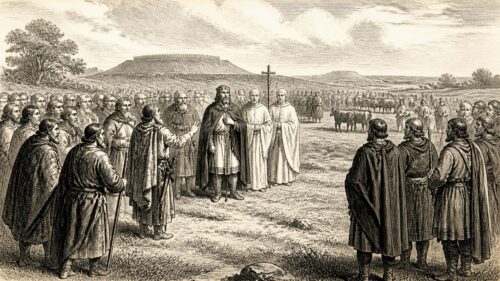
John’s confrontation with his English barons reached its famous settlement at Runnymede on 15 June 1215, where he put his seal to Magna Carta. His formal style included “lord of Ireland”, but the 1215 charter was framed for the kingdom of England and should not be treated as an Irish constitutional settlement. Its immediate safeguards were principally concerned with the English church, English political society and free men within that kingdom. Nor did the agreement bring lasting peace: by the autumn John had appealed to Pope Innocent III against the barons, and civil war was under way.
Ireland nonetheless mattered greatly to a king whose authority and finances were under strain. The island supplied revenue, military resources, ships and political connections across the Irish Sea. John’s government also had unfinished business there. His expedition of 1210 had broken the resistance of William de Braose and the Lacy brothers, Hugh and Walter, seized Carrickfergus, and carried the royal presence through the east. Yet the aftermath had left confiscated estates, prisoners, hostages, disputed inheritances and magnates whose loyalty needed to be bought or rebuilt. The documents of 1215 show a government attempting both to extract money and to construct a workable peace.
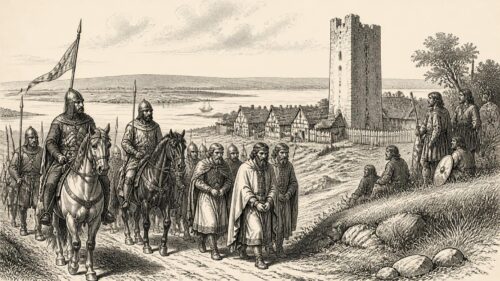
Walter de Lacy’s rehabilitation was particularly important. By February there were signs of reconciliation; negotiations over his return developed during the spring. In July, at roughly the time John was trying to stabilise his position after Runnymede, Walter recovered a substantial part of his Irish inheritance in return for a fine of 4,000 marks. Castles and lands associated with the Lacy lordship, including Granard, were restored. This was not generosity in a modern sense: it was a costly bargain designed to turn an exceptionally dangerous former opponent into a useful lord again. The settlement also demonstrates how Irish landholding could be used in the wider politics of the Plantagenet realms.
Government by Fine, Hostage and Castle
On 1 February John sent detailed instructions to Henry of London, archbishop of Dublin and then justiciar of Ireland. The order is a vivid record of the practical business of rule. Debts and fines were to be pursued; custody of lands, marriages of heirs and release of captives were bargaining counters; royal officials were to render accounts at Dublin’s Exchequer. Among the demands was an account from Dublin’s burgesses for 500 marks previously received to fortify their town. A royal administration existed, with writing, accounting and judicial claims, but it depended upon bargains with local elites and upon the coercive leverage of castles and hostages.
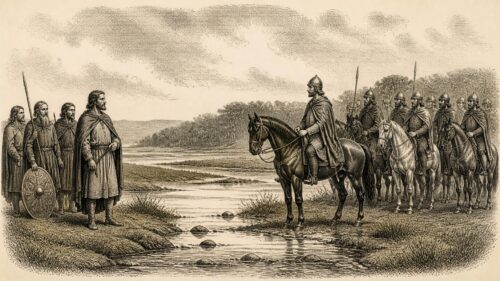
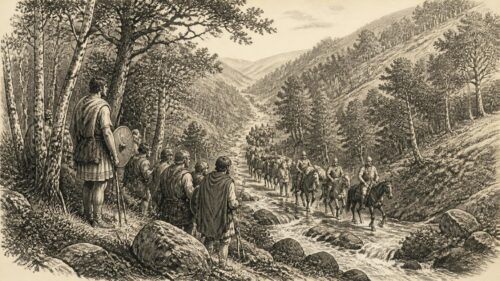
The same instructions reveal the reach and the limits of royal power. John considered competing offers for lands in Thomond from Muirchertach Ó Briain and his rival Donnchad Cairbrech Ó Briain. The king could recognise claims, demand large payments and seek control of strategic sites, but he did not simply appoint rulers over an obedient countryside. In the west and north, lordship was negotiated amid rivalry between Irish dynasties and between them and incomers. Along the frontier of royal lands and Connacht, the government ordered those holding the marches to protect them by Michaelmas, 29 September, or risk losing their estates. Such an instruction indicates anxiety, not secure mastery.
Personnel changed in this atmosphere. Geoffrey de Marisco, a magnate with interests in Munster, Leinster and Offaly, became justiciar in July. He took office under demanding conditions, including responsibility for royal revenues, and gave two sons as pledges for his conduct. His appointment placed a locally powerful royal servant at the head of government. It was a practical response to a difficult moment, but it also concentrated influence in the hands of a man whose family and allies stood to benefit from office.
War and Sacred Landscapes in the North
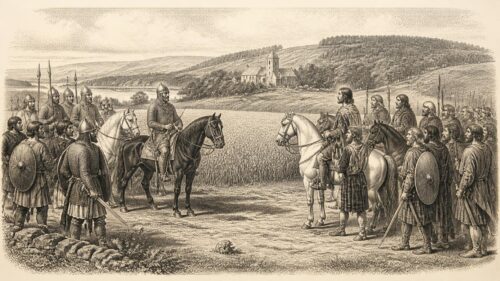
The Irish annals give the year a different geography. They record that Áed Ua Néill, king of Ailech, led a hosting into Ulidia and inflicted a major defeat on the “Foreigners of Ulidia”. The annal does not supply a day or battlefield, and “Foreigners” was the chronicler’s broad term for settler forces rather than a precise modern ethnic label. Even so, the entry is important: royal authority in north-east Ireland was contested in the field by an Irish king capable of striking hard against the lordship’s interests.
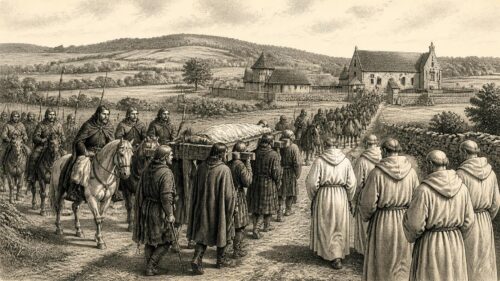
Another notice has a more intimate scale. Áed, son of Máel Sechlainn Mac Lochlainn, raided the successor of St Columba and carried off cattle, then was killed by the Foreigners in the same year. Cattle were wealth, food, labour and status; taking them was a serious political act. The annalist’s attribution of his death to Columba’s miracle also shows how warfare was interpreted through sacred patronage. Churches and their successors possessed lands, herds and political standing, and an assault on them could be remembered not merely as theft but as an offence answered by a saint.
Ports, Towns and Resources
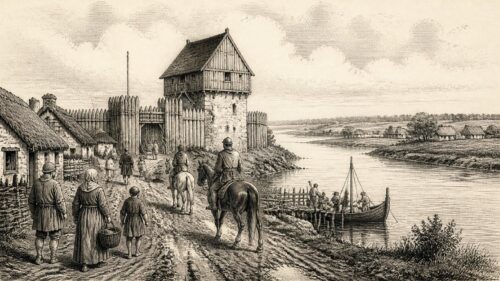
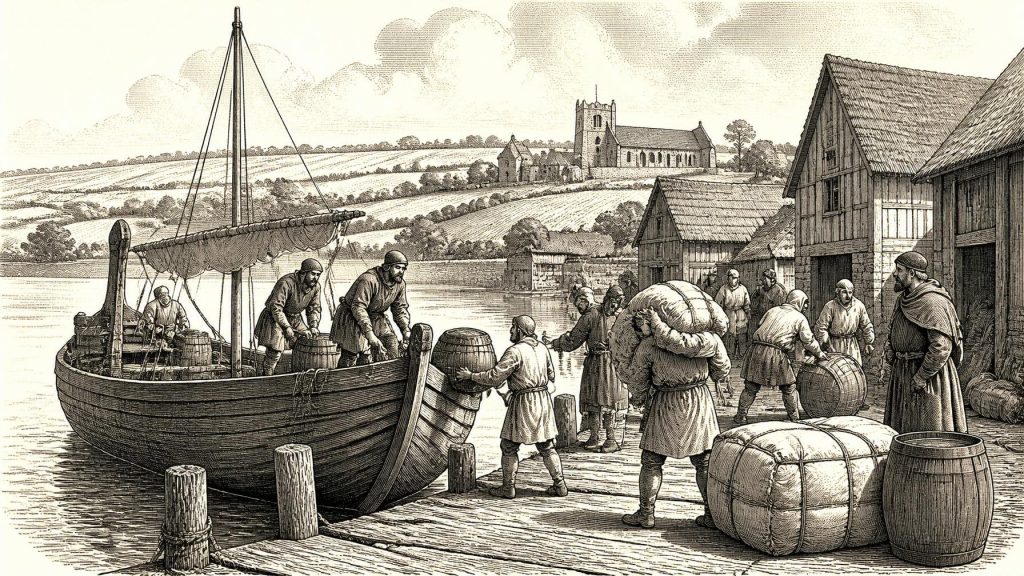
Royal and seignorial ambitions were equally visible in the south-east. New Ross, the town developed by William Marshal on the Barrow, received permission in 1215 for ships to come directly to it, provided this did not damage Waterford’s trade. The qualification matters. Waterford was a royal city with established privileges and a strong interest in controlling harbour traffic, while New Ross was an expanding lordly port. The concession acknowledged commercial reality without fully abandoning Waterford’s claims. It foreshadowed a long rivalry over where ships should land and where merchants should pay dues.
For traders, boatmen, porters, craftsmen and victuallers, the issue was tangible. Access to a navigable river port shaped the movement of wine, salt, grain, cloth, hides and other cargoes, and created work in warehouses, markets and transport. Yet it would be unsafe to imagine all Ireland sharing in such urban growth. The documentary evidence is strongest for the colonial towns and their hinterlands; elsewhere economic life continued to turn principally on local lordship, agriculture, cattle and customary exchange.
A smaller but revealing royal grant concerned Cratloe in present-day County Clare. Geoffrey Lutterel received the land of Crateluach from John in 1215 for thirty ounces of silver. The grant illustrates how the Crown converted claims to land and woodland into cash and service, while extending the interests of royal followers into a region where control remained uneven. Cratloe’s woods were valuable resources, although the surviving notice should not be stretched into evidence for a wholesale transformation of the district in that single year.
Ireland at Lateran
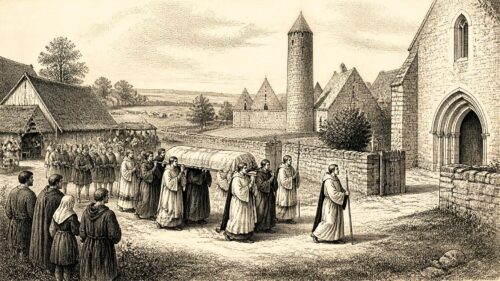
Irish religious affairs reached Rome in November. Echdonn Mac Gilla Uidir, or Eugenius, archbishop of Armagh and successor of Patrick, attended the Fourth Lateran Council, opened by Innocent III on 11 November 1215. This was one of the greatest assemblies of the medieval western Church. Its decrees addressed doctrine, clerical discipline, pastoral care, confession, marriage and the organisation of religious life. Their effects in Ireland unfolded over time, rather than all at once in 1215; nevertheless, Irish bishops were present where the norms of Latin Christendom were restated and sharpened.
Echdonn’s presence was also politically significant. His archiepiscopate had involved disputes over primacy and diocesan rights, in a church divided by older provincial claims and by the new realities of the lordship. At the council, Armagh secured dioceses in return for ending certain claims within Tuam’s province. The settlement was not a simple victory for one national community over another. It was a negotiated rearrangement within an Irish church that was increasingly connected to papal law and administration. The Annals of Ulster also note the council and record the confirmation of the Friars Minor that year, placing events in Rome within an Irish annalistic horizon.
1215 thus leaves an unusually clear set of traces: a king bargaining with magnates, officials counting fines in Dublin, armies campaigning in Ulidia, merchants testing the limits of port privilege, and an Armagh archbishop participating in a universal council. Together they resist a simple picture of either conquest or independence. Ireland was bound into John’s transmarine dominions, but its political life remained locally contested, regionally varied and shaped by institutions—churches, lordships, towns and dynasties—that no single ruler fully commanded.
Primary Sources
- The Annals of Ulster
- Mac Gilla Uidir, Echdonn (Eugenius)
- Marisco, Geoffrey de
- Irish Fines and Obligations
- John Prepares His Exfil
- Magna Carta
- John Appeals to the Pope, 1215
- Magna Carta, 1215
- The Articles of the Barons
- The Great Parchment Book of Waterford
- Waterford City Council Collection
- County Wexford Urban Archaeology Survey
- Cratloe: Historical Background
- The Pope, a Knight and a Bishop on the Edge of Christendom: The Politics of Exclusion in Thirteenth-Century Ireland
- From Kingdom to Colony: Framing the English Conquest of Ireland
- English Lordship in Ireland: 1200–1550
- Fourth Lateran Council: 1215 Council Fathers
- Select Canons of the Fourth Lateran Council, 1215
- From Runnymede to County Meath—Magna Carta and Magna Carta Hiberniae
- Henry II, the Council of Oxford and Angevin Overlordship in Leinster, 1177–85
- Irish Texts at CELT