
Archived: 26 September 2026
Abstract
Ireland’s 2016 combined the Easter Rising centenary with political fragmentation and Brexit uncertainty. After an inconclusive election, Enda Kenny led a Fine Gael minority government sustained by Fianna Fáil confidence and supply, amid disputes over water charges, housing and public services. Inclusive commemorations at the GPO, Kilmainham and elsewhere examined 1916’s contested legacy. Britain’s EU withdrawal vote revived concerns about the border, trade, the Common Travel Area and the peace process. Economic recovery, falling unemployment and immigration coincided with homelessness and housing shortages. Ireland challenged the European Commission’s Apple tax ruling, established a Citizens’ Assembly, and joined the Paris Agreement.
Read Article

Archived: 26 September 2026
Abstract
Ireland in 2017 faced political, social and constitutional uncertainty amid economic recovery. Leo Varadkar became Taoiseach, leading a fragile Fine Gael minority after Frances Fitzgerald’s resignation. Northern Ireland’s Executive collapsed, while Brexit negotiations elevated the border, producing commitments to avoid a hard border and protect the Belfast Agreement. Citizens’ Assembly and Oireachtas processes advanced debate on repealing the Eighth Amendment. Tuam excavations revealed infant and child remains, intensifying scrutiny of mother-and-baby homes. Growth coexisted with severe housing need and homelessness. Census profiles highlighted education and diversity; Storm Ophelia caused disruption and deaths; Creative Ireland promoted cultural participation across communities nationwide.
Read Article

Archived: 26 September 2026
Abstract
In 1211, King John’s Irish lordship remained fragile despite his previous campaign against the de Lacys. John de Gray, royal justiciar, sought to consolidate control through castles, garrisons, revenue collection and alliances, as recorded in the Irish Pipe Roll. At Athlone, Richard de Tuit and eight others died when a new tower collapsed, highlighting frontier tensions and disputes over church land. In the north, Áed Méith Ua Néill repelled foreign forces at Narrow Water, demonstrating organised resistance. Irish rulers negotiated through hostages and temporary agreements. Royal power expanded through administration and fortification, but Ireland remained a patchwork of competing jurisdictions.
Read Article
Archived: 26 September 2026
Abstract
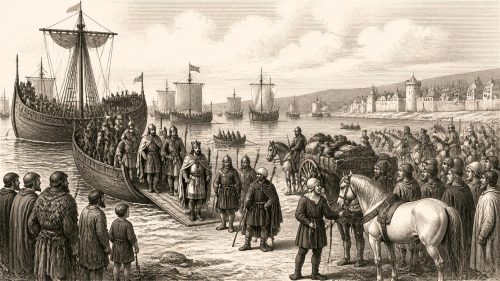
In 1210 King John launched a 63-day expedition to Ireland, asserting authority over Anglo-Norman magnates and seeking alliances with Gaelic rulers. Landing at Waterford, he received Donnchadh Ua Briain and Cathal Crobhdearg Ua Conchobair, then advanced through Dublin, Meath and Ulster. Walter and Hugh de Lacy were dispossessed; Carrickfergus fell to royal forces, while Man suffered punitive attack. John expanded administration, installed John de Grey, promoted castles and a bridge at Athlone, and supported royal coinage. Yet hostage-taking damaged relations with Connacht, Gaelic submissions remained conditional, and regional conflicts continued. The campaign strengthened royal control but left divided politics unresolved.
Read Article

Archived: 26 September 2026
Abstract
In 1209, Ireland remained politically divided between King John’s lordship, centred on Dublin and Anglo-Norman estates, and competing Gaelic dynasties. John de Grey, acting justiciar, strengthened royal administration, while Dublin’s developing castle symbolised expanding governance. The later tradition of Black Monday recalled settlers’ vulnerability beyond the city walls, though its details are uncertain. Warfare in Inishowen between Ó Néill and Ó Domnaill forces demonstrated contested northern borderlands. In Desmond, Finghin Mac Carthaigh’s killing during a booty dispute triggered succession change; Breifne likewise saw rival Ó Ruairc claimants. Ecclesiastical deaths and everyday economic obligations underscore communities affected by unstable, negotiated power.
Read Article

Archived: 26 September 2026
Abstract
In 1208, conflict within the Anglo-Norman lordship undermined royal authority in Ireland. William Marshal’s allies captured justiciar Meiler fitz Henry at Thurles, prompting King John to restore Marshal’s lands and appoint John de Grey. These settlements strengthened supervision but did not end rivalry among colonial magnates. Gaelic rulers remained independent actors: northern dynasties fought and later negotiated, while English influence shaped succession in Breifne. In Munster, dynastic disputes involved Limerick’s English community and church guarantors, despite breaches of protection. Ecclesiastical life continued amid violence and uncertainty. The year revealed a fragmented Ireland, governed through local alliances, force, charters and negotiation.
Read Article

Archived: 26 September 2026
Abstract
In 1207, King John’s Irish government faced armed opposition from Anglo-Norman magnates and continuing Gaelic rivalries. Justiciar Meiler fitz Henry’s disputes with the Lacys and William Marshal escalated into warfare across Leinster and Meath. Hugh de Lacy’s allies besieged Ardnurcher for five weeks, captured Firceall and forced Meiler from Ireland. Raiding and successions reshaped northern and western lordships, while Cathal Crobhdearg redistributed Connacht territory. Churches at Lismore and Armagh suffered attack, prompting ecclesiastical appeals to England. John promoted control through coinage rules, land grants and fortification, but these measures exposed rather than resolved fragile authority, foreshadowing his later 1210 intervention.
Read Article

Archived: 26 September 2026
Abstract
In 1206, Ireland remained divided among Gaelic kingdoms, Anglo-Norman lordships, church lands and towns under uneven royal influence. Bishop Simon Rochfort transferred Meath’s see to Newtown beside Trim, aligning ecclesiastical authority with a colonial centre. King John negotiated Connacht’s status with Cathal Crobderg, without settlement. A castle was built at Cork, while Desmond faced succession conflict after Domnall Mór Mac Carthaig’s death. Raids in Tyrone and Ciannachta destroyed churches, crops and cattle but failed to secure submission. Annals also record widespread human and livestock losses, clerical deaths, and Armagh’s appeal to England against settlers, revealing contested, localised power and negotiation.
Read Article

Archived: 26 September 2026
Abstract
In 1205, Ireland remained a patchwork of Gaelic kingdoms, Anglo-Norman lordships, church jurisdictions and Irish Sea alliances. Severe winter weather disrupted rural life. King John created Hugh de Lacy earl of Ulster, but John de Courcy’s Manx-backed invasion showed the region remained contested. In Connacht, William de Burgh’s disappearance reduced pressure on Cathal Crobderg, who negotiated an emerging tributary accommodation with the Crown. Theobald fitz Walter founded Woney Abbey in Limerick, while annals recorded ecclesiastical appointments, local deaths and violence. These events demonstrate that authority depended on negotiation, warfare, kinship, patronage and maritime connections, with ordinary communities bearing political disruption.
Read Article

Archived: 26 September 2026
Abstract
In 1204, Ireland remained politically fragmented, with King John’s authority strongest in Anglo-Norman towns, castles and lordships. Justiciar Meiler fitz Henry curbed William de Burgh’s Connacht ambitions, while Cathal Crobhdearg Ua Conchobair negotiated terms to preserve part of his kingdom. In Ulster, John de Courcy’s displacement enabled the de Lacys’ rise, though royal law sought to regulate the outcome. Annals record raids, church plundering, Doire’s burning and Domnall Mac Carthaig’s southern victory. Ecclesiastical disputes at Iona demonstrated clerical power. Dublin fortifications, authorised fairs, and Duiske’s foundation linked royal administration, commerce, settlement and religious patronage amid continuing local conflict across Ireland.
Read Article


