Archived: 25 September 2026
Abstract
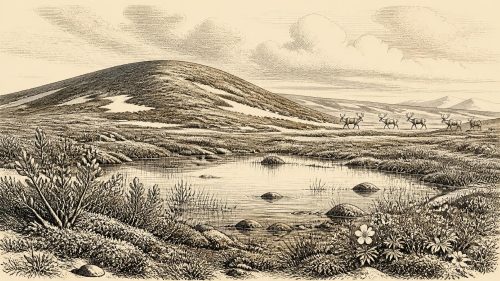
Around 30,723 BCE, Ireland lay within the unstable Late Pleistocene, rather than a single recoverable historical year. At Derryvree, County Fermanagh, freshwater organic deposits between glacial tills record a cold, open, largely treeless wetland during an interval between ice advances. Plants, mosses and insects indicate sedges, pools and periglacial habitats. Castlepook Cave, County Cork, preserves mixed animal remains accumulated over millennia, demonstrating varied cold-stage fauna but not a single contemporary ecosystem. A marked reindeer femur may indicate Upper Palaeolithic butchery, yet remains inconclusive. No evidence supports settlements, institutions or cultures. Environmental change, expanding ice and intermittent habitats define this period.
Read Article

Archived: 25 September 2026
Abstract
30,724 BCE is an imprecise modern label for a volatile later Ice Age interval, reconstructed from deposits rather than records. At Derryvree, County Fermanagh, freshwater sediments sealed between glacial tills indicate a temporary treeless tundra wetland, with pools, mosses and herbs, during fluctuating ice conditions. Ireland’s ice expanded unevenly towards a later maximum, preserving rare evidence of habitable, though severe, environments. Castlepook Cave, County Cork, contains remains of mammoth, reindeer, giant deer, bears, hyaenas and other cold-stage fauna, demonstrating ecological connections beyond Ireland. A possibly tool-marked reindeer bone may indicate early human presence, but cannot prove settlement, culture or occupation.
Read Article
Archived: 25 September 2026
Abstract
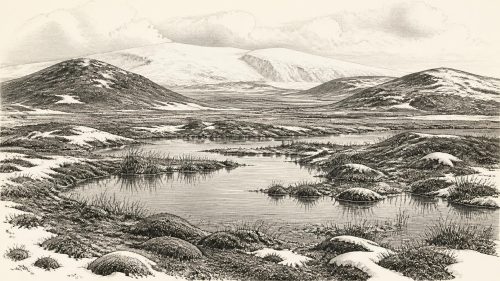
30,725 BCE is a modern label rather than a dateable Irish event. During MIS 3, Ireland experienced fluctuating cold conditions before the last ice sheet’s greatest expansion. At Derryvree, County Fermanagh, freshwater organic sediments between glacial tills demonstrate a temporary wetland with tundra-like vegetation and cold-adapted insects, although they cannot describe the whole island. Castlepook Cave, County Cork, preserves diverse Late Pleistocene fauna, including mammoth, reindeer and hyaena, indicating connections with wider Eurasian ecosystems. A possibly cut-marked reindeer bone may signal human carcass processing, but cannot prove permanent settlement. Evidence permits cautious environmental reconstruction, not political, social or calendar-year history.
Read Article
Archived: 24 September 2026
Abstract
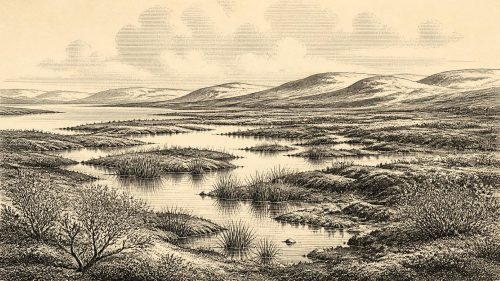
Labelled 30,726 BCE, this period cannot be dated precisely and is best understood through environmental evidence from MIS 3. At Derryvree, County Fermanagh, freshwater organic deposits between glacial tills record an interval of cold, treeless tundra-like terrain, with shallow water, marsh plants, mosses and Arctic-adapted insects. The site shows that Ireland was not continuously ice-covered, although advancing glaciers and unstable climates transformed landscapes. Castlepook Cave fauna indicates that mammoths, reindeer, predators and other cold-climate mammals reached Ireland. A possibly tool-marked reindeer bone raises, but does not prove, early human visits. No evidence supports settlement, political or cultural events in Ireland.
Read Article
Archived: 24 September 2026
Abstract
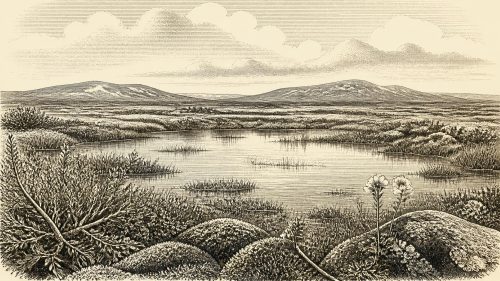
30,727 BCE is a modern label within Marine Isotope Stage 3, not a precisely recoverable Irish year. At Derryvree near Maguiresbridge, roadworks exposed freshwater organic sands and silts between glacial tills, demonstrating an ice-free local wetland before renewed glaciation. Radiocarbon dates provide broad calibrated ranges, not annual certainty. Pollen, plants, mosses and insects indicate treeless, periglacial terrain with shallow water, sedges, grasses, aquatic plants and cold-adapted vegetation. Castlepook Cave's mixed fauna, including mammoth, reindeer and predators, attests episodic open habitats. A marked reindeer femur may suggest human butchery, but neither permanent occupation nor settled society is securely proven anywhere yet.
Read Article

Archived: 24 September 2026
Abstract
Around 30,728 BCE, Ireland lay within the climatically unstable Late Pleistocene. Sediments at Derryvree in Fermanagh record ice-free intervals of cold, treeless wetland, with pools, sedges, mosses, juniper and dwarf willow. Castlepook Cave in Cork yielded mammoth, reindeer, giant deer and predators, demonstrating a diverse cold-stage fauna. A cut-marked reindeer femur may indicate Upper Palaeolithic butchery by humans, although its date and context remain uncertain. No settlement, tools, hearths or social structures are securely attested. The evidence instead depicts a changing glacial landscape offering possible brief human visitation, while requiring cautious interpretation through future dating, analysis and excavation of deposits.
Read Article
Archived: 24 September 2026
Abstract
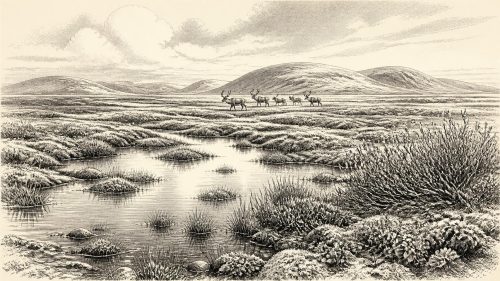
Thirty thousand years ago, Ireland lay in unstable Marine Isotope Stage 3, although dates cannot identify events in 30,729 BCE precisely. At Derryvree, County Fermanagh, freshwater sediments between glacial tills record an ice-free wetland interval, with tundra-like, open vegetation including bogbean, water-milfoil, mosses and dwarf willow. Castlepook Cave, County Cork, preserves mixed-age remains of mammoth, reindeer, giant deer and predators, demonstrating links to wider cold-stage ecosystems but not contemporaneity. A cut-marked reindeer bone suggests possible human presence, not settlement. Changing sea levels and ice complicated access. Later glaciation destroyed evidence, leaving environmental change in Ireland as the period's principal story.
Read Article

Archived: 24 September 2026
Abstract
30,730 BCE is a nominal date within MIS 3, not a recoverable Irish year at a precise calendar point. At Derryvree, County Fermanagh, freshwater silts and organic deposits between glacial tills indicate a locally ice-free, treeless periglacial wetland during a broadly dated interval of 36,900–31,700 calibrated years BP. Mosses, sedges, tundra plants and insects reveal cold, varied habitats. Castlepook Cave, County Cork, preserves complex evidence of mammoth, reindeer, giant deer, predators and other cold-adapted fauna. Human presence remains unproven, despite a possibly cut-marked bone. Ice later expanded across Ireland. These fragmentary records document changing environments, not settlements, societies or events.
Read Article
Archived: 24 September 2026
Abstract
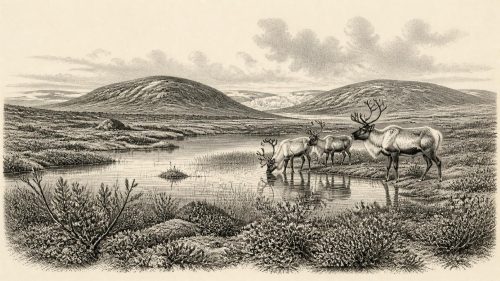
At the notional date of 30,731 BCE, Ireland lay within the climatically unstable MIS 3 cold stage, rather than a precisely datable year. Derryvree, County Fermanagh, preserves freshwater organic deposits between glacial tills, demonstrating a treeless, waterlogged tundra-like wetland during an interval between ice advances. Plant and insect remains indicate sedges, mosses and Arctic-alpine vegetation. Castlepook Cave, County Cork, records a diverse cold-stage fauna including mammoth, reindeer, giant deer, hyaena and Arctic fox. A marked reindeer femur may indicate human butchery, but cannot prove settlement. No evidence supports permanent population, polities, trade, or recoverable culture; subsequent glaciation destroyed much evidence.
Read Article
Archived: 24 September 2026
Abstract
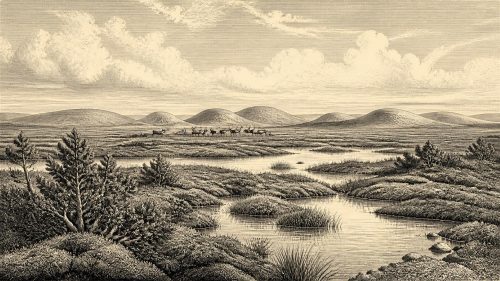
Around 30,732 BCE, Ireland’s history is reconstructed from environmental evidence rather than precise annual records. Derryvree, County Fermanagh, preserves freshwater sediments between glacial tills, dated broadly to 36,900–31,700 cal BP. Pollen, seeds, mosses and animal remains indicate open treeless tundra, marshes and pools during an ice-free interval within a harsh periglacial climate. Southern caves demonstrate episodic access by cold-stage animals, although their remains need not be contemporary. A possibly butchered reindeer bone from Castlepook may suggest brief human contact, but no secure settlement exists. Ireland’s landscape, fauna, ice margins and possible travel routes changed repeatedly before the Last Glacial Maximum.
Read Article


