Archived: 22 September 2026
Abstract
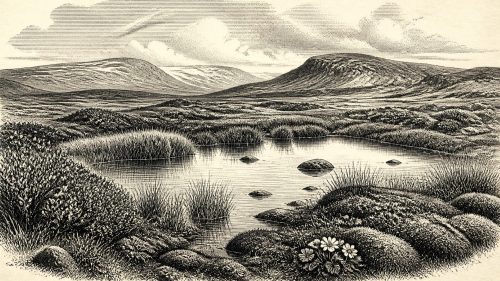
Thirty thousand eight hundred and seventy-three BCE is not a precise historical date but falls within MIS 3, a climatically unstable Late Pleistocene period. Derryvree, County Fermanagh, preserves freshwater sediments between glacial tills, indicating an ice-free interval with damp tundra, shallow pools and sparse vegetation before renewed glaciation. Castlepook Cave, County Cork, records diverse cold-stage fauna, although disturbed deposits and revised dating prevent species being assigned confidently to one moment. Ireland was undergoing expanding glaciation, with uncertain routes from Britain. No human settlement exists; a possibly cut-marked reindeer bone suggests possible Upper Palaeolithic visitation. Evidence chiefly reconstructs environment, not society.
Read Article
Archived: 22 September 2026
Abstract
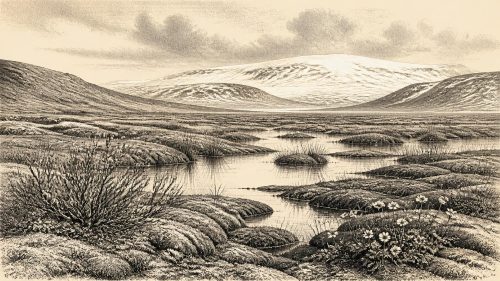
30,874 BCE is a modern label rather than a recoverable Irish historical year; evidence provides broad probabilities within unstable MIS 3. Ireland experienced severe, changing conditions between ice advances, with later glaciation erasing or burying much evidence. Derryvree, County Fermanagh, preserves organic freshwater silts between tills, indicating a cold, treeless tundra wetland during an ice-free interval. Castlepook Cave’s fauna demonstrates intermittent cold-stage habitats supporting mammoth, reindeer, giant deer and predators. A possibly cut-marked reindeer femur suggests, but does not prove, Upper Palaeolithic human activity. No evidence establishes settlement, agriculture, institutions or culture; recoverable history is chiefly ecological in character overall.
Read Article
Archived: 22 September 2026
Abstract
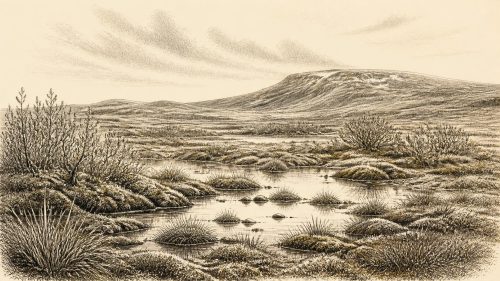
30,875 BCE, a modern label within Marine Isotope Stage 3, cannot describe a recorded Irish year. At Derryvree, County Fermanagh, sediments between two tills show a local ice-free interval: cold, treeless freshwater wetland supported mosses, sedges, dwarf plants and insects before glacial return. Radiocarbon calibration places the organic deposit broadly around 34,950–29,750 BCE, preventing precise dating. Castlepook Cave in Cork preserves diverse Ice Age animal remains, but its disturbed, long-accumulated bones cannot represent one moment or community. A possibly tool-marked reindeer bone may indicate human activity, yet remains provisional. No secure evidence demonstrates settlement, society or regular contact in Ireland.
Read Article
Archived: 22 September 2026
Abstract
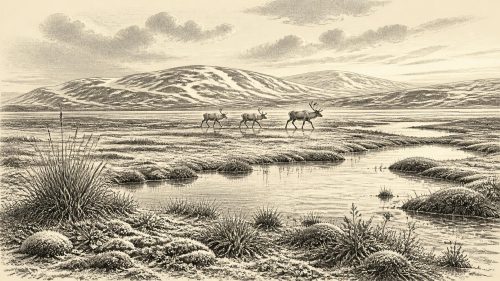
Around 30,876 BCE, Ireland’s record is environmental rather than historical. At Derryvree, County Fermanagh, freshwater silts between glacial tills indicate a locally ice-free interval, broadly dated to 34,950–29,750 BCE, with cold, treeless, wet tundra-like habitats. The evidence cannot identify conditions in a single year or across the whole island. Before the Last Glacial Maximum, fluctuating ice, meltwater and low sea levels shaped varied landscapes. Castlepook Cave in County Cork preserves remains of cold-adapted mammals; a possibly cut-marked reindeer bone may indicate brief human activity, but not settlement. Later glaciation obscured much evidence and substantially reshaped Ireland’s landforms over subsequent millennia.
Read Article
Archived: 22 September 2026
Abstract
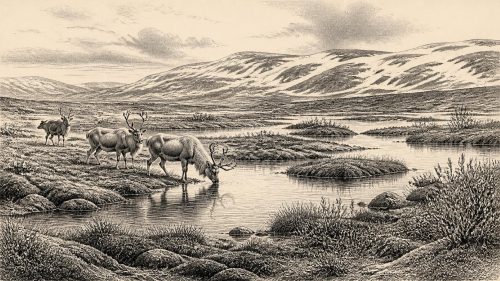
Around 30,877 BCE, Ireland experienced an unstable Late Pleistocene cold stage rather than a datable historical year. Before the Last Glacial Maximum, ice margins fluctuated, producing regionally varied conditions. Derryvree, County Fermanagh, preserves freshwater sediments beneath later till, indicating treeless, waterlogged tundra with grasses, sedges, mosses and Arctic-alpine plants. Castlepook Cave, County Cork, contains a disturbed but important faunal archive of mammoth, giant deer, reindeer, predators and smaller cold-adapted animals. A possibly cut-marked reindeer bone raises, but cannot prove, Upper Palaeolithic human activity. Glaciation, erosion and rising seas limit evidence, allowing environmental reconstruction but no account of communities and society.
Read Article
Archived: 22 September 2026
Abstract
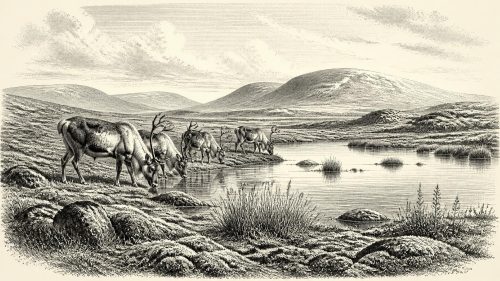
30,878 BCE cannot be identified as a specific Irish year, but falls within Marine Isotope Stage 3. At Derryvree near Maguiresbridge, Fermanagh, freshwater silts, sands and organic remains between tills record an ice-free interval, broadly dated to 36,900–31,700 calibrated years before present. Pollen, mosses and fauna indicate treeless, tundra-like wetlands amid fluctuating glacial conditions. Castlepook Cave in Cork preserves bones of mammoth, reindeer, giant deer, bear and hyaena, though accumulated over millennia rather than contemporaneously. A possibly cut-marked reindeer bone suggests unconfirmed human contact, not settlement. Evidence reveals changing cold ecology, while political, cultural and social history remains largely unrecoverable.
Read Article
Archived: 22 September 2026
Abstract
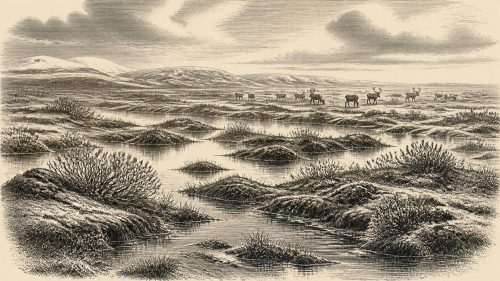
At 30,879 BCE, Ireland cannot be described through a precise annual record, as dating uncertainties and disturbed deposits require a broad Late Pleistocene interpretation. Derryvree, County Fermanagh, preserves evidence of a cold, largely treeless, wet periglacial landscape with sedges, grasses, mosses, freshwater pools and open ground between glacial advances. Castlepook Cave, County Cork, contains time-averaged remains of mammoth, giant deer, reindeer, bear and hyena, demonstrating intermittent links to wider European fauna. Expanding British–Irish ice later destroyed or buried much evidence. No secure human occupation, tools, polity or culture dates to this period in Ireland; early visits remain conceivable but unproven.
Read Article
Archived: 22 September 2026
Abstract
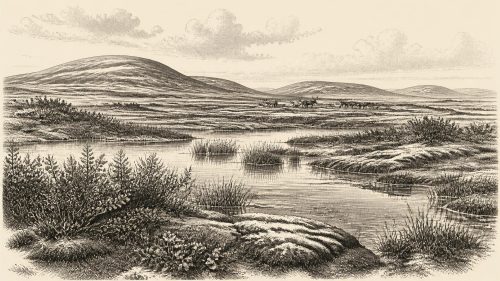
Around 30,880 BCE, a modern notional date within MIS 3, Ireland lacked historical records, states and securely identifiable communities. Evidence from Derryvree, County Fermanagh, preserves freshwater sediments between glacial tills, indicating an ice-free, periglacial wetland with tundra vegetation, insects and shallow water. Castlepook Cave, County Cork, yielded remains of mammoth, reindeer, giant deer, predators and other cold-stage fauna, although deposits span long periods. A possibly cut-marked reindeer bone suggests limited human activity around 33,000 years ago, not settlement. Fluctuating ice, sea levels and access shaped habitats and erased evidence; religion, culture and routes remain unknown for this remote prehistoric period.
Read Article
Archived: 22 September 2026
Abstract
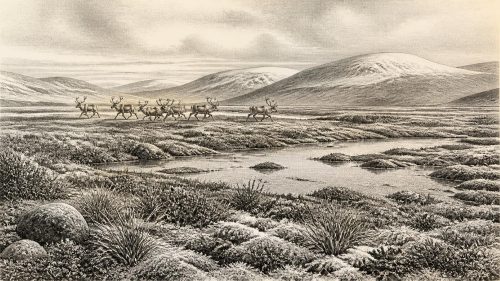
Around 30,881 BCE, Ireland experienced unstable Late Pleistocene conditions during Marine Isotope Stage 3, before the Last Glacial Maximum. Derryvree, County Fermanagh, preserves freshwater organic deposits between tills, indicating an ice-free, tundra-like wetland with sedges, mosses, insects and sparse vegetation during an interval of glacial advance and retreat. Castlepook Cave, County Cork, contains remains of mammoth, reindeer, giant deer and carnivores, documenting recurring cold-stage fauna rather than one event. A marked reindeer femur may indicate stone-tool butchery and fleeting human activity, but lacks contextual evidence. No settlement, polity or society is demonstrable; later ice expansion transformed and obscured earlier landscapes.
Read Article
Archived: 22 September 2026
Abstract
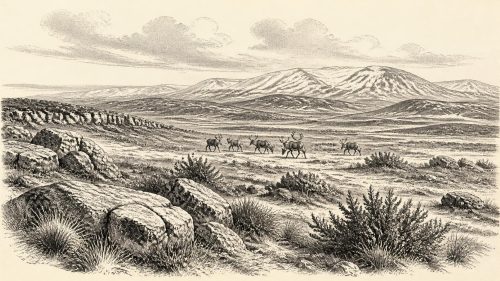
Around 32,800 calibrated years before 1950, Ireland experienced cold, unstable MIS 3 conditions, with open vegetation, lower seas and changing ice margins. Cave deposits, particularly Castlepook Cave, preserve evidence of reindeer, mammoth, giant deer, predators and other fauna, although disturbed deposits limit reconstruction. A reindeer femur, about 33,000 years old, bears a possible stone-tool cutmark, suggesting but not proving Upper Palaeolithic human activity. No associated settlement, artefacts or evidence of permanent population survives. Later butchered bear remains confirm human visitation around 12,800 cal BP. Expanding ice subsequently erased many traces, leaving cautious interpretation dependent on bones, sediments, dating and research.
Read Article


