
Archived: 22 September 2026
Abstract
At the modern reference date of 30,893 BCE, Ireland has no year-specific historical record; evidence instead describes unstable Late Pleistocene environments. At Derryvree, County Fermanagh, freshwater sediments sealed between glacial tills, radiocarbon-dated broadly to 36,900–31,700 calibrated years before present, preserve cold, treeless wetland flora including mosses, sedges, bogbean and mountain-avens. They demonstrate a locally ice-free tundra interval, not island-wide conditions. Castlepook Cave, County Cork, contains Ice Age mammals, but disturbed contexts prevent a single-date fauna. No secure human settlement is known. A possibly tool-marked reindeer bone may indicate brief human activity, yet remains inconclusive. These fragmentary deposits constitute recoverable history.
Read Article

Archived: 22 September 2026
Abstract
About 30,894 BCE, Ireland cannot be assigned a specific historical event, but evidence from Derryvree, County Fermanagh, and Castlepook Cave, County Cork, illuminates Middle Devensian conditions. Derryvree sediments, broadly dated to 34,950–29,750 BCE, indicate ice-free, wet, treeless tundra with sedges, mosses, herbs and pools. Castlepook bones show intermittent cold-adapted fauna, including mammoth, reindeer, giant deer, Arctic fox and hyaena, in open habitats. A marked reindeer femur may suggest brief human presence, but remains unproven. Later ice expansion erased much evidence, leaving Ireland an intermittently habitable Atlantic frontier rather than a documented society, with no recoverable annual narrative or settled population.
Read Article

Archived: 22 September 2026
Abstract
Around 30,895 BCE, Ireland was within the unstable Late Pleistocene MIS 3, not a dateable historical year. At Derryvree near Maguiresbridge, Fermanagh, organic layers between glacial tills indicate a temporary cold, treeless freshwater wetland, supporting tundra plants, mosses and small animals before renewed ice cover. Castlepook Cave, Cork, preserves a time-mixed fauna including reindeer, mammoth, giant deer, hare, fox, lemming, bear and hyaena, evidencing open habitats and European ecological connections. A possibly tool-marked reindeer femur suggests, but does not prove, early human activity. No settlement, polity, farming, trade, ritual or enduring population is known; sediments and fossils provide the record.
Read Article

Archived: 22 September 2026
Abstract
Around 30,896 BCE, Ireland’s evidence records environmental change rather than events. At Derryvree, County Fermanagh, freshwater sediments beneath glacial till preserve tundra-like wetland vegetation, showing that cold, ice-free intervals supported plant life before renewed glaciation. Castlepook Cave, County Cork, contains diverse MIS 3 fauna, including mammoth, reindeer, giant deer, hyaena, wolves and Arctic foxes, though species need not have coexisted. These remains demonstrate intermittent connections with Britain and Europe under shifting climates and sea levels. A possibly tool-marked reindeer bone suggests brief human presence, but cannot prove settlement. Ireland was a dynamic, sparsely evidenced Ice-Age landscape during this remote period.
Read Article

Archived: 22 September 2026
Abstract
Around 30,897 BCE, Ireland cannot be described through calendar-year history, but environmental archives reveal a changing later Glacial Period landscape. At Derryvree, County Fermanagh, BIRM-166 organic deposits between tills document a locally ice-free, treeless periglacial wetland with mosses, sedges, herbs and open water, before renewed glacial deposition. Castlepook Cave, County Cork, preserves diverse fauna, including mammoth, reindeer, giant deer and predators, demonstrating intermittent ecological links with north-west Europe. A marked reindeer femur may indicate human butchery about 33,000 years ago, yet its context is insecure. Evidence supports possible transient visitors, not settlement, amid dynamic regional ice, sea-level and land-route changes.
Read Article
Archived: 22 September 2026
Abstract
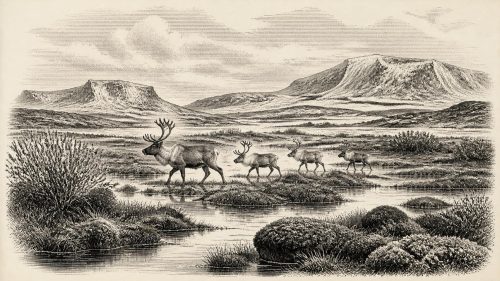
Around 30,898 BCE, Ireland lay within a variable Late Pleistocene periglacial phase, rather than a precisely datable year. At Derryvree, County Fermanagh, freshwater sediments between tills show that ice-free conditions temporarily supported cold, open wetlands with Arctic-alpine plants, insects and organic accumulation before glaciers returned. Castlepook Cave, County Cork, preserves diverse cold-stage fauna, including mammoth, reindeer, giant deer, predators and lemmings, though its mixed deposits limit precise interpretation. A possibly tool-marked reindeer bone suggests brief human contact, but proves neither settlement nor society. Lower sea levels altered routes, while advancing ice eventually covered Ireland, destroying or concealing most earlier evidence.
Read Article
Archived: 22 September 2026
Abstract
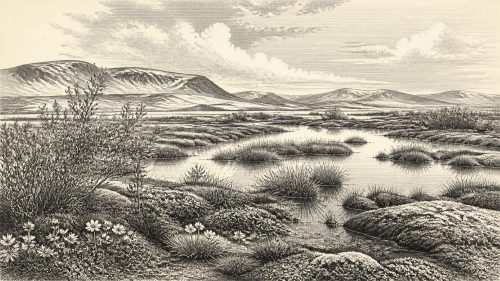
30,899 BCE is a modern chronological label, not a recoverable Irish year. During MIS 3, Derryvree, County Fermanagh, preserved freshwater organic deposits between glacial tills, indicating a locally ice-free but cold, treeless periglacial wetland with mosses, sedges, water-milfoil, dwarf willow, mountain avens and cold-adapted insects. Castlepook Cave, County Cork, records mammoth, reindeer, giant deer, bear, wolf and hyaena across a broad period. A possibly tool-marked reindeer bone suggests an early human visit, but cannot prove settlement. No political, social, economic or ritual history is evidenced. Renewed glaciation eventually buried habitats, while later ice-sheet activity erased or obscured much surviving evidence.
Read Article

Archived: 22 September 2026
Abstract
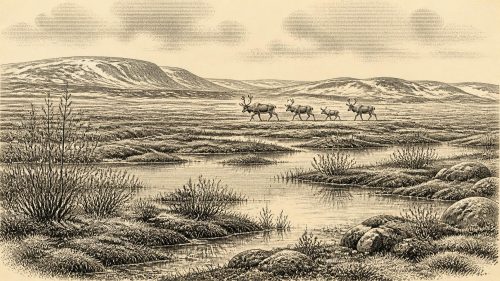
Around 30,900 BCE, Ireland’s past is reconstructed from environmental evidence rather than records or communities. At Derryvree, County Fermanagh, organic wetland deposits between two glacial tills indicate a cold, treeless, tundra-like landscape of pools, mosses, sedges and Arctic-alpine plants during an interstadial interval. Ice margins, drainage and coastlines remained unstable, and conditions varied regionally. Cave remains, notably from Castlepook, County Cork, show diverse MIS 3 fauna, including mammoth, reindeer, giant deer and hyaena, though not necessarily contemporaneously. A cut-marked reindeer bone may suggest brief human activity, but cannot demonstrate settlement or continuous occupation. Dating permits only broad chronological ranges securely.
Read Article
Archived: 22 September 2026
Abstract
Around 30,901 BCE, Ireland lay within a fluctuating cold phase before the Last Glacial Maximum, not a precisely recoverable year. Derryvree, County Fermanagh, preserves evidence of an ice-free freshwater wetland between glacial advances, with tundra vegetation, mosses, sedges and aquatic plants. Castlepook Cave, County Cork, contains a long, disturbed archive of mammoth, reindeer, giant deer, brown bear and spotted hyaena remains, demonstrating intermittent ecological links with north-west Europe. A cut-marked reindeer bone may indicate brief Upper Palaeolithic human activity, but cannot prove settlement. Changing ice, sea levels and routes made Ireland environmentally variable, while beliefs, societies and institutions remain unknowable.
Read Article

Archived: 22 September 2026
Abstract
30,902 BCE is a modern label within a broad calibrated radiocarbon range, not a historical year. Derryvree, County Fermanagh, preserves freshwater silts between glacial tills, indicating an ice-free interval of treeless tundra, wetlands, insects and cold-adapted vegetation before renewed ice advance. Ireland was environmentally varied but approaching extensive Last Glacial Maximum glaciation, which erased much earlier evidence. Castlepook Cave, County Cork, records mammoth, reindeer, giant deer, predators and other cold-stage fauna, accumulated over long periods. A cut-marked reindeer femur may indicate brief human butchery, but lacks supporting artefacts or occupation evidence. No society, settlement, politics or culture can be reconstructed.
Read Article


