Archived: 21 September 2026
Abstract
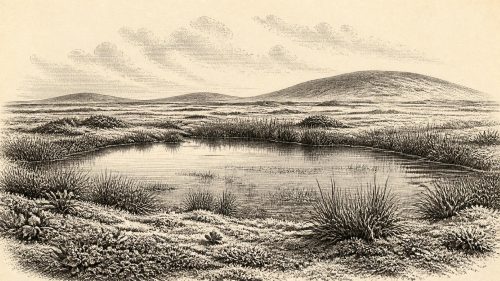
At around 30,913 BCE, Ireland’s evidence records unstable Ice Age environments rather than identifiable events or communities. Derryvree, County Fermanagh, preserves freshwater organic deposits between glacial tills, dated broadly to 34,950–29,750 BCE, indicating ice-free periglacial wetland with open, treeless vegetation, pools and insects. Cave assemblages, notably Castlepook in Cork, contain remains of mammoth, reindeer, giant deer, predators and cold-adapted mammals, though not necessarily contemporaneous. Crag Cave calcite documents climatic oscillation. A possibly cut-marked reindeer bone suggests, but cannot prove, early human presence. No secure habitation evidence exists; Ireland’s landscape was repeatedly altered, buried and eroded by advancing ice over time.
Read Article

Archived: 21 September 2026
Abstract
Thirty thousand, nine hundred and fourteen BCE cannot identify a specific Irish event, but falls within the calibrated range of Derryvree freshwater deposits near Maguiresbridge, Fermanagh. Sealed between glacial tills, these deposits indicate an ice-free interval of cold, open periglacial wetlands containing sedges, dwarf willow, clubmoss and bogbean. Cave remains at Castlepook, Cork, show varied Late Pleistocene fauna, including reindeer, mammoth and hyaena, though not all were contemporary. A cut-marked reindeer bone may suggest human butchery around 31,000 BCE, but remains unconfirmed. Climatic instability and advancing ice shaped landscapes; no reliable evidence supports political, cultural or settled human social history.
Read Article
Archived: 21 September 2026
Abstract
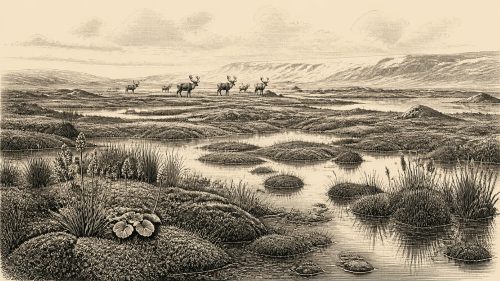
Around 30,915 BCE, Ireland’s history is reconstructed from fragmentary Late Pleistocene environmental evidence rather than annual events. Beneath Fermanagh’s Derryvree drumlin, freshwater sediments dated broadly to 36,900–31,700 calibrated BP preserve bogbean, mountain avens, insects, sedges and grasses, indicating treeless, cold periglacial wetland during an ice-free interval between glacial advances. Castlepook Cave in Cork contains time-mixed remains of mammoth, reindeer, giant deer, predators and smaller cold-adapted animals, demonstrating changing habitable phases. A modified reindeer femur may indicate human butchery, but cannot prove settlement. Growing British-Irish ice sheets increasingly disrupted habitats, access and preservation, leaving a dynamic, uncertain landscape for later investigators.
Read Article
Archived: 21 September 2026
Abstract
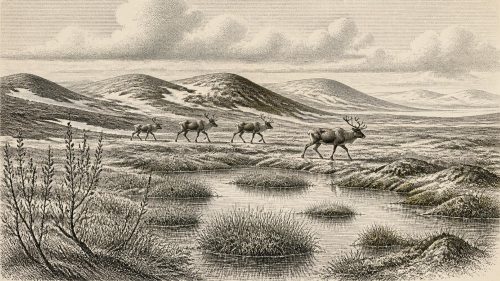
30,916 BCE is an approximation within a broad, uncertain MIS 3 chronology, not a recoverable Irish year. Derryvree, County Fermanagh, preserves freshwater sediments between glacial tills, indicating cold, open tundra-like wetlands during fluctuating regional ice conditions. Castlepook Cave, County Cork, contains time-averaged remains of reindeer, mammoth, hyaena and mammals, demonstrating changing ecological opportunities rather than a uniform fauna. An incised reindeer femur may record human butchery around 31,000 BCE, but its old documented context prevents conclusions about settlement or society. No evidence supports claims about politics, belief or culture. The records instead reveal environmental change before the Last Glacial Maximum.
Read Article
Archived: 21 September 2026
Abstract
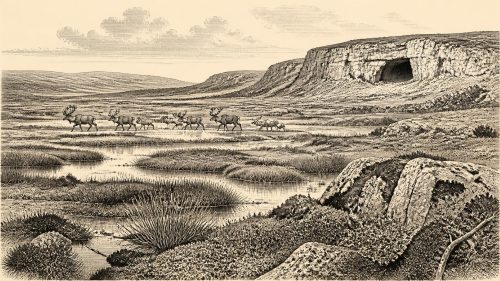
At 30,917 BCE, Ireland was a climatically unstable Late Pleistocene landscape, not a date capable of precise annual history. During the Midlandian cold stage, open tundra, wetlands and seasonal meltwater existed alongside advancing ice. Derryvree sediments in Fermanagh preserve evidence of treeless freshwater habitats, although their dating cannot identify this specific year. Castlepook Cave in Cork yielded a reindeer femur, about 33,000 years old, bearing a possible stone-tool cut mark: Ireland’s earliest proposed human evidence. Yet no associated tools, hearths or settlements survive. Faunal and geological remains demonstrate ecological activity and changing routes, while human presence remains brief, uncertain, debated.
Read Article
Archived: 21 September 2026
Abstract
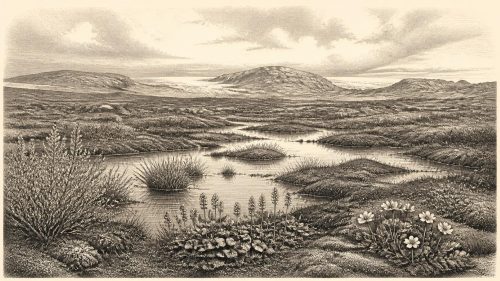
Labelled 30,918 BCE retrospectively, this period belongs to MIS 3 and cannot support year-specific Irish history. Derryvree, County Fermanagh, preserves freshwater silts between glacial tills, radiocarbon dated broadly to 36,900–31,700 calibrated years before present. Its fossils indicate ice-free, treeless tundra with wetlands, mosses, sedges and hardy plants during a fluctuating cold climate. Castlepook Cave, County Cork, records MIS 3 fauna including reindeer, giant deer, mammoth and predators, but accumulated over long periods. A marked reindeer femur may indicate stone-tool butchery, although it remains uncertain. Together, these archives show a dynamic, wildlife-rich landscape, not evidence for settled human communities or institutions.
Read Article
Archived: 21 September 2026
Abstract
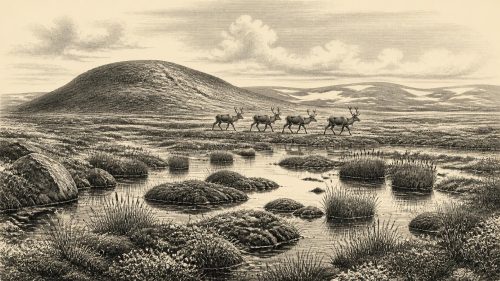
About 30,919 BCE, Ireland lay within the climatically unstable Late Pleistocene, not a datable historical year. During MIS 3, advancing but uneven ice, permafrost and open tundra habitats varied regionally. At Derryvree, County Fermanagh, freshwater sediments between tills indicate an ice-free interval, dated broadly by radiocarbon, with treeless periglacial vegetation. Castlepook Cave, County Cork, preserves remains of mammoth, reindeer, giant deer, hyaena and other cold-adapted fauna, demonstrating intermittent ecological links with north-west Europe. A possibly cut-marked reindeer bone suggests, but does not prove, brief human presence. Evidence cannot support claims of settlement, polities, trade, religion or warfare at this horizon.
Read Article
Archived: 21 September 2026
Abstract
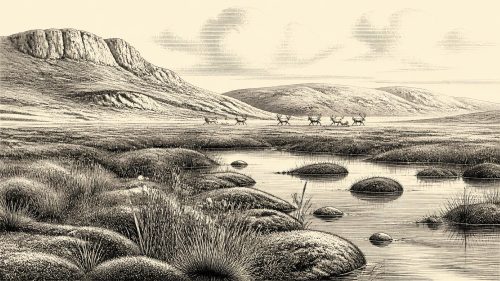
Although 30,920 BCE is a modern label rather than a recoverable Irish date, evidence places it within variable MIS 3 conditions. Derryvree, Fermanagh, preserves freshwater organic sediments indicating cold, treeless tundra wetlands before renewed glaciation. Castlepook Cave, County Cork, documents diverse fauna, including mammoth, giant deer, reindeer, hyaena, bear, wolf and Arctic species, but its disturbed deposits cannot represent one moment or habitat. A possibly cut-marked reindeer bone may indicate Upper Palaeolithic carcass processing, yet remains unconfirmed and proves neither settlement nor society. Ice-sheet expansion after about 29,000 BP transformed habitats and destroyed evidence, leaving a fragile, predominantly ecological record.
Read Article
Archived: 21 September 2026
Abstract
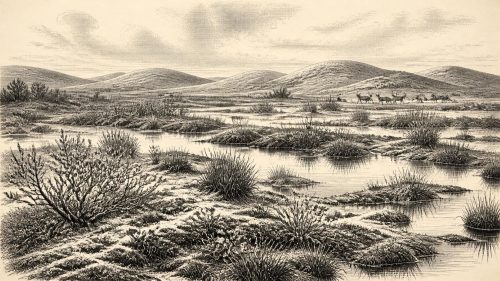
Around 30,921 BCE, Ireland lay in climatically unstable Marine Isotope Stage 3, before the Last Glacial Maximum. Freshwater sediments at Derryvree, County Fermanagh, dated broadly to 34,950–29,750 BCE, record a cold, open wetland between glacial advances. Fossils indicate tundra vegetation, mossy pools and severe seasonal conditions, while Crag Cave shows intermittent milder episodes. Castlepook Cave fauna, including reindeer, mammoth, bear, wolf and hyaena, demonstrates that large animals occupied parts of Ireland. A possibly tool-marked reindeer bone suggests human visitation, but proves neither settlement nor continuous occupation. Evidence instead depicts transient habitats amid advancing, uneven ice across the island over time.
Read Article
Archived: 21 September 2026
Abstract
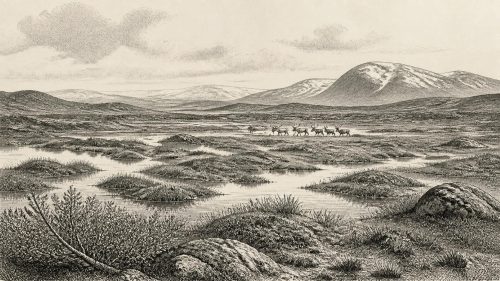
Thirty thousand nine hundred and twenty-two BCE is a modern label within a broad Late Pleistocene interval, not a recoverable Irish historical year. At Derryvree, County Fermanagh, organic freshwater silts between glacial tills record locally ice-free, periglacial tundra wetlands, dated broadly to 36,900–31,700 calibrated years BP. Castlepook Cave, County Cork, preserves mixed remains of mammoth, reindeer, giant deer, bears, hyenas and other fauna, demonstrating links with wider north-west European ecosystems. A cut-marked reindeer bone may indicate human butchery, but lacks secure context and cannot prove settlement. Fluctuating climate preceded later ice-sheet expansion, which obscured much earlier evidence across Ireland generally.
Read Article


