

The Awbeg Tundra
Around 31,434 BCE, Ireland lay within a fluctuating Marine Isotope Stage 3 cold environment, although no event can be dated precisely to that year. Derryvree, County Fermanagh, preserves an inter-till wetland sequence showing locally ice-free, open tundra terrain with sedges, mosses, pools and cold-tolerant plants, rather than woodland. Castlepook Cave, County Cork, records a time-averaged fauna including reindeer, mammoth, giant deer and predators, indicating cold open country. A possibly stone-cut reindeer femur suggests brief human contact, but lacks secure archaeological context. No settled population, culture or institutions can be demonstrated from Ireland; later glaciation and inundation probably erased much evidence.
View Record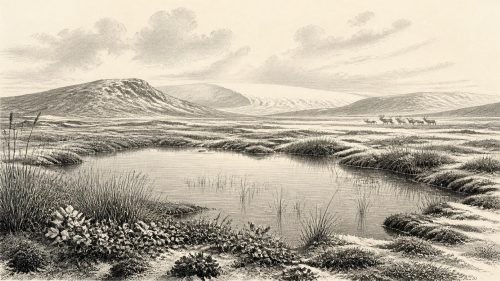
Derryvree’s Bogbean Season
Around 31,435 BCE, Ireland lay within the variable Midlandian cold stage, not a precisely reconstructable single year. Derryvree, County Fermanagh, preserves freshwater organic sediments between glacial tills, radiocarbon-dated broadly to 36,900–31,700 cal BP. Its bogbean, sedges, mosses and aquatic plants indicate treeless wet tundra with seasonal liquid water, rather than permanent ice or temperate woodland. Comparable deposits show changing local climates and ice limits. Cave fauna demonstrate that reindeer, mammoth, giant deer and predators occurred during overlapping Late Pleistocene phases, but not necessarily together. No securely dated human activity exists. Later ice expansion buried Derryvree and erased many older landscapes.
View Record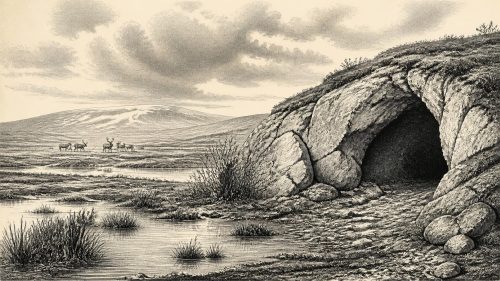
Doneraile’s Earliest Trace
At c. 31,436 BCE, Ireland cannot be described through annual events or human history, but through uncertain Late Pleistocene environmental evidence. Derryvree, County Fermanagh, preserves freshwater sediments between glacial tills, indicating episodically ice-free, cold, treeless wetlands with tundra plants during Marine Isotope Stage 3. Castlepook Cave near Doneraile contains remains of mammoth, reindeer, horse, bear, hyaena and other cold-stage fauna, although collections span long periods. A marked reindeer bone may indicate early human butchery, but sustained occupation is unproven. Dynamic ice, changing coasts and later erosion shaped intermittently habitable landscapes, while preventing reconstruction of societies, politics, settlement, or exact chronology.
View Record
Derryvree’s Tundra Insects
31,437 BCE is a modern label within a broad calibrated Late Pleistocene MIS 3 range, not a datable Irish year. At Derryvree, County Fermanagh, freshwater silts between glacial tills preserve mosses, sedges, aquatic plants and cold-adapted insects, indicating locally ice-free, open tundra-like wetland during fluctuating glaciation. Castlepook Cave, County Cork, contains MIS 3 fauna including reindeer, mammoth, giant deer, predators and other cold-stage species, demonstrating diverse open habitats. A marked reindeer femur may suggest human butchery, but lacks secure archaeological context and cannot prove occupation. No evidence supports contemporary Irish politics, settlements, beliefs or culture. The evidence records ice-age environments.
View Record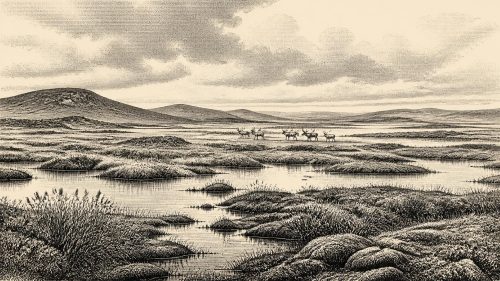
Derryvree’s Moss and Mammoths
Around 31,438 BCE, Ireland had no historical calendar, communities or written record; evidence instead describes a changing Late Pleistocene environment. At Derryvree, County Fermanagh, organic sediments between glacial tills indicate a locally ice-free, open tundra wetland during a broad, uncertain interval, later buried by ice. Plant and insect remains reveal cold, damp, sparsely vegetated ground. Castlepook Cave, County Cork, preserves mixed remains of mammoths, reindeer, giant deer, predators and other cold-adapted animals, demonstrating intermittent access to suitable habitats. A marked reindeer bone may indicate human butchery, but cannot establish settlement. Subsequent glaciation destroyed or obscured evidence of Ireland’s earliest visitors.
View Record
Derryvree’s Entombed Herbarium
Around 31,439 BCE, a modern label within Marine Isotope Stage 3, Ireland was a changing cold-climate landscape rather than a historically documented society. Derryvree, County Fermanagh, preserves freshwater organic sediments beneath later glacial till, dated broadly to 36,900–31,700 calendar years BP. Pollen, plants and insects indicate open, wet tundra with sedges, mosses, herbs and pools. Cave faunas show reindeer, mammoth, hyaena and other cold-adapted animals reached Ireland, though deposits are mixed and imperfectly dated. A marked reindeer bone at Castlepook may suggest human butchery, but secure evidence of people is far later. Expanding ice eventually buried Derryvree’s wetland biological record.
View Record
Fermanagh’s Intertill Reedbed
Around 31,440 BCE, Ireland lay within the climatically unstable later Marine Isotope Stage 3, although no evidence can identify events in that exact year. At Derryvree, County Fermanagh, freshwater silts sealed between glacial tills preserve a cold, treeless tundra wetland of sedges, mosses and shallow water. Castlepook Cave, County Cork, contains remains of mammoth, reindeer, giant deer, bear and hyena, indicating changing animal movements rather than a permanent fauna. A cut-marked reindeer bone may indicate human butchery about 33,000 years ago, but cannot prove settlement. Later glaciation obscured evidence; no politics, monuments, farming or permanent communities are firmly known anywhere.
View Record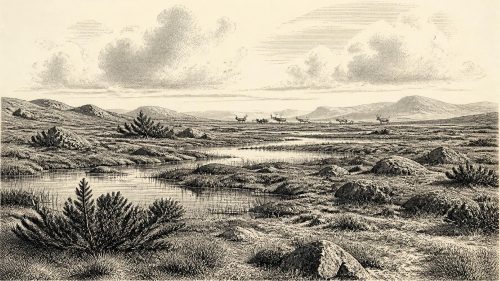
Castlepook’s Hyena Passage
Around 31,441 BCE, Ireland lay within Marine Isotope Stage 3, a fluctuating prelude to the Last Glacial Maximum rather than a uniformly ice-covered landscape. Derryvree sediments in Fermanagh indicate cold, treeless wetlands of sedges, grasses, juniper, mosses and arctic-alpine plants, alongside regional variation. Castlepook Cave in Cork preserves MIS 3 fauna including mammoth, reindeer, giant deer, bears, wolves, Arctic foxes, lemmings and spotted hyaenas, which used the cave as a den. A marked reindeer femur may indicate human butchery about 33,000 years ago, but cannot prove permanent settlement. Later glaciation erased much evidence, leaving deposits and bones as Ireland’s witnesses.
View Record
Trifoliate Seeds Below Ice
31,442 BCE lies within Marine Isotope Stage 3, a climatically unstable Late Pleistocene interval for which precise annual dating is impossible. At Derryvree, County Fermanagh, organic freshwater sediments between glacial tills indicate locally ice-free tundra, with dwarf willow, mountain avens, sedges, mosses and bogbean. Southern Irish caves preserve remains of reindeer, mammoth, hyaena, bear, fox, hare and lemmings, although their chronology and associations require caution. A possibly tool-marked Castlepook reindeer bone suggests, but cannot confirm, human visitation. Later ice expansion destroyed much evidence, leaving sediment, seeds and bones as fragmentary records of cold ecosystems in Ireland and possible human contact.
View Record
BIRM-166’s Periglacial Pool
Around 31,443 BCE, Ireland lay within the unstable cold climate of Marine Isotope Stage 3, before the Last Glacial Maximum. Derryvree, County Fermanagh, preserves Birm-166, organic freshwater sediments between glacial tills, dated broadly to 36,900–31,700 cal BP. Its plants and insects indicate an ice-free local tundra wetland with mosses, sedges and cold-adapted flora, rather than continuous national ice cover. Greenagho supports episodic ice-free terrain. Lower sea levels altered coastlines, while cave remains indicate reindeer, mammoth and hyaena regionally. A marked Castlepook reindeer bone may suggest human activity, but lacks secure context. No evidence supports permanent settlement, polities, farming or trade.
View Record