
Doneraile’s Open Margin
31,495 BCE is a modern label for roughly 33,500 years ago, during late Marine Isotope Stage 3, rather than a datable Irish event. Ireland was approaching, but had not reached, maximum glaciation; parts remained ice-free, supporting open tundra-grassland environments and large mammals. Castlepook Cave near Doneraile preserves mixed Pleistocene remains including mammoth, reindeer, giant deer, bear, wolf and Ireland’s sole spotted hyaena. A marked reindeer femur may record stone-tool butchery and Upper Palaeolithic visitors, but cannot prove settlement or occupation. Cave deposits and dates are uncertain. Secure human evidence is later, from a butchered bear bone around 12,800 years ago.
View Record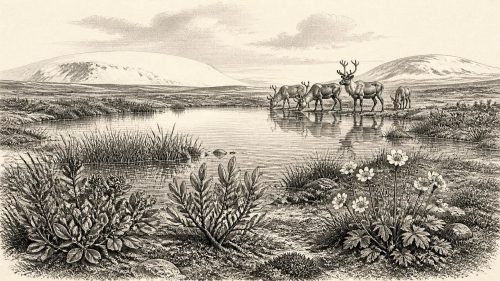
Maguirebridge’s Trifoliate Seed
Around 31,496 BCE, Ireland’s history is reconstructed from environmental evidence rather than recorded events. At Derryvree, County Fermanagh, freshwater silts between glacial tills preserve bogbean, dwarf willow and other cold-adapted plants, indicating temporary wetlands within open tundra-steppe conditions. Castlepook Cave, County Cork, yielded remains of reindeer, mammoth, giant deer and predators, though accumulated deposits cannot prove contemporaneous fauna. A cut-marked reindeer bone may indicate an exceptionally early human visit, but cannot establish settlement or population continuity. Ireland’s climate, ice cover, coastlines and possible access routes were changing. The evidence depicts a productive yet precarious landscape before more extensive later glaciation.
View Record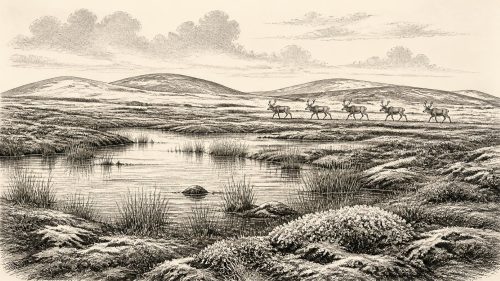
The BIRM-166 Landscape
Around 31,497 BCE, Ireland was a climatically unstable Late Pleistocene landscape rather than a datable year. Derryvree, County Fermanagh, preserves freshwater sediments between successive glacial tills, indicating cold, open periglacial wetlands during part of MIS 3. Castlepook Cave, County Cork, produced remains of reindeer, giant deer, bears, wolves, Arctic foxes, hyaenas and possibly mammoths, though cave contexts are disturbed and revised dating is essential. An incised reindeer bone may indicate butchery but cannot prove settlement. No evidence supports resident communities, agriculture, trade, polities or culture. Later glaciation erased much evidence, leaving a treeless, intermittently accessible Ice Age frontier for fauna.
View Record
Derryvree’s Insect Ledger
Around 31,498 BCE, Ireland cannot be described through precise dates or written history, but environmental evidence reveals a variable late-Pleistocene landscape. Organic silts at Derryvree, County Fermanagh, indicate an ice-free freshwater wetland with treeless tundra vegetation, mosses, sedges and northern insects during part of MIS 3. Other deposits suggest regional, rather than continuous, ice cover. Castlepook Cave, County Cork, preserves fauna including mammoth, reindeer, giant deer, hyaena, Arctic fox and lemmings, demonstrating open, cold habitats. A possibly cut-marked reindeer bone may indicate Upper Palaeolithic human activity, but cannot prove settlement. Later ice expansion destroyed or buried much evidence from landscapes.
View Record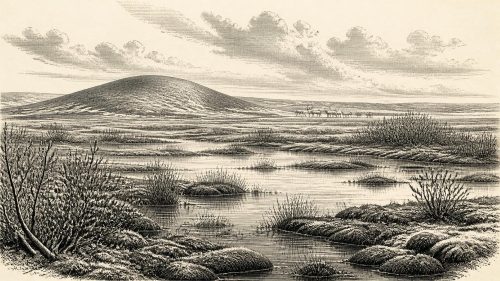
Fermanagh’s Intertill Mosses
31,499 BCE is best understood as a broad later Marine Isotope Stage 3 interval, not a datable Irish year. Ireland experienced unstable Ice Age conditions, with shifting ice margins, lowered seas and locally varied open, tundra-like habitats. At Derryvree, Fermanagh, freshwater organic sediments between tills preserve evidence of sedges, mosses, herbs, shrubs and pools during an ice-free episode. Crag Cave calcite indicates intermittent milder conditions. Castlepook Cave documents reindeer, mammoth, giant deer and predators. A cut-marked reindeer bone may suggest human activity, but lacks secure context. Evidence supports dynamic environments and mobile fauna, not settlement, society or certain historical events.
View Record
Derryvree’s Drumlin Pool
Around 31,500 BCE, Ireland lay within the fluctuating cold conditions of Marine Isotope Stage 3, not a historically identifiable year. At Derryvree, County Fermanagh, freshwater sediments dated broadly to this period preserve tundra-like plants and wetland evidence between glacial deposits, demonstrating a local ice-free or ice-marginal interval. Castlepook Cave, County Cork, contains MIS 3 fauna, including a reindeer femur dated about 31,000 BCE with a possible stone-tool butchery mark. This may indicate a brief human visit, but cannot prove settlement. Ireland’s ice, water, fauna and climate changed regionally; no secure evidence exists for communities, ritual, trade, dwellings or sustained population.
View Record
An Incision at Castlepook
Although 31,501 BCE cannot be dated precisely in Ireland, it falls within climatically unstable Marine Isotope Stage 3. Derryvree sediments in Fermanagh indicate a local ice-free interval with cold, treeless freshwater wetlands between glacial advances, not conditions across the island. Castlepook Cave, Cork, preserves fauna including mammoth, reindeer, giant deer, predators and cold-adapted mammals, demonstrating suitable open habitats. A reindeer femur, possibly cut with a stone tool around 31,000 BCE, may indicate human butchery. However, its disturbed provenance and lack of occupation evidence preclude claims for permanent settlement. Ireland remained a changing Ice Age landscape, perhaps visited by mobile hunter-gatherers.
View Record
Reindeer, Sedges and BIRM-166
Approximately 31,502 BCE, Ireland lay within the unstable Late Pleistocene MIS 3, not a precisely recoverable historical year. Derryvree sediments in County Fermanagh, dated by BIRM-166, show an ice-free, open tundra wetland with sedges, grasses, mosses and cold-adapted plants. Castlepook Cave in County Cork preserves a mixed, long-lived fauna including mammoth, reindeer, giant deer, hyena and Arctic fox, rather than one contemporary community. A cut-marked reindeer femur may indicate brief Upper Palaeolithic butchery, but cannot prove settlement or permanent occupation. Climatic oscillations preceded major ice-sheet expansion, whose erosion and deposits later obscured much earlier landscape and human evidence in Ireland.
View Record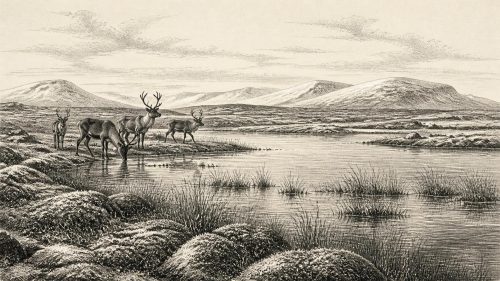
The BIRM-166 Silt Bed
Around 31,503 BCE, Ireland’s history is reconstructed from environmental evidence rather than annual chronology. At Derryvree, County Fermanagh, the BIRM-166 organic silt bed, dated broadly to 36,900–31,700 calendar years BP, records an ice-free freshwater wetland between glacial advances. Its plants and animal traces indicate cold, largely treeless tundra with pools and saturated ground. Castlepook Cave, County Cork, preserves mixed remains of mammoth, reindeer, giant deer, bears, wolves and hyaenas, reflecting changing populations over millennia. A possibly cut-marked reindeer bone may indicate brief human visits, but no secure settlement evidence exists. Later ice both preserved and destroyed Ireland’s sparse Pleistocene record.
View Record
Derryvree’s Glacial Interlude
Around 31,504 BCE, Ireland lay within the climatically unstable Late Pleistocene MIS 3 phase, before the Last Glacial Maximum. Derryvree, County Fermanagh, preserves freshwater sediments between glacial tills, demonstrating a local ice-free interval with treeless tundra, wetland plants and shallow pools. Cave finds in southern Ireland indicate cold-adapted fauna, including reindeer, mammoth, giant deer and hyaena, although deposits span long periods and dating remains uncertain. A marked reindeer bone from Castlepook may suggest human activity, but cannot prove settlement or permanent occupation. Evidence records changing environments and occasional animal access, not calendar-year events, political communities, trade or established human societies.
View Record