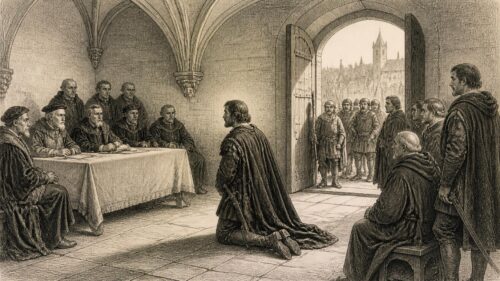
Ormond Parliament1703 CE
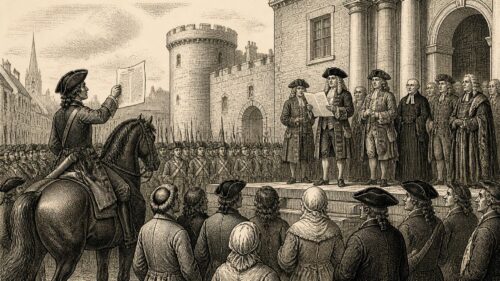
In 1703 Queen Anne appointed James Butler, duke of Ormond, as lord lieutenant, hoping his influence would manage Ireland’s Protestant parliament. Meeting in September, parliament approved liquor excise, trade-related imports, and legislation strengthening restrictions on arriving Catholic clergy, amid wartime fears of France, Spain and Jacobitism. MPs also petitioned for constitutional restoration or union with England, expressing resentment over trade and political subordination. Church and judicial appointments reinforced Protestant administration. Kinsale hosted Dampier’s privateering expedition to the South Seas. Parliament considered navigation improvements linking Lough Neagh, Newry, the Barrow and trade, revealing ambitions for development within an unequal, confessional kingdom.
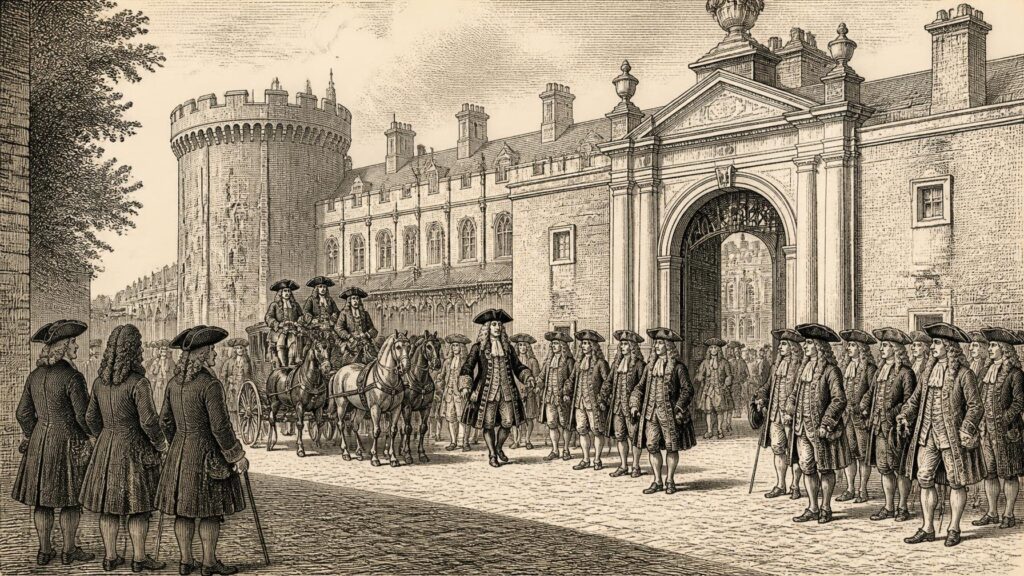
Dateline
In 1703, Ireland’s most consequential developments were concentrated not on a battlefield but in the workings of government: the arrival of a new lord lieutenant, the meeting of a new parliament, and legislation that sharpened the religious settlement created after the Williamite war. The year also revealed an Ireland connected to wider maritime conflict and commercial ambition. Kinsale sent privateers towards the Atlantic; MPs considered ways to improve internal waterways; and Dublin’s political elite argued over Ireland’s constitutional and economic position within the monarchy of Queen Anne.
The dates used here are those of contemporary Irish and English usage, when the legal new year began on 25 March. Since the events discussed fall after that date, they also belong unambiguously to the calendar year 1703.
A New Viceroy
In February, Queen Anne appointed James Butler, second duke of Ormond, lord lieutenant of Ireland. The appointment mattered because Ormond was not merely an official sent from London. He was an immensely wealthy Anglo-Irish magnate, heir to a name with deep political and territorial roots in Ireland, and he possessed connections in both houses of the Irish parliament. Anne’s ministers hoped that his standing could make a difficult parliamentary session manageable.
The difficulties were real. The Protestant landowning and office-holding class which dominated parliament had emerged from decades of upheaval, confiscation and war. It was also increasingly alert to its subordinate position within the composite monarchy. English legislation restricting Irish woollen exports, the recent resumption of Williamite land grants, and disputes over judicial authority had left many Irish Protestants resentful of intervention from England. Their interests could nevertheless diverge sharply from those of the Catholic majority, whose political and legal position had already been gravely weakened after 1691.
Ormond’s task was therefore double: secure revenue and loyalty for Anne’s government during the War of the Spanish Succession, while managing a political community eager to make its own grievances heard. His administration was also shaped by rival Protestant groupings. Alan Brodrick, one of the leading Commons figures, had acquired a reputation for defending what was termed the Irish parliament’s “sole right” in financial matters, even while court supporters sought to keep Dublin Castle supplied and the queen’s business moving.
Parliament Meets at Dublin
The Irish parliament assembled at Dublin on 21 September, its first session under Anne and the first since 1698. It was a legislature of Protestant peers and MPs, meeting in a kingdom whose population was overwhelmingly Catholic. Its powers were further constrained by Poynings’ Law: proposed legislation had to pass through Irish and English privy councils before it could become a bill in Dublin. Parliamentary debate could be energetic, but the constitutional machinery placed decisive limits on independent law-making.
Even so, the opening weeks produced three public acts that received royal assent on 16 October. One imposed an additional excise on beer, ale and other liquors. Another encouraged the importation of iron and staves: practical commodities for building, repair, barrels and the workings of a trading economy. The third, much more politically charged, was entitled An Act to prevent Popish Priests from coming into this Kingdom.
The latter measure did not create Catholic exclusion from nothing. It reinforced earlier legislation against Catholic ecclesiastical authority and regular clergy. Its preamble alleged that bishops, friars, Jesuits and others were entering Ireland from France, Spain and elsewhere while presenting themselves as secular priests, and portrayed this movement as a danger to public peace and Protestant security. The statute declared Catholic clergymen arriving after 1 January 1703 liable to the penalties already imposed on prohibited clergy.
Its language exposed the political atmosphere of the age. France and Spain were Catholic powers, and Britain was at war with France and its allies. For Protestant legislators, religion, foreign policy and fears of Jacobitism could readily be joined together. Yet the act should not be mistaken for a description of daily religious reality. Catholic worship and pastoral organisation survived, often through local networks and discreet accommodation. What the statute did was increase the vulnerability of clergy entering the country and reaffirm that the established Church of Ireland enjoyed the law’s protection.
Union as a Grievance
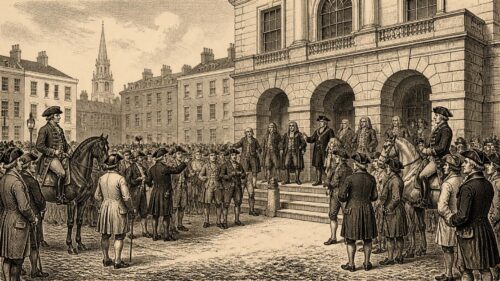
The session did not simply display obedience to Dublin Castle. On 22 October the Commons presented Ormond with a representation for transmission to the queen. It asked for relief from Ireland’s condition through restoration to a “full enjoyment” of its constitution or through a “more firm and strict union” with England. This was not a plan for the parliamentary union eventually imposed in 1800, nor evidence that an agreed union was close. It was a political manoeuvre and a statement of grievance, shaped by frustration over trade restrictions, property questions and constitutional dependence.
The representation embarrassed Ormond. A request for union could be read in England as a serious constitutional challenge, while a blunt rejection risked alienating Irish MPs whose support he needed for supply. He initially avoided a direct reply, then authorised a carefully qualified assurance that he would take proper care of the matter. The episode demonstrates that the Protestant political nation in Ireland was neither silent nor simple. Its members could affirm loyalty to Anne while pressing demands that tested the limits of imperial governance.
It is important, however, not to project the later Penal Law settlement backwards into October 1703. The notorious statute commonly called the Popery or Gavelkind Act belonged to this same parliamentary session, but it did not receive royal assent until 4 March 1704. Its bills were being prepared and contested during 1703; the act itself was not yet law in the calendar year covered here. That distinction matters, because the later act’s restrictions on Catholic landholding, inheritance and office were among the most severe features of eighteenth-century Irish legislation.
Church and Courts
Church government supplied another visible sign of the established order. Charles Hickman was consecrated Church of Ireland bishop of Derry on 11 June. Derry was a particularly resonant see after the siege of 1689 and the Williamite victory in Ulster. Hickman’s appointment did not transform the religious landscape of the north-west, but it formed part of the routine replenishment of a Church whose bishops sat in the Irish House of Lords and whose institutional privileges were bound to Protestant political authority.
At the end of the year, judicial patronage also reflected the remaking of the administration. On 27 December Ormond recommended Robert Doyne, then chief baron of the Exchequer, for the chief justiceship of Common Pleas. Doyne’s patent followed on 1 February 1704, so it is best understood as a transition initiated in 1703 rather than a completed appointment within it. Such appointments mattered well beyond legal technicalities: the senior courts, like the Church and revenue offices, were central to the authority exercised from Dublin.
Kinsale and the Atlantic War
Ireland’s connection to the wider war was also visible at Kinsale. William Dampier’s privateering expedition, consisting of the St George and the Cinque Ports, had reached the harbour in May. On 11 September the ships sailed from Kinsale for the South Seas. Dampier, already famous as a navigator and observer, commanded the larger vessel; the smaller Cinque Ports carried sixty-three men under Captain Charles Pickering.
This was an English privateering venture rather than an Irish naval expedition, but its departure from Kinsale is historically significant. The harbour was a provisioning point and a gateway between Ireland, England, the Atlantic and the Iberian world. The expedition aimed to prey on Spanish commerce, illustrating how a port on Ireland’s south coast could be drawn into conflicts fought at vast distance. Its later history is remembered partly because Alexander Selkirk served aboard the Cinque Ports; his marooning would contribute to the literary background of Robinson Crusoe. None of that was foreseeable in 1703, when the immediate reality was a risky commercial-military voyage leaving an Irish anchorage.
Waterways and Improvement
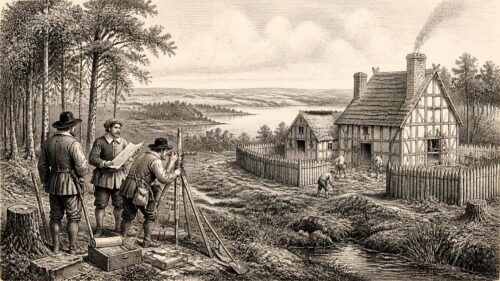
Parliamentary attention also turned towards internal communications. In 1703 the Commons considered the potential benefits of improving navigation, including a proposal for a canal route between Lough Neagh and Newry. Francis Nevil surveyed the ground for such a connection towards Carlingford Lough. A committee was also appointed to prepare a bill to make the River Barrow navigable. These were plans and investigations, not completed works: no canal sprang into being that year, and the Newry Canal would only be constructed decades later.
Nonetheless, the proposals reveal an emerging language of “improvement”. Better waterways promised cheaper movement of bulky goods, especially coal, grain, timber and materials needed by towns and export trades. Newry’s position near Ulster’s developing coal interests gave a Lough Neagh connection obvious attraction, while a navigable Barrow offered the prospect of linking inland Leinster more effectively to Waterford and the sea. In 1703, such projects remained aspirations requiring capital, engineering skill, political agreement and sustained state support.
For most people, life was still organised locally around farms, small towns, parish structures, rents, markets and seasonal labour. The surviving record for this particular year says far more about governors, statutes and schemes than about individual households. Yet the decisions made in Dublin were not remote abstractions. Taxes on drink affected consumption and retail; regulation of clergy affected community worship; and proposed waterways imagined new routes by which produce, fuel and people might circulate. Ireland in 1703 was peaceful compared with the preceding century’s wars, but its social order remained unequal, confessional and politically unsettled.
The year’s most enduring image is therefore not of a single dramatic occurrence but of an October parliament attempting to govern a changed kingdom. Ormond brought aristocratic influence to Dublin Castle; MPs combined loyalty with complaint; Catholic clergy were further threatened by law; and the first outlines of later infrastructural ambition appeared on paper. These developments did not settle Ireland’s constitutional or religious conflicts. They showed how deeply those conflicts were already embedded in the institutions of the early eighteenth-century kingdom.

Primary Sources
- Acts and statutes made in a Parliament begun at Dublin the twenty first day of September, Anno Dom. 1703
- An Act to prevent Popish Priests from coming into this Kingdom
- Statutes in Chronological Order: The Reign of Queen Anne
- Irish Statute Book: Pre-Union Irish Statutes
- Irish Legislation Database: Browse
- Butler, James
- Brodrick, Alan
- The ‘Union’ Representation of 1703 in the Irish House of Commons: A Case of Mistaken Identity
- The Duke of Ormond to the Earl of Nottingham
- BUTLER, James (1665–1745)
- A Voyage Round the World: Captain Dampier’s Expedition into the South Seas
- King’s Inns Admission Papers 1607–1867
- Ormond Papers: Additional Collection List
- The Making of a Penal Law (2 Anne, c.6), 1703–4
- Irish History Online: 1703
- Communications
- The Early Development of Newry Port
- Ireland’s ‘Canal Navigators’
- Arthur Young: Tythes, Church Lands; Absentees; Population; Public Works
- The Kingdom of Ireland, 1641–1760