Tyrone Succession1559 CE
In 1559, Conn Bacach O’Neill’s death triggered a succession crisis between Shane, chosen The O’Neill under Gaelic custom, and his grandson Brian, heir under an English patent. Sir Henry Sidney negotiated a temporary peace, acknowledging Shane’s effective power while Elizabeth’s government postponed a decision. Crown administration expanded through appointments, monetary measures and urban defence, yet remained weak beyond the Pale. Religious change was initially confined largely to official circles before Irish legislation in 1560. In Thomond, rival noble alliances fought around Inchiquin, showing persistent regional instability. Trade, provisions and fortifications preoccupied towns. Ireland remained fragmented, neither rebellious nor securely governed.
Dateline
In 1559 Ireland entered Elizabeth I’s reign with no single political centre strong enough to command the island. The queen’s accession on 17 November 1558 had changed the sovereign in Dublin, London and every royal document, but it did not dissolve the competing jurisdictions of Gaelic lordships, Old English earldoms, chartered towns and the crown’s shrinking zone of dependable authority around Dublin. The year’s most consequential Irish development was the death of Conn Bacach O’Neill, first earl of Tyrone, and the succession struggle that brought his legitimate son Shane into open collision with the crown’s legal claims.
A Lordship Changes Hands
Conn Bacach died early in 1559, according to later narrative evidence; the Annals of the Four Masters, which record the death within their annal for the year, offer no precise day. His death mattered far beyond Tír Eoghain. Since 1542 Conn had held an English earldom created under Henry VIII’s policy of “surrender and regrant”: an Irish lord surrendered a claimed hereditary authority to the crown and received title and lands back under English law. But the Tyrone settlement had named Conn’s affiliated son Matthew Feardorcha as heir to the earldom, rather than Shane, Conn’s eldest surviving legitimate son.
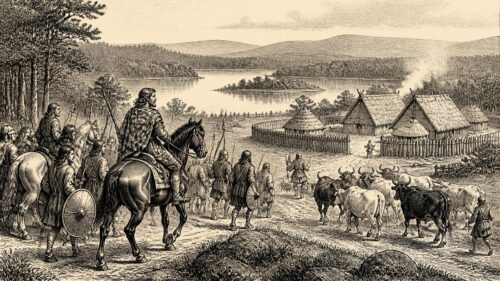
Matthew had been killed in 1558, leaving a young son, Brian, whose right under the English patent the Dublin government could not simply ignore. Shane, however, had a different case. He claimed both the ordinary hereditary entitlement of a legitimate son and the consent of the O’Neill kindred under Gaelic political custom. In 1559 he was chosen as The O’Neill, the head of the dynasty and lord of Tír Eoghain. That election was not a decorative survival. It supplied the authority to demand military service, hostages, tribute and deference from dependent districts, while also making Shane the principal power in the heart of Ulster.
The collision was therefore not merely a family quarrel. It exposed the incompatibility, or at least the unresolved overlap, between an English patent that treated an earldom as a royal grant and a Gaelic lordship understood as an office held within a kin-group. Later accounts often turn the dispute into a simple contest between “English” and “Irish” systems. In 1559 it was more complicated. Shane used arguments drawn from both worlds: traditional election for the lordship, but also hereditary legitimacy and legal objections to the earlier patent. The crown, meanwhile, had to weigh Brian’s paper title against Shane’s effective control of men and territory.
Sidney’s Temporary Settlement
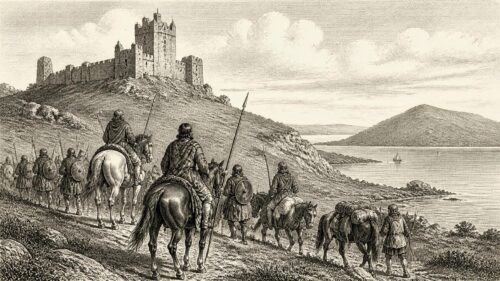
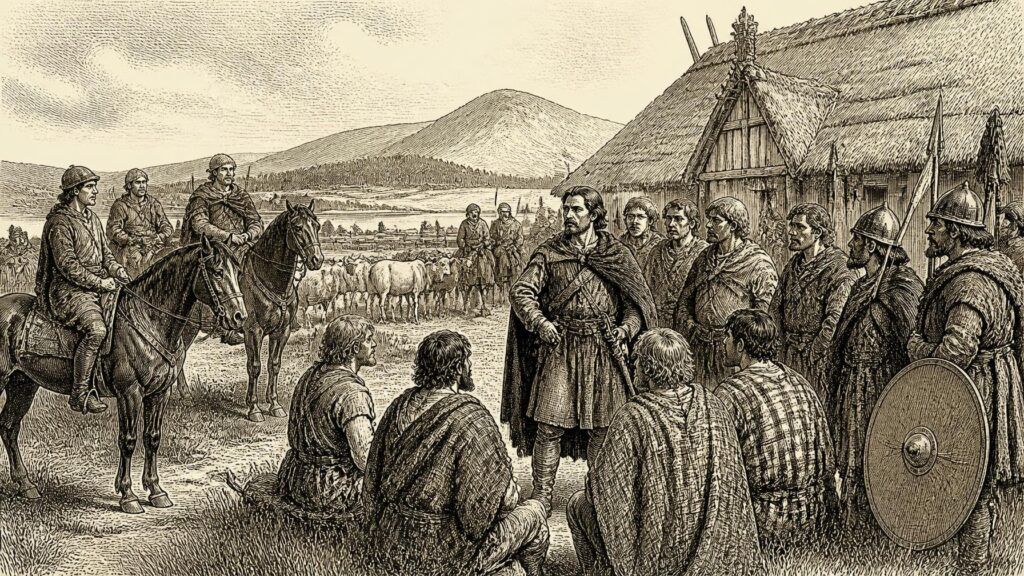
Sir Henry Sidney, serving as lord justice while Thomas Radcliffe, earl of Sussex, was absent, tried to prevent the succession dispute becoming immediate war. He went to Dundalk, summoned Shane, and then—when Shane would not risk appearing before him—visited the O’Neill camp himself. The two men entered the ritual relationship called gossipred or spiritual kinship: Sidney became godfather to Shane’s son. Such a bond could carry real political weight in sixteenth-century Ireland, creating an expectation of mutual obligation across cultural and social boundaries.
Shane promised to keep peace while Elizabeth considered his claims. Sidney obtained no final settlement, but his conduct recognised a practical fact: the government lacked the force to impose an answer in Tír Eoghain. This did not mean that Dublin accepted Shane’s full programme. He envisaged an O’Neill authority reaching beyond Tyrone towards other Ulster lordships, including territories where the crown, the MacDonnells of Antrim, the O’Donnells of Tír Chonaill and many local rulers had their own interests.
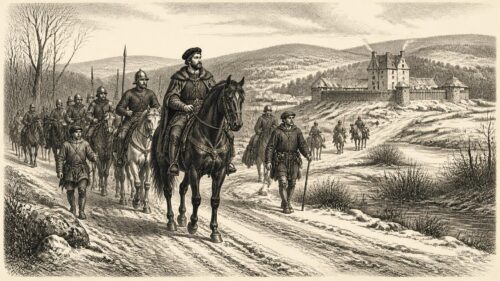
Elizabeth’s instructions to Sussex, issued in July, show the uncertainty at the centre of policy. They allowed Shane to succeed to his father’s title and lands, while also requiring attention to the claims of the young baron of Dungannon. The formula postponed rather than solved the crucial question: whether the crown would recognise Shane as earl of Tyrone, as Gaelic chief, as both, or as neither. Sussex returned to Irish office with instructions to contain Shane by conciliation if possible and coercion if necessary. The ambiguity would shape the years ahead.
Government, Office and Money
1559 also brought a reshaping of the crown’s administration. Thomas Butler, tenth earl of Ormond, was appointed lord treasurer of Ireland in August. Ormond was one of the most powerful magnates in the kingdom: lord of extensive estates, commander of a substantial following, and a courtier trusted by Elizabeth. His elevation tied crown government more closely to a great Irish aristocratic house, even as it illustrated the continuing dependence of the administration on local political power.
Appointments in the legal and financial machinery mattered too. Robert Dillon became chief justice of the Common Pleas on 3 September; William Fitzwilliam held the vice-treasurership and acted as lord justice during Sussex’s absences; and Valentine Browne was appointed surveyor general. These were not dramatic changes for most inhabitants, but they reveal the crown’s effort to make authority more regular through courts, revenue offices, written commissions and salaried officials. In practice, that apparatus remained thin outside the Pale and a handful of strategic towns and garrisons.
Money was a daily political problem. Irish currency had been debased repeatedly under the previous Tudor monarchs, unsettling prices, wages and exchange. During 1559 the government arranged the sending of English money, considered rates of exchange and ordered specified inferior coins to be withdrawn from use. The policy was not an abstract reform. Soldiers expected wages; merchants needed dependable payment; and every official transaction—from provisions to rents—was distorted by uncertain coin. Fiscal weakness also limited what Sussex could do in Ulster. An army that could not be reliably paid was liable to burden the communities through which it moved.
Town, Coast and Church
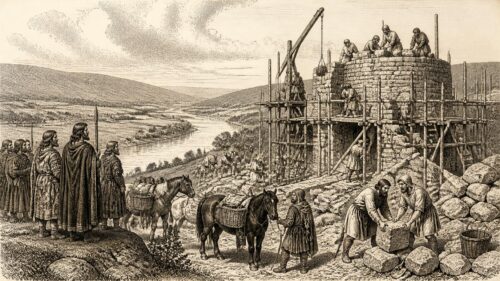
The records of 1559 give brief but valuable glimpses of urban and coastal priorities. Waterford sought permission to export grain, while Dungarvan and other ports appear in requests concerning provisions. Carrickfergus sought liberties and support for defensive works; its exposed position opposite Scotland made the town an important point in the crown’s anxious watch on the North Channel. Instructions also allowed limited expenditure on Waterford’s fortifications. These requests should not be mistaken for proof of prosperity everywhere. Rather, they show towns bargaining with government for trade privileges, ammunition, walls and access to grain in a politically insecure landscape.
Religion changed officially before it changed locally. Elizabeth’s English religious settlement was enacted in 1559, but the Irish parliamentary legislation that restored royal supremacy and imposed the new ecclesiastical order would not be passed until 1560. In 1559, therefore, Ireland stood in an interim phase. Sussex’s instructions required English-born office-holders to use the rites established in England in their own households pending parliamentary action. When Sussex was sworn in at Christ Church Cathedral, English liturgical forms were publicly used. Yet such ceremonies in Dublin cannot be treated as evidence of swift religious transformation across Ireland. Parishes, clergy and lay communities retained deeply rooted devotional habits, while the state lacked both personnel and reach.
War in Thomond
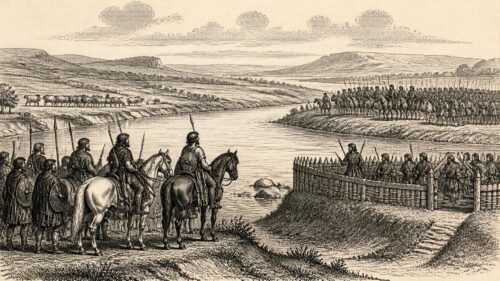
The year was not dominated by Ulster alone. In June, conflict in Thomond drew in Gerald FitzGerald, fourteenth earl of Desmond, Conor O’Brien, third earl of Thomond, Richard Burke, second earl of Clanricarde, and rival branches of the O’Brien family. Conor had been besieging Inchiquin, where Donough O’Brien, son of the former earl Murrough, held out. Teige O’Brien, Donough’s brother, secured Desmond’s intervention. The annalistic account describes the opposing camps near Inchiquin and a subsequent encounter at Cnoc Fuarchoilli, where Desmond’s side prevailed over Thomond and Clanricarde.
The fighting demonstrates how earldoms granted or recognised by the crown did not end older dynastic contests. Desmond’s intervention was an assertion of regional influence as much as an act of friendship towards Teige O’Brien. Clanricarde’s support for Thomond likewise reflected the web of alliances that crossed the Shannon. Armed households included mounted followers, kern, gallowglass companies and retainers supplied through the lordly economies of hospitality, exactions and landholding. For tenants and small communities, such conflict meant billeting, requisitioned food, lost cattle, disrupted cultivation and the danger of raids even where no pitched battle occurred.
What 1559 Did—and Did Not—Set in Motion
Some later accounts place Shane O’Neill’s capture of Calvagh O’Donnell on 14 May 1559 because the Four Masters enter it under that year. Contemporary state-paper chronology and modern scholarly reference works instead place the seizure in May 1561. It should therefore not be treated as an event of 1559. The discrepancy is a useful warning: annals preserve indispensable Irish perspectives, but their dating must be tested against nearer contemporary evidence.
What can securely be placed in 1559 is a more important turning point. Conn Bacach’s death made Shane O’Neill the effective leader of Tír Eoghain; Sidney’s negotiations revealed the crown’s immediate limits; and Elizabeth’s July instructions left the succession unresolved. In Munster, the Thomond struggle proved that noble rivalry could still mobilise regional warfare independently of Dublin. In towns and government offices, questions of coin, grain, defence, worship and legal authority continued alongside high politics. Ireland in 1559 was not yet in general rebellion, nor was it securely governed. It was a kingdom in which every attempt to settle one authority created new claims, new alliances and new reasons to fight.
Source References
Hover over a number to see the source. Select it to open the source.

- [1] Annals of the Four Masters
- [2] CELT Project: Annals of the Four Masters
- [3] Calendar of State Papers: Ireland, 1509–1573
- [4] O’Neill, Shane (Seaán)
- [5] Radcliffe, Thomas
- [6] Sidney, Sir Henry
- [7] Butler, Thomas
- [8] O’Donnell (Ó Domhnaill), An Calbhach
- [9] O’Neill, Hugh
- [10] Gaelic Lordship and Tudor Conquest: Tír Eoghain, 1541–1603
- [11] Ireland Under the Tudors, Volume II
- [12] Memorial Delivered to the Lord Deputy of the Answers Made by the Queen to Several Suits Made to Her by Subjects in Ireland, 1559
- [13] The Annals of Ulster
- [14] Annála Connacht
- [15] Shane O’Neill and the Scots in Ulster
- [16] Calvagh O’Donnell
- [17] Dictionary of National Biography: O’Donnell, Calvagh
- [18] Dictionary of National Biography: Radcliffe, Thomas
- [19] Creating Facts on the Ground: The Destruction of Clandeboye
- [20] Shane O’Neill, Ciaran Brady
- [21] Letters of Shane O’Neill
- [22] Ireland Under the Tudors
Primary Sources
- Annals of the Four Masters
- CELT Project: Annals of the Four Masters
- Calendar of State Papers: Ireland, 1509–1573
- O’Neill, Shane (Seaán)
- Radcliffe, Thomas
- Sidney, Sir Henry
- Butler, Thomas
- O’Donnell (Ó Domhnaill), An Calbhach
- O’Neill, Hugh
- Gaelic Lordship and Tudor Conquest: Tír Eoghain, 1541–1603
- Ireland Under the Tudors, Volume II
- Memorial Delivered to the Lord Deputy of the Answers Made by the Queen to Several Suits Made to Her by Subjects in Ireland, 1559
- The Annals of Ulster
- Annála Connacht
- Shane O’Neill and the Scots in Ulster
- Calvagh O’Donnell
- Dictionary of National Biography: O’Donnell, Calvagh
- Dictionary of National Biography: Radcliffe, Thomas
- Creating Facts on the Ground: The Destruction of Clandeboye
- Shane O’Neill, Ciaran Brady
- Letters of Shane O’Neill
- Ireland Under the Tudors