Máel Sechnaill’s November Death862 CE
In 862 Máel Sechnaill mac Máele Ruanaid, Clann Cholmáin king of Mide and acclaimed king of all Ireland, died on 27 November after sixteen years, transferring Tara’s kingship to Áed Findliath of Cenél nÉogain. Earlier, Áed, Flann of Cianachta Brega and Scandinavian allies, including Amlaíb, raided Mide, exposing the limits of Máel Sechnaill’s negotiated supremacy. In Osraige, Cerball mac Dúnlainge and Cennétig defeated Rodolb’s Scandinavian fleet. Obituaries for churchmen and physician Máelodar attest religious and learned authority. Beneath dynastic conflict and maritime warfare, rural communities, church estates and agricultural production sustained Ireland’s competing kingdoms and their rulers throughout the year.
Dateline
In 862, Ireland’s most commanding ruler died just as the political order he had built was being tested. Máel Sechnaill mac Máele Ruanaid of Clann Cholmáin, king of Mide and styled by the Annals of Ulster rí Érenn uile – “king of all Ireland” – died late in November after sixteen years of rule. Modern chronological scholarship places his death on 27 November, although the surviving annalistic wording contains a problematic Roman-calendar date. What is beyond doubt is that his death belongs to 862 and that it marked a transfer of the kingship of Tara from the southern to the northern branch of the Uí Néill.
The year was not simply a change of monarch. Before Máel Sechnaill’s death, Áed Findliath of Cenél nÉogain had carried war into Mide with a coalition that included both Irish and Scandinavian forces. In the south-east, Cerball mac Dúnlainge of Osraige and his nephew Cennétig struck at a Scandinavian fleet. Clerics, an anchorite and a famous physician also died. The annals thus preserve a compressed but revealing view of a country in which dynastic rivalry, armed seaborne power, church institutions and rural lordship were closely interwoven.
A Raid into Mide
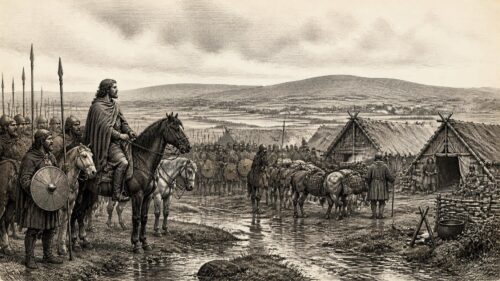
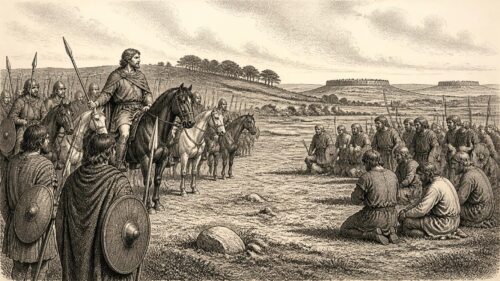
The clearest military event of the year was an attack upon Mide, the midland kingdom that formed the power-base of Máel Sechnaill. The Annals of Ulster record that Áed son of Niall went with “the kings of the foreigners” into Mide and plundered it alongside Flann son of Conaing. The Fragmentary Annals of Ireland, a much later and more literary compilation which nevertheless preserves earlier annalistic material, makes the alliance more explicit. It says that Áed and his son-in-law Amlaíb led large forces of Gaels and Scandinavians into the plain of Mide, killing many freeborn men.
Neither account permits a precise reconstruction of the route, scale or duration of the raid. Yet their agreement on its basic character is important. This was not an impersonal “Viking invasion” directed against a united Ireland. Scandinavian rulers and warbands could become allies in contests between Irish dynasties. Áed, a northern Uí Néill king, was challenging the authority of Máel Sechnaill, his southern Uí Néill rival; Flann of Cianachta Brega had his own interest in disrupting Mide; and Amlaíb’s involvement connected the campaign to the maritime military power centred on Dublin.
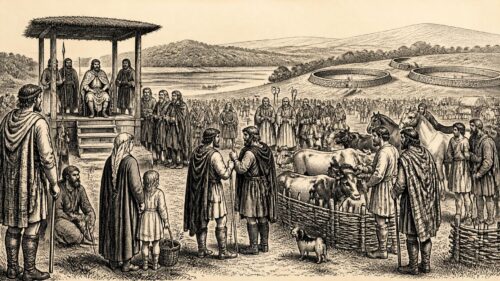
The attack also shows why claims to rule all Ireland must be read carefully. Máel Sechnaill had imposed his authority widely and was exceptional among ninth-century kings in the reach of his campaigns, but Ireland remained a patchwork of kingdoms, client peoples and church territories. A high king’s supremacy depended on personal alliances, hostages, tribute, assemblies and force. It could be vigorously resisted even in his own central lands. The plundering of Mide in 862 was a direct demonstration of the limits of royal power.
The End of Máel Sechnaill’s Rule
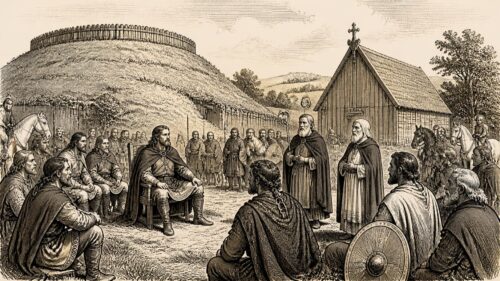
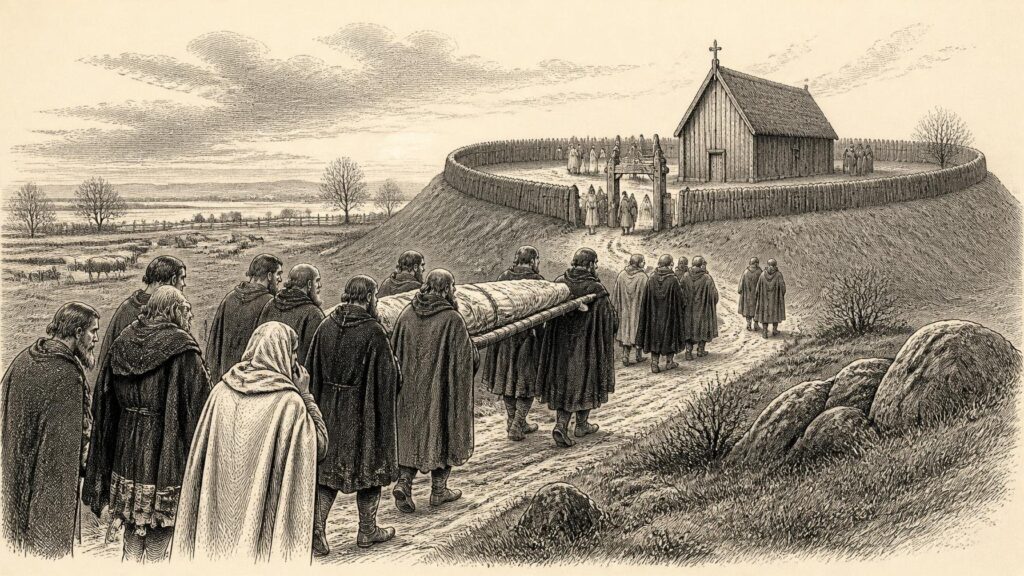
Máel Sechnaill’s obituary is unusually grand. The Annals of Ulster recite his long genealogy and call him king of all Ireland. Such language was both an honour and a political claim. He belonged to Clann Cholmáin, the leading southern Uí Néill dynasty of Mide, and had spent his reign seeking obedience from Leinster, Munster, Connacht and the north. He had confronted Scandinavian armies, extracted hostages and made the kingship of Tara more than an empty dignity. But he had never converted Ireland into a unified kingdom administered from a capital. His authority was negotiated and uneven, and it had been under strain from Áed’s northern challenge in the years immediately before 862.
His death released those pressures. The Fragmentary Annals says that Áed took the kingship of Ireland after Máel Sechnaill. This should not be understood as an uncontested national succession in a modern sense. Rather, Áed secured pre-eminence among the Uí Néill and the kingship conventionally associated with Tara. His rise represented a major shift from southern to northern Uí Néill leadership. Áed’s later career would be defined by conflict with Scandinavian forces as well as by attempts to impose authority over rival Irish kingdoms.
Personal and dynastic connections mattered in making this transition workable. Máel Sechnaill’s widow, Lann daughter of Dúngal of Osraige, was sister to Cerball mac Dúnlainge. Áed later married Lann, a union that helped bind the new Tara king to the powerful Osraige dynasty. The date of that marriage should not be forced into 862, but the relationship illuminates the political landscape created by Máel Sechnaill’s death. Marriage, fosterage and kinship were instruments of government as real as armed retinues.
Cerball and Rodolb’s Fleet
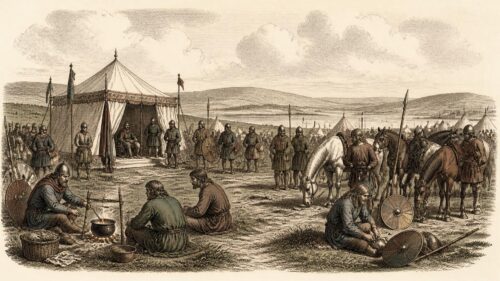
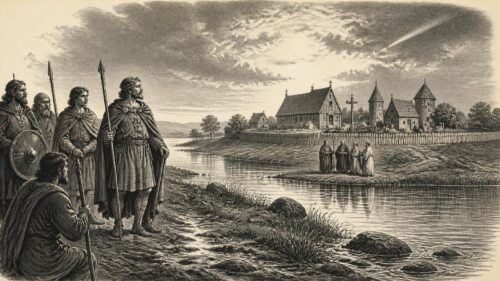
A second conflict recorded for 862 lay in and around Osraige, the kingdom of the Nore valley. The Fragmentary Annals credits Cerball and his nephew Cennétig son of Gáethíne with defeating the fleet of Rodolb, a Scandinavian leader who had recently arrived from Norway. It says that Conall Ultach, Luirgnén and many others were killed. Later historical interpretation associates the action with the destruction of Rodolb’s fortified base, or longphort, in the Barrow valley, but the surviving annal itself is sparing about location and tactics. It is safest to say that a fleet connected with Rodolb was decisively defeated by Osraige forces in 862.
This episode matters because it captures the mixed character of Scandinavian activity in Ireland. Fleets were instruments of raiding, transport and political intervention, but their crews were not necessarily detached visitors from overseas. By the middle decades of the ninth century, Scandinavian leaders had bases in Ireland and made alliances with Irish rulers. Archaeology from Dublin reinforces the point: ninth- and tenth-century graves, tools, weights, scales, silver and personal objects reveal traders, craftworkers and families as well as fighters. The military struggle in Osraige therefore belonged to a wider transformation in which river routes, coastal settlements and armed commerce were becoming increasingly important.
Churchmen, Healing and Written Memory
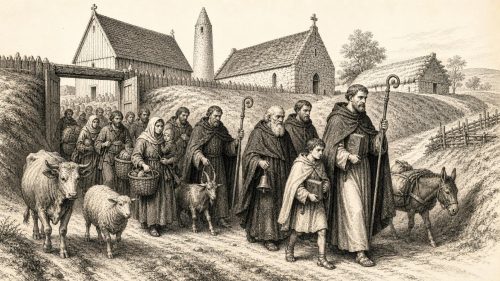
The year’s obituaries also reveal the reach of ecclesiastical life. Finán of Cluain Cáin, described as both bishop and anchorite, died; so did Muirgius, anchorite of Armagh. Their titles suggest the coexistence of institutional office and ascetic prestige. An anchorite was not merely a solitary figure outside society: religious reputation could strengthen the standing of a church community, while churches themselves were major landholders, places of learning and centres of patronage.
Máelodar grandson of Tinnred also died in 862 and is called an eminent Irish liaig, or physician. The brief notice is valuable. It confirms that learned healing was a recognised expertise worthy of commemoration beside kings and churchmen. Ireland’s literate ecclesiastical culture preserved biblical texts, legal and penitential learning, Latin scholarship and Irish-language writing; medical knowledge too circulated within learned networks. The annals are selective, not a census of ordinary life, but these notices show that status could rest on religious discipline, literacy and specialised skill as well as on lordship.
Life Beyond the Annals
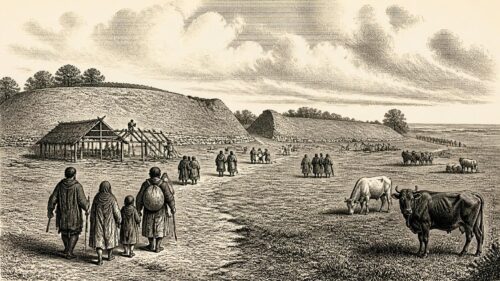
Most people affected by the raids and successions of 862 were never named. They lived in a predominantly rural landscape of dispersed farmsteads, enclosed settlements, fields, routeways and ecclesiastical estates. Cattle remained a principal measure of wealth and status, but cereal cultivation had become increasingly significant by this period. Households managed livestock, sowed and harvested grain, prepared dairy produce, stored food, spun wool and maintained fences, buildings and tools. Free tenants, dependent cultivators, enslaved people and members of ruling kindreds experienced these demands very differently.
For such communities, a raid on Mide or a fleet defeated near Osraige was not distant high politics. Plunder could mean the seizure of cattle, foodstores, metalwork, captives and labour; killing freeborn men damaged kin groups and local military capacity. Conversely, rulers relied upon the productive surplus of farms and church lands to feed followers, reward allies and sustain campaigning. The political history of 862 rested on this rural foundation.
The year therefore closes with both rupture and continuity. Máel Sechnaill’s death ended an ambitious reign and enabled Áed Findliath’s accession. Armed Scandinavian-Irish alliances had exposed the vulnerability of Mide, while Cerball’s victory over Rodolb displayed the capacity of an Irish regional king to meet seaborne power. Yet farms continued their seasonal work, churches maintained their communities, and learned specialists still commanded notice. In 862, Ireland was not a kingdom overwhelmed by outsiders or ruled from a single centre: it was a connected island of competing powers, in which local society, ecclesiastical influence and maritime warfare shaped one another.
Primary Sources
- The Annals of Ulster, Year U862
- The Annals of Ulster
- Fragmentary Annals of Ireland, Annals FA 261–269
- Fragmentary Annals of Ireland, Annals FA 280–299
- Fragmentary Annals of Ireland, Annals FA 301–320
- CELT Project: Fragmentary Annals of Ireland
- Chronicon Scotorum
- CELT Project: Chronicon Scotorum
- Annals of the Four Masters
- Vikings in Irish Chronicles, 794–902: Introduction
- Vikings in Irish Chronicles, 794–902: Data
- Máel-Sechnaill
- Áed Findliath
- Cerball
- Cennétig
- The Vikings in Ninth-Century Ireland: Sources and Settlements
- Viking
- Guide to the National Museum of Ireland
- Agriculture, Settlement and Society in Early Medieval Ireland
- The Archaeology of Livestock and Cereal Production in Early Medieval Ireland, AD 400–1100
- Early Medieval Farming and Food Production: A Review of the Archaeobotanical Evidence from Archaeological Excavations in Ireland
- Early Literacy and Multilingualism in Ireland and Britain
- Literacy and Identity in Early Medieval Ireland
- Vikings in Ireland and Scotland
- Viking Ireland: Afterthoughts