Archived: 2 October 2026
Abstract
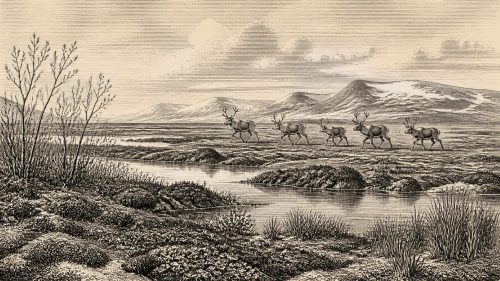
Around 30,343 BCE, Ireland lay within the climatically unstable Late Pleistocene, although no specific calendar-year history can be recovered. At Derryvree, County Fermanagh, organic freshwater sediments between glacial tills demonstrate a local ice-free interval, preserving evidence of open, periglacial wetland with sedges, mosses, shallow pools and cold-adapted insects. This does not show that all Ireland was ice-free. Pre-Last Glacial Maximum cave deposits, especially Castlepook, indicate diverse fauna including mammoth, reindeer, giant deer and predators. A possibly butchered reindeer bone suggests an unconfirmed early human visit, but no secure settlement exists. Environmental reconstruction, constrained by uncertain dating, remains the principal evidence.
Read Article
Archived: 2 October 2026
Abstract
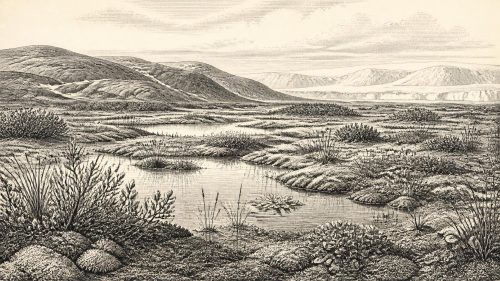
About 30,344 BCE is a modern label within a broad, uncertain Late Pleistocene interval, not a datable Irish event. Organic freshwater sediments at Derryvree, County Fermanagh, deposited between glacial advances, record treeless periglacial wetlands with bogbean, sedges, mosses, dwarf shrubs and open herbaceous ground. They show that parts of Ireland were not continuously ice-covered before the Last Glacial Maximum, although conditions varied regionally and renewed ice later buried the site. Castlepook Cave, County Cork, preserves MIS 3 remains of mammoth, reindeer, giant deer, bear and hyaena. Possible human bone modification is inconclusive; no evidence establishes settlement, society or specific activity.
Read Article
Archived: 2 October 2026
Abstract
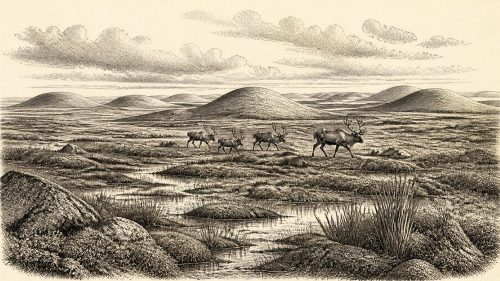
At 30,345 BCE, Ireland cannot be described through a recoverable single-year event. Derryvree, County Fermanagh, records freshwater silts between glacial tills, indicating a locally ice-free, tundra-like wetland during a climatically unstable Late Pleistocene interval, though its dates span millennia. Castlepook Cave, County Cork, preserves diverse pre-Last Glacial Maximum fauna, including mammoth, reindeer, giant deer, bear and hyaena, but its mixed bone deposits are not a contemporary census. A possibly cut-marked reindeer femur may indicate brief human activity, yet settlement remains unproven. Evidence instead reveals a cold, varied island shaped by advancing ice, ecological refuges and evidence surviving unevenly across millennia.
Read Article
Archived: 2 October 2026
Abstract
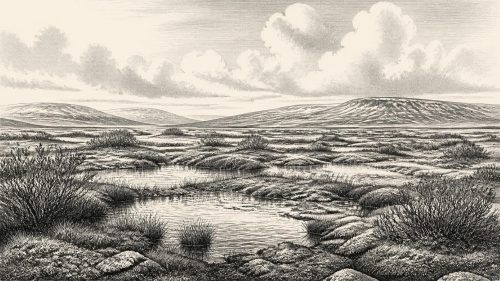
At 30,346 BCE, Ireland lay within climatically volatile Marine Isotope Stage 3, not a precisely datable historical moment. Derryvree’s freshwater silts, bracketed by glacial tills and broadly dated to 34,950–29,750 BCE, demonstrate an ice-free interval in Fermanagh. Their plants and insects indicate cold, treeless, waterlogged tundra with pools and seasonal growth. Cave finds show that cold-adapted mammals inhabited Ireland at various times, but cannot reconstruct a single landscape. A possibly cut-marked reindeer bone suggests a human visit, not settlement. Lower sea levels and fluctuating ice altered connections, while the Last Glacial Maximum remained ahead. Evidence therefore records dynamic, precarious ecosystems.
Read Article
Archived: 2 October 2026
Abstract
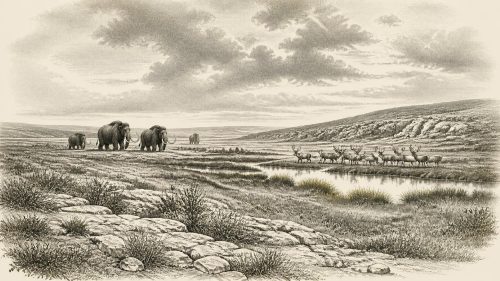
Around 30,347 BCE, Ireland lay within an unstable cold phase preceding the Last Glacial Maximum, not a dateable historical moment. Growing ice sheets, low sea levels and changing coastlines shaped a largely open, treeless landscape. Buried Fermanagh sediments demonstrate local freshwater wetlands supporting tundra vegetation before later glaciation. Southern caves, especially Castlepook, preserve remains of mammoth, reindeer, giant deer, bears, wolves, Arctic foxes and hyaenas, though poorly recorded contexts and revised dating prevent precise contemporaneous reconstruction. No securely dated human settlement, artefacts or burial belongs to this period. Ireland’s evidence instead records variable Ice Age habitats, fauna and encroaching ice.
Read Article
Archived: 2 October 2026
Abstract
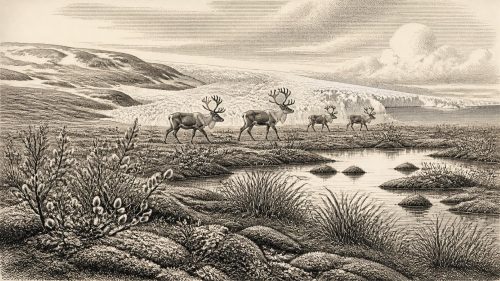
30,348 BCE is a modern label rather than a precise Irish date. Evidence from Greenagho and Derryvree in Fermanagh comprises organic lake sediments sealed beneath till, indicating cold open wetlands with freshwater plants, insects and animals before advancing ice. During Marine Isotope Stage 3, Ireland experienced severe but regionally variable glaciation; the full ice-sheet extent came later. Cave faunas, notably at Castlepook, demonstrate diverse large mammals, including reindeer, horse, mammoth and predators, though deposits are complex. A cut-marked reindeer bone tentatively suggests human butchery, not settlement. No political, cultural or economic structures are recoverable; environmental change dominates this deep past.
Read Article
Archived: 2 October 2026
Abstract
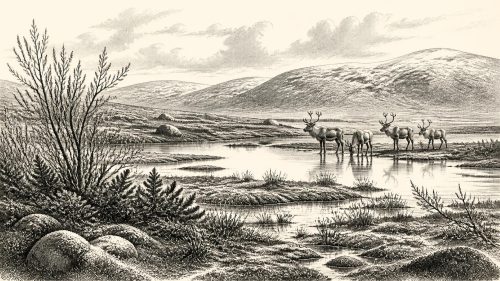
30,349 BCE is a label rather than a datable Irish year, representing a Late Pleistocene interval within Marine Isotope Stage 3. At Derryvree, County Fermanagh, organic sediments between glacial tills, dated BIRM-166 to about 30,500 radiocarbon years BP, preserve a cold, open freshwater wetland with tundra vegetation. Castlepook Cave, County Cork, records diverse cold-stage fauna, including mammoth, reindeer, hyaena and Arctic fox, accumulated across extended periods. A potentially cut-marked reindeer femur suggests human carcass processing around 33,000 years ago, but cannot demonstrate sustained occupation. Together, these fragmentary archives show fluctuating ice-age environments, regional ecological diversity and limits on historical reconstruction.
Read Article
Archived: 2 October 2026
Abstract
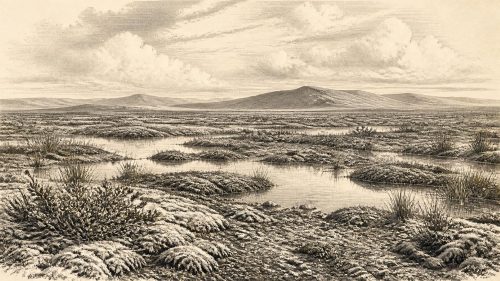
Around 30,350 BCE, Ireland cannot be described through precise events or settlements, but through fragmentary environmental evidence from Marine Isotope Stage 3. At Derryvree, County Fermanagh, freshwater sediments trapped between glacial tills record a cold, treeless wetland of sedges, mosses, aquatic plants and dwarf shrubs during an interval without local overriding ice. Conditions varied regionally as the British–Irish Ice Sheet expanded. Castlepook Cave, County Cork, preserves time-averaged remains of mammoth, reindeer, giant deer and predators, showing changing open habitats and animal movement. A possibly cut-marked reindeer bone suggests, but does not prove, a brief human visit. A volatile landscape overall.
Read Article
Archived: 2 October 2026
Abstract
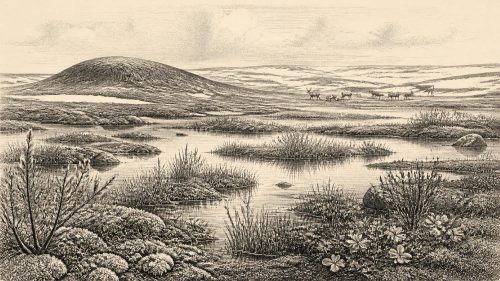
Around 30,351 BCE, Ireland’s history is reconstructed from environmental evidence rather than written records. At Derryvree, County Fermanagh, freshwater sediments between two tills indicate a cold, treeless wetland interval between glacial advances. Fossils reveal grasses, sedges, mosses, bogbean and mountain avens within tundra-like terrain. Ireland experienced regional climatic change as the last ice sheet expanded, not uniform conditions. Castlepook Cave, County Cork, preserves remains of reindeer, mammoth, giant deer and predators, though they span different periods. A possibly butchered reindeer bone may indicate Upper Palaeolithic human activity, but no secure settlement evidence exists. Political, cultural and religious life remains unknown.
Read Article
Archived: 2 October 2026
Abstract
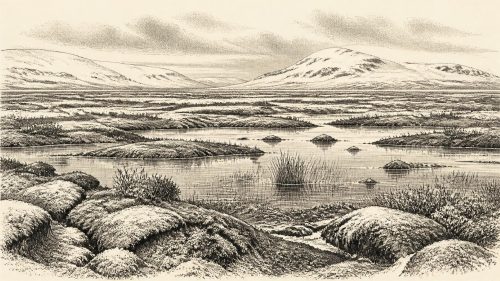
30,352 BCE is a modern label, not a recoverable Irish date. Derryvree sediments in County Fermanagh, radiocarbon dated broadly to this period, record cold, treeless freshwater wetland between glacial advances, demonstrating regional environmental change rather than island-wide conditions. Castlepook Cave in County Cork preserves a diverse cold-climate fauna, including reindeer and mammoth. An incised reindeer femur may indicate stone-tool carcass processing around 33,000 years ago, but its old, poorly documented context prevents firm conclusions. No securely dated settlement, hearth, burial or continuous population is known. Evidence instead indicates volatile Late Pleistocene habitats, shifting ice margins and possible, unconfirmed human visitation.
Read Article


