Archived: 3 October 2026
Abstract
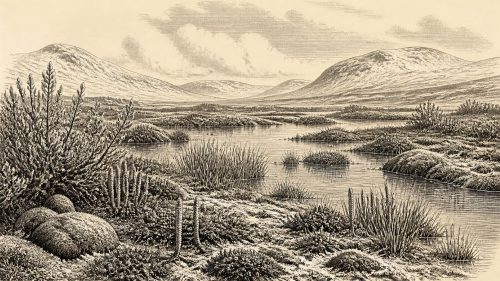
Thirty thousand years BCE is not a date for a recorded Irish event, but falls within an uncertain Late Pleistocene interval. At Derryvree, County Fermanagh, organic sediments between glacial tills indicate an ice-free, periglacial freshwater landscape during a broad period encompassing this year. Fossil lesser clubmoss, sedges, mosses, insects and pollen suggest treeless tundra wetlands. Castlepook Cave, County Cork, preserves remains of Ice Age animals, though not as a single contemporary community. A cut-marked reindeer bone may indicate early human activity, but cannot prove settlement. Recurrent ice advances, drainage and erosion obscure the landscape, preventing reconstruction or claims about society.
Read Article
Archived: 3 October 2026
Abstract
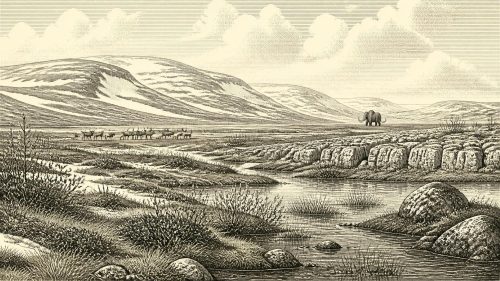
The modern label 30,324 BCE denotes no identifiable event in Ireland’s unwritten deep past. Evidence belongs broadly to Marine Isotope Stage 3, a climatically unstable pre-maximum glacial period. Castlepook Cave in County Cork preserves bones of mammoth, reindeer and other cold-stage animals, though deposits were disturbed and specimens differ greatly in age. A reindeer femur bears a possible fresh-bone stone-tool butchery mark, potentially Ireland’s earliest human trace, but not proof of settlement. Open tundra-like habitats, wetlands and shifting ice margins formed regional mosaics; lowered seas altered access without certainly creating a land bridge. The bone suggests mobile Upper Palaeolithic visitors.
Read Article

Archived: 3 October 2026
Abstract
Around 30,325 BCE, Ireland lay in later Marine Isotope Stage 3, amid unstable cold conditions and growing ice sheets. Derryvree in Fermanagh preserves an ice-free wetland interval, with tundra vegetation, shallow pools and open ground. Castlepook Cave in Cork contains remains of mammoth, reindeer, giant deer and carnivores, demonstrating changing connections with north-west Europe. A cut-marked reindeer femur may indicate early human carcass processing, but cannot establish settlement. Later glaciation destroyed or disturbed much evidence, leaving deposits and bones as fragmentary records of a landscape approaching major glacial transformation. Evidence cannot support an exact annual historical account for this period.
Read Article
Archived: 3 October 2026
Abstract
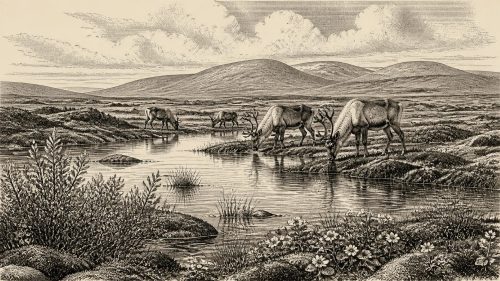
The label 30,326 BCE is approximate, as Ireland’s evidence consists of dated deposits rather than year-specific events. At Derryvree, Fermanagh, organic silts and sands between glacial tills record an ice-free interval, broadly 36,900–31,700 years before present, with treeless tundra wetlands, freshwater, sedges, mosses and periglacial ground. Castlepook Cave, County Cork, preserves remains of mammoth, reindeer, giant deer, predators and other cold-adapted fauna, demonstrating intermittent animal occupation. A possibly butchered reindeer bone suggests a brief early human visit, but remains contested. No settlements, institutions, language or sustained human community are evidenced; climate, ice and shifting habitats fundamentally shaped Ireland’s prehistoric environment.
Read Article
Archived: 3 October 2026
Abstract
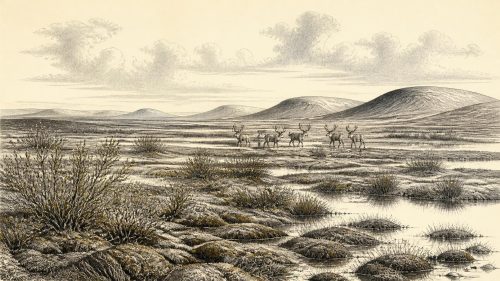
30,327 BCE cannot describe a recoverable Irish year, but provides a broad Late Pleistocene context within Marine Isotope Stage 3. At Derryvree, County Fermanagh, organic freshwater silts between tills record an ice-free or ice-marginal wetland during a fluctuating, cold climate. Tundra plants, shallow water and periglacial conditions supported seasonal ecological diversity. Castlepook Cave, County Cork, preserves remains of mammoth, reindeer, hyaena and other cold-adapted animals, demonstrating varied habitats. A cut-marked reindeer femur may indicate a fleeting human visit, not settlement. Fragmentary evidence reveals climatically volatile, patchy Ice Age Ireland, while excluding claims about annual conditions, society or continuous occupation elsewhere.
Read Article
Archived: 3 October 2026
Abstract
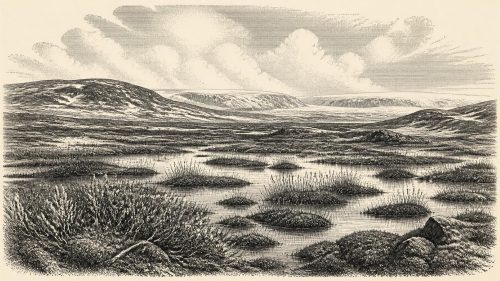
Around 30,328 BCE, Ireland experienced severe, unstable Ice Age conditions rather than a datable historical event. At Derryvree, County Fermanagh, freshwater sediments between glacial tills preserve evidence of tundra wetlands, shallow pools, sedges, aquatic plants and sparse cold-adapted vegetation during a locally ice-free interval. Ice-sheet growth varied regionally, with later advances burying such landscapes. Southern cave deposits demonstrate diverse fauna, including mammoth, reindeer and hyaena, although assemblages span long periods. A possibly tool-marked reindeer bone from Castlepook may suggest brief Upper Palaeolithic human activity, but does not prove settlement. Environmental evidence is stronger than evidence for human society or occupation.
Read Article

Archived: 3 October 2026
Abstract
30,329 BCE is a modern label within the climatically unstable Late Pleistocene, not a date for a known Irish event. At Derryvree, County Fermanagh, sediments between two glacial tills show that an ice-free freshwater wetland developed during a broadly dated interval, probably about 36,900–31,700 calibrated years BP. Fossils indicate cold, treeless tundra-like vegetation around shallow water. Irish cave and speleothem records reveal shifting climates, fauna and ice extent. Castlepook Cave preserves remains of mammoth, reindeer, giant deer and predators, but complicated deposition precludes a single community. Possible human visits remain unproven; no secure settlement, society or annual narrative is known.
Read Article

Archived: 3 October 2026
Abstract
30,330 BCE is a modern label within a broad, uncertain Late Pleistocene range, not a recoverable Irish year. Derryvree, County Fermanagh, preserves freshwater organic deposits between glacial tills, indicating an ice-free interval with cold, treeless wetland, sedges, mosses, aquatic plants and insects before renewed ice cover. Elsewhere, evidence shows episodic, spatially variable glaciation as the British–Irish Ice Sheet expanded. Southern cave remains demonstrate a richer cold-stage fauna, including reindeer, mammoth, bear and hyaena, but cannot securely place species together. A possibly cut-marked reindeer bone from Castlepook suggests human activity, yet remains contested. No securely documented settlement or events are known.
Read Article

Archived: 3 October 2026
Abstract
30,331 BCE is a modern label within a fluctuating Late Pleistocene interval, not a date for a recorded Irish event. Sediments at Derryvree, Fermanagh, preserved between glacial tills, indicate a local ice-free tundra wetland with freshwater, sedges and cold-adapted plants during a broadly calibrated period encompassing this date. Castlepook Cave, Cork, contains diverse fauna, including mammoth, reindeer, hyaena and Arctic fox, while sediment DNA confirms connections with European populations. A possibly cut-marked reindeer femur may indicate early human carcass processing, but remains provisional. No evidence supports permanent settlement, institutions, agriculture or a defined human community at this time or polity.
Read Article
Archived: 3 October 2026
Abstract
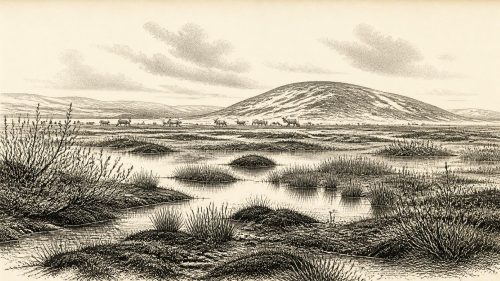
Thirty thousand three hundred and thirty-two BCE is a modern chronological label within a broad, uncertain Late Pleistocene interval, not a recoverable Irish year. Derryvree, County Fermanagh, records a cold, treeless freshwater wetland between glacial advances, demonstrating locally open, wet tundra conditions. Cave deposits, especially at Castlepook, County Cork, contain reindeer, mammoth, hyaena and other fauna, although dates and contexts remain imperfect. A reindeer femur with a linear mark, interpreted by Ruth Carden as stone-tool butchery, may be Ireland’s earliest human evidence. It cannot prove settlement. Together, environmental and faunal archives show a climatically variable landscape, ice and human presence.
Read Article


